
Weeds Master Reference List

The Dirt Doctor
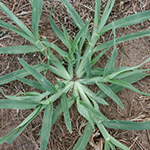 Goosegrass (Eleusine indica) Goosegrass, also called wiregrass, is an annual weed that grows as a compressed plant in turf and reproduces by seed in unhealthy soil. It appears as a silvery mat forming a pale green clump with a low rosette and flattened stems. Flower stalks are short, stout, and compressed. Seed heads are somewhat similar to those of dallisgrass, but short and stiff. Normally found in compacted areas or areas of heavy wear. Produces seed even under close mowing. Very similar to crabgrass. Control with healthy soil and spraying vinegar-based products.
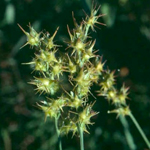 Grassbur (Cenchrus echinatus) Also called sand spur, sticker bur and field sandbur, it is a summer annual grassy weed adapted to dry, sandy soils but can be found growing in other types of soils as well. Small black seeds in the sharp, spiny burs generally start germinating in late spring and will continue to germinate until late summer or early fall months. Plant will continue to grow until the first hard frost or freeze occurs in the fall. Generally not a problem in well maintained turfgrass areas. Apply compost, corn gluten meal, lava sand and the entire organic program for best control.
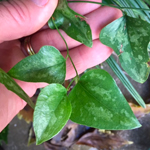 Grenbriar (Smilax spp.) Thorny, tough weed wine with one beneficial feature.
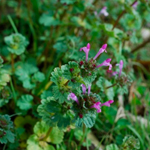 Henbit (Lamium amplexicaule) Winter annual that reproduces by seed and rooting stems. Henbit stems droop and then turn upright to grow to 16 inches tall. They may root where they touch the ground. They are square, green to purplish and smooth or hairy.
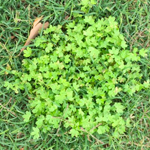 Hoary Bowlesia (Bowlesia incana) Apiaceae (Carrot or parsley family) common weed native to South America and the southeastern and southwestern United States as far north as Oregon. It grows in many types of habitat. This is a small annual herb growing thin, spreading stems. The leaves are borne on long petioles and have multi-lobed rounded or kidney-shaped blades. The leaves are coated in fine white hairs. The inflorescences of yellow-green flowers appear in the leaf axils. Tiny fruit. Easy to hand remove, spot spray kill with vinegar or other organic herbicides.
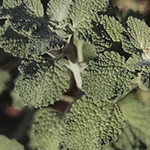 Horehound (Marrubium vulgare) Bushy and woody, fuzzy gray-green crinkled edge leaves that turn down. Hardy and weedy looking. Can become invasive.
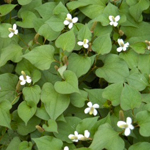 Houttuynia (Houttuynia cordata ‘Variegata’) is a pretty ground cover but needs to be in the weed list because it is so invasive. I’t used in Thai cooking but has a very strong fragrance.Be very careful where you plant it.
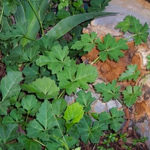 Ivy, Treebine(Cissus trifoliata) is a common vine with fleshy leaves that are generally 3-lobed and coarsely toothed but extremely variable in form. The vine has tuberous roots, a woody base, and fleshy structure above. It has clusters of small berries that become black when mature. The leaves give off a sharp odor when crushed.
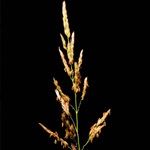 Johnsongrass (Sorghum halepense) One of the most troublesome of perennial grasses. It reproduces from underground stems and seeds. Grows in spreading, leafy patches that may be as tall as 6 to 7 feet. Leaves have a prominent whitish midvein, which snap readily when folded over. The flower head is large, open, well branched, and often reddish tinged. Underground stems are thick, fleshy, and segmented.
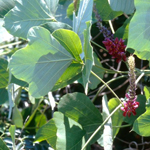 Kudzu (Pueraria lobata) a legume that has purple pea-shaped flowers, large leaves and is extremely fast growing, aggressive vine that spreads quickly by underground runners. Leaves 3-6” long on hard, slender, hairy stems. Each leaf has three dark leaflets. Japanese farmers are growing kudzu as a high protein food crop.
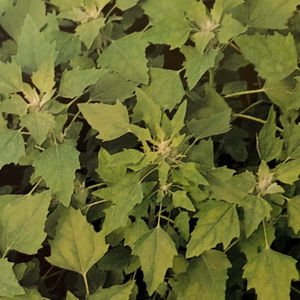 Lamb’s Quarters is an annual wild edible. It was once thought that lamb’s quarters was native to Europe. However, recent archaeological studies show that the seeds were stored and used by the American Blackfoot Indians during the sixteenth century. It is a purifying plant and helps to restore healthy nutrients to poor qualitysoil. This unique plant tends to spread quickly no matter the soil condition.
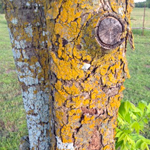 Lichen This isn’t a weed or a plant problem in any way but many people worry about it. It is a growth seen on rocks and the trunks of trees that is actually two plants. Commonly growing in flat greenish, gray, brown, yellow or black patches, lichen consists of algae and fungi. They live together in a symbiotic relationship. The fungi absorb and conserve moisture and provides shelter. The algae conduct photosynthesis, grow and provide protein for the fungi. No treatment or worry needed.
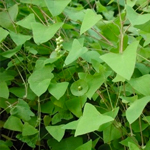 Mile-a-minute Weed (Persicaria perfoliata) Herbaceous, annual, trailing vine. Stems are armed with barbs which are also present on the underside of the leaf blades. The light green colored leaves are triangular and alternate along the narrow, delicate stems. Distinctive circular, cup-shaped leafy structures, called ocreae, surround the stem at nodes, thus the name ‘perfoliata.’ Flowers are small, white and generally inconspicuous. The fruits are attractive, deep blue and arranged in clusters at terminals. Each berry-like fruit contains a single glossy, black or reddish-black hard seed.
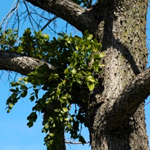 Mistletoe Plant parasite that primarily attaches to limbs and trunks of low quality and/or stressed trees, such as Arizona ash, hackberry, bois d’ arc, locust, box elder, and weak elms and ashes.
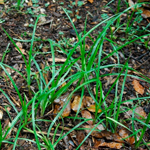 Nutgrass (Cyperus esculentus and Cyperus rotundus) Nutsedge also called purple or yellow nutgrass are perennial sedges introduced from Eurasia. They spread by seeds, nutlets and creeping tendrils. They like wet, anaerobic soils and that is a key to control. They are perennial pests in lawns and gardens. Erect, single, triangular stems have narrow, grass-like, yellow-green leaves.
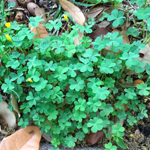 Oxalis, yellow (Oxalis stricta) Also called yellow wood sorrel or yellow oxalis. it is a native North American plant and grows from underground stems (rhizomes). The leaves are most often green, but may also be purplish or brownish red. Its leaves fold up at night and open again in the morning. The yellow spring/summer flowers are about a half-inch in diameter. It can easily be killed with fatty acid products like BioSafe, strong vinegar spray or Agralawn crabgrass killer. I think it’s a pretty plant and wouldn’t waste much time or money trying to control it.
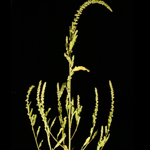 Pigweed Palmer amaranth, also known as Palmer pigweed is known officially now as the most troublesome weed in the U.S. and is very common in food crop production in both home gardens and large scale agriculture.
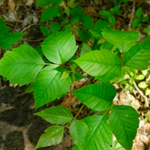 Poison Ivy Deciduous vine that grows in sun or shade and spreads easily underground. Has red berries and red fall color. Do not allow to flower and produce seed. Remove compost and spray new growth with vinegar based organic herbicides.
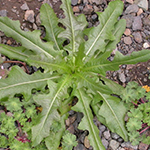 Prickly lettuce(Lactuca serriola) Prickly lettuce is a common winter annual or biennial broadleaf plant that
germinates with the onset of winter rains and inhabits gardens, agricultural land
and many other areas.
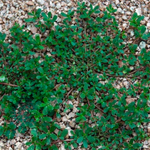 Purslane (Portulaca oleracea) Common purslane is an annual that grows rapidly in spring and summer. It thrives under dry conditions but also competes well in irrigated situations. Low growing. Leaves are very succulent and often tinged red. Small yellow flowers are born singly or in clusters of two or three. Flowers usually open only on sunny mornings. Purslane seeds are very tiny and produced in abundance. Entire plant is edible and nutritious. It really shouldn’t be treated as a weed.
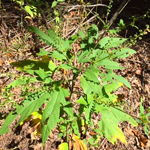 Ragweed (Ambrosia spp.) Annual broadleaf that indicates droughty soil. Releases a potent pollen that causes hay fever. Control by cultivation, mowing, building the soil and spraying with vinegar-based organic herbicides.
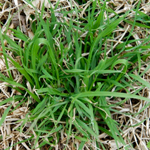 Rescuegrass (Bromus catharticus) Cool-season annual bromegrass. Control by broadcasting corn gluten meal in early October or before seed germinates.
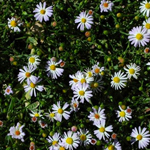 Roadside Aster (Aster exilis) Small white flower in late spring. Usually is found growing in fairly poor soils. It will not compete with turfgrasses if the lawn is healthy. Easy to control by increasing the vigor of the lawn. Use the organic program, top dress problem with compost and water consistently. Dry molasses at 10 – 20 lbs. per 1000 square feet will also help.
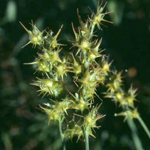 Sandbur (Cenchrus pauciflorus) Annual grass plant that produces a bur with strong, sharp spines. Seeds in the bur can lie dormant in the soil for years before germinating. Control by increasing the carbon in the soil with humates, dry molasses and/or corn gluten meal.
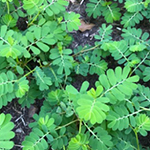 Sensitive Plant (Mimosa pudica) also known as sleeping grass, touch-me- not and tickle-me- plant, is a touch-sensitive plant that folds up its leaves when it is touched. This plant has delicate compound leaves with oblong green leaf blades and it also produces a pink-purple flower.
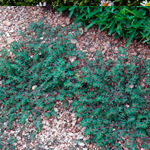 Spurge (Euphorbia spp.) Sappy succulents, annuals or perennials that like hot, dry weather. Control by spot spraying vinegar-based organic herbicides.
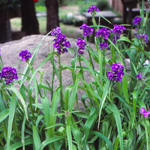 SpiderwortTropical spiderwort (Commelina benghalensis) or benghal dayflower is a weed. It is perennial, similar in look but not related to Tradescantia spp., the ornamental spiderwort. Highly invasive and problematic to gardeners and farmers in the southern states and considered a noxious weed nationwide.
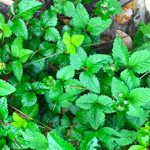 Strawberry, Mock or False (Duchesnea indica) also known as Gurbir and Indian strawberry, it has strawberry-like foliage and an aggregate accessory fruit similar to true strawberry. This groundcover-like plant spreads easily by stems and seeds to become seriously invasive. It can be controlled with the Agralawn Crabgrass Killer. This is the weed at my place where I learned about the power of this organic product.
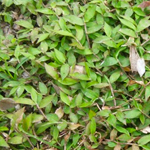 Virginia Buttonweed (Diodia virginiana) is one of the most difficult-to-control broadleaf weeds. It does well in poorly drained areas and can tolerate low mowing heights. It is a deep-rooted perennial that produces both above- and below-ground flowers. Its prolific seed production, extensive root system and ability to vegetatively reproduce make control difficult.
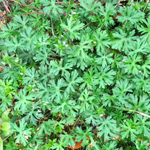 Wild geranium (Geranium carolinianum) Also called Carolina geranium. Pretty wildflower or weed that has delicate foliage.
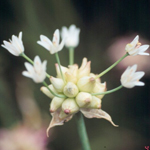 Wild Onions This is an edible wild flower that most people consider a weed. I have had luck and others have reported success killing them with kindness. Mow, clip or pull as often as you can and apply a heavier than normal application of molasses.
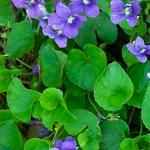 Wild violet Annual or perennial depending on species. Has heart shaped glossy leaves. Produces flowers in a variety of colors ranging from white, purple, pink, and yellow. Reproduces from seed and underground runners. I consider it a pretty wildflower but can be killed with any of the organic herbicides if necessary.
Yellow Sorrel (Oxalis stricta) Also called yellow wood sorrel or yellow oxalis. it is a native North American plant and grows from underground stems (rhizomes). The leaves are most often green, but may also be purplish or brownish red. Its leaves fold up at night and open again in the morning. The yellow spring/summer flowers are about a half-inch in diameter. It can easily be killed with fatty acid products like BioSafe, strong vinegar spray or Agralawn crabgrass killer. I think it’s a pretty plant and wouldn’t waste much time or money trying to control it.
The Dirt Doctor Podcast · 32 min