
Northern Red Oak
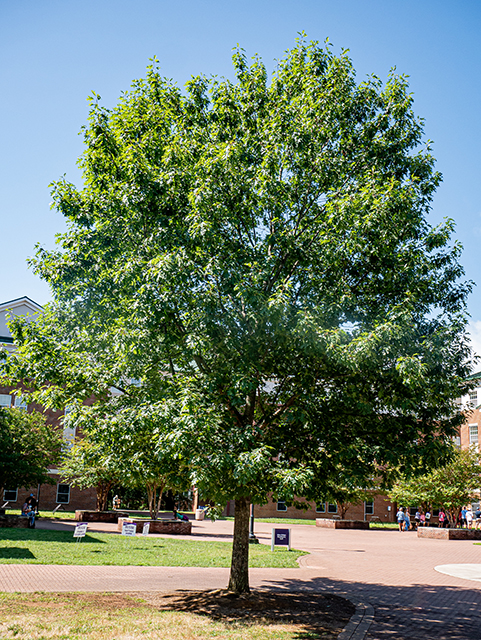
Northern red oak, photo from Lady Bird Johnson Wildflower Center, photo by Stephanie Brundage.
Common Name: red oak
Botanical Name: Quercus rubra
Family: Fagaceae
Type: Deciduous
Native Range: Eastern North America
Zone: 4 to 8
Height: 50 to 75 feet
Spread: 50 to 75 feet
Bloom Time: May Bloom
Description: Yellowish-green
Sun: Full sun
Water: Dry to medium
Maintenance: Low
Suggested Use: Shade tree, street tree
Flower: Insignificant
Leaf: Good Fall
Tolerate: Drought, dry soil, black walnut, air pollution
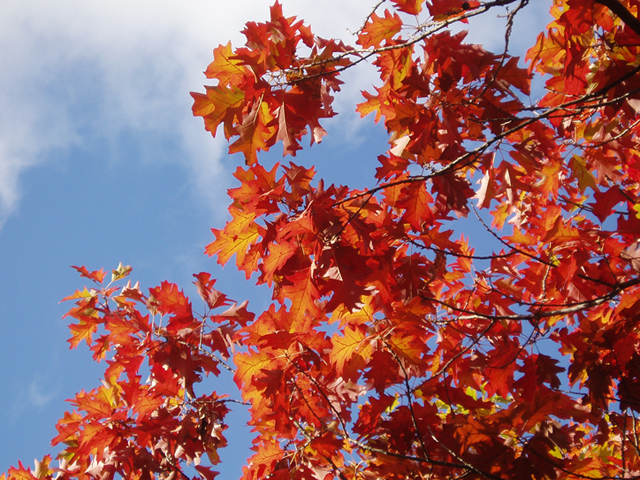
Fall color, northern red oak, photo from Lady Bird Johnson Wildlife Center, by Julie Makin.
Culture: Easily grown in average, dry to medium moisture, acidic soil in full sun. Prefers fertile, sandy, finely-textured soils with good drainage.
Habit: Commonly called red oak or northern red oak, is a medium sized, deciduous tree with a rounded to broad-spreading, often irregular crown. Typically grows at a moderate-to-fast rate to a height of 50-75′ (often larger in the wild). Dark, lustrous green leaves (grayish-white beneath) with 7-11, toothed lobes which are sharply pointed at the tips. Leaves turn brownish-red in autumn. Insignificant flowers in separate male and female catkins appear in spring. Fruits are acorns (with flat, saucer-shaped cups) that mature in early fall. An abundant crop of acorns may not occur before this tree reaches 40 years old.
Problems: Generally a durable and long-lived tree. Susceptible to oak wilt which is a systemic fungal disease that has no cure. Chlorosis (yellowing of the leaves while the veins remain green) often occurs when soils are not sufficiently acidic.
Uses: Specimen, street tree, lawn tree.
Notes: Genus name comes from the classical Latin name for oak trees. Specific epithet means red.