

Banana Trees
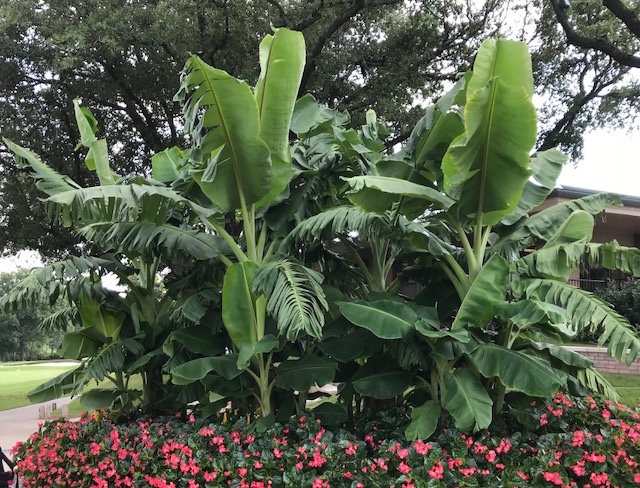
COMMON NAME: Banana
BOTANICAL NAME: Musa spp.
FAMILY: Musaceae
TYPE AND USE: Tender perennial with edible fruit
LOCATION: Full sun
SPREAD: 5-10 feet
FINAL SPACING: 5-10 feet
PLANTING DATES: Spring through fall
PLANTING METHOD: Divisions or transplants
HARVEST TIME: When bananas are ripe Height: 5-20 feet (some even taller)
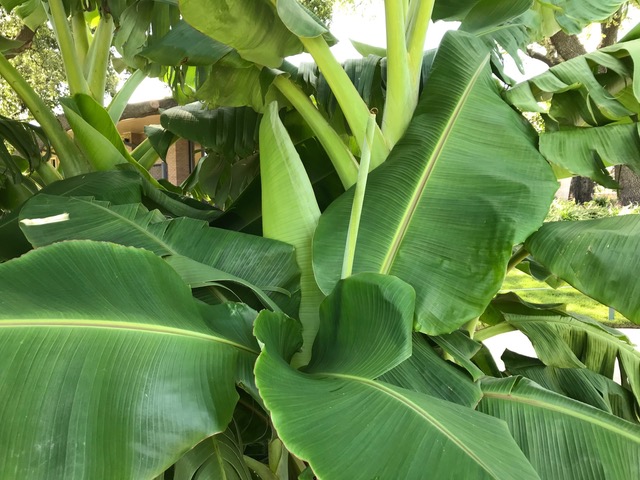
GROWTH HABITS: Very large leaves, thick stems, spread by suckers to form large clumps. Banana clusters will set and produce in the southern one-third of the state.
CULTURE: Nothing special if planted in healthy, well-drained soils. Use a basic organic program. Don’t let the roots stay too wet in the winter or they will rot. Bananas need approximately 15 months above 28° to bear fruit.
TROUBLES AND SOLUTIONS: Freeze damage and no fruit production in the northern half of the state.
HARVEST AND STORAGE: Harvest the fruit whenever and if ever ready. To store the plant for the winter in the northern part of the state, cut the top off and throw into the compost pile after the first light freeze. Cover the stumps with a thick layer of mulch to protect the roots from winter temperatures. The fruit stem normally requires 3 to 4 months to mature following its appearance. However, do not expect the bananas to turn yellow on the stalk. Maturity is achieved when the individual bananas become full and rounded, after which they can be cut and hung or placed in a warm area to ripen to good eating quality. Once a stalk of bananas begins to ripen, the entire stalk will ripen in a few days.
NOTES: Bananas can be brought into production in greenhouses. If you have chickens, feed them the discarded banana leaves. After the first frost, bananas, elephant ears, hoja santa and other large leaf perennials should be cut off leaving 2-3″ stump. Then cover the stump with shredded much. Unless the roots stay too wet during the winter from frequent rains or poor drainage, the plants be back next spring to once again put on a show. Some gardeners put a piece of old carpet over the stump and the mulch on top of that if they concerned about the moisture rooting the crown of the plants. This information is for most of Texas and will not be the case in colder climates.
HEALTH BENIFITS: The health benefits of the banana are numerous. They are high in potassium, which helps maintain normal blood pressure, and fiber, which helps prevent heart disease. Unripe bananas are green. Not only are they safe to eat they have more health benefits than the riper yellow banana. However, they also have some drawbacks that might make the yellow banana a better choice.
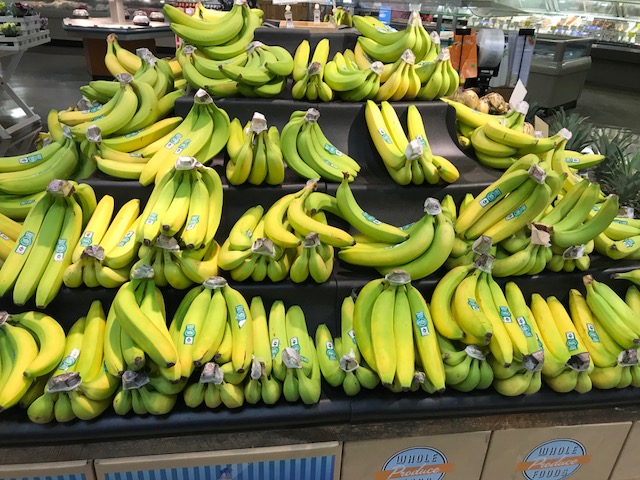
Bananas are picked when they are only 75 percent ripe to prevent them from splitting open during shipping. As bananas ripen they gives off ethylene gas. This gas is such a powerful component of the ripening process that it can be used to ripen other produce, such as tomatoes, if placed in a sealed container with bananas.
Green bananas are higher in starch than yellow bananas. Yellow bananas, by contrast, are higher in natural sugars such as sucrose, glucose and fructose. This is because the ripening process converts the banana’s starch into sugar. The type of starch contained in green bananas is resistant starch, which makes you feel fuller and helps you burn fat more quickly. Drawbacks of green bananas include stronger taste and waxy texture. Green bananas contain proteins that limit the body’s ability to digest complex carbohydrates.