
Slime Molds
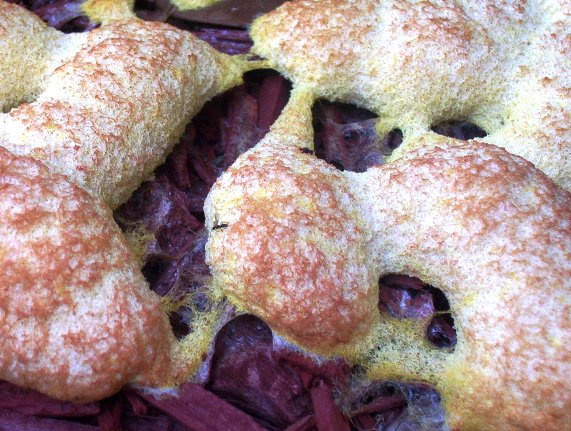
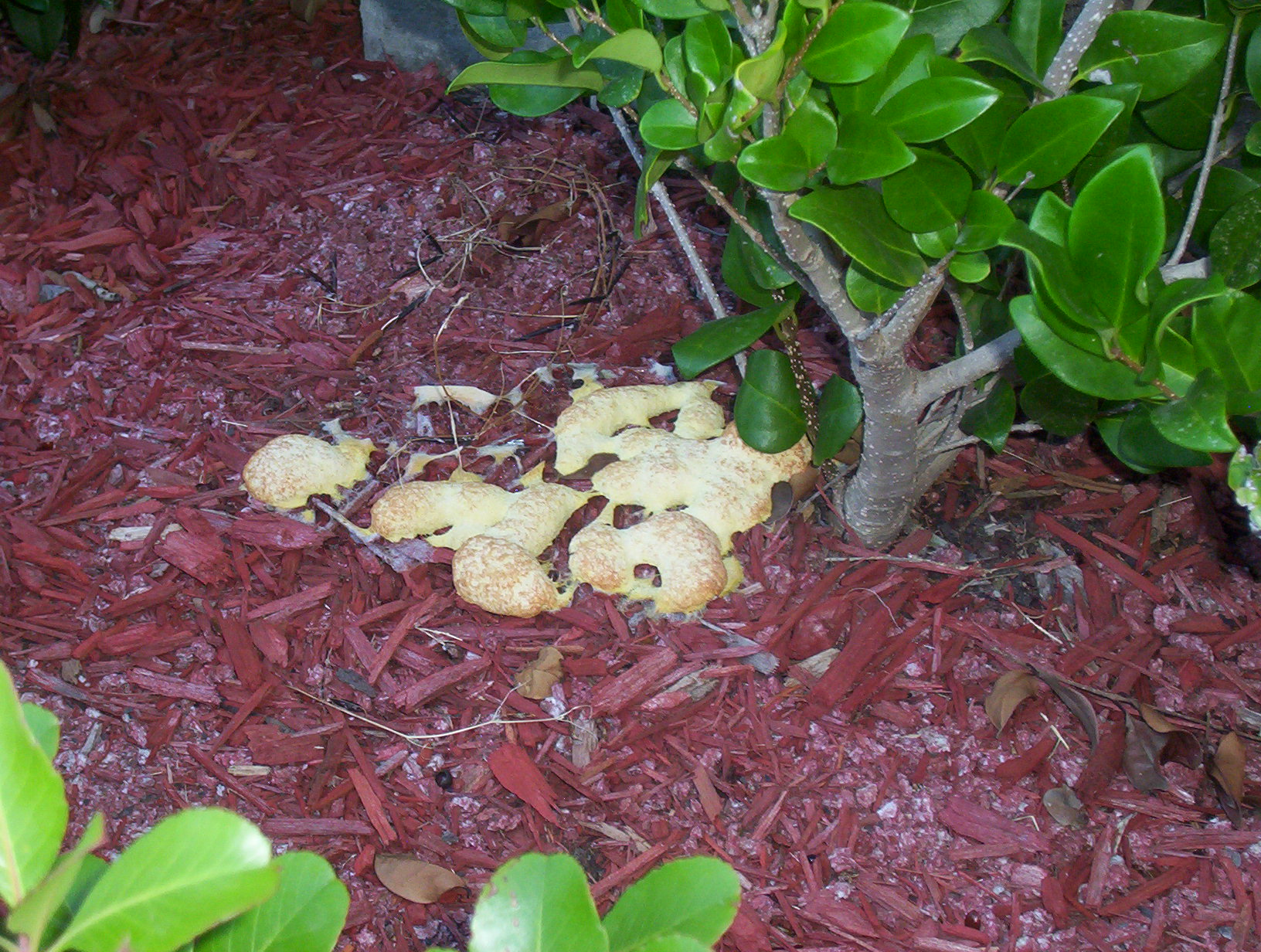
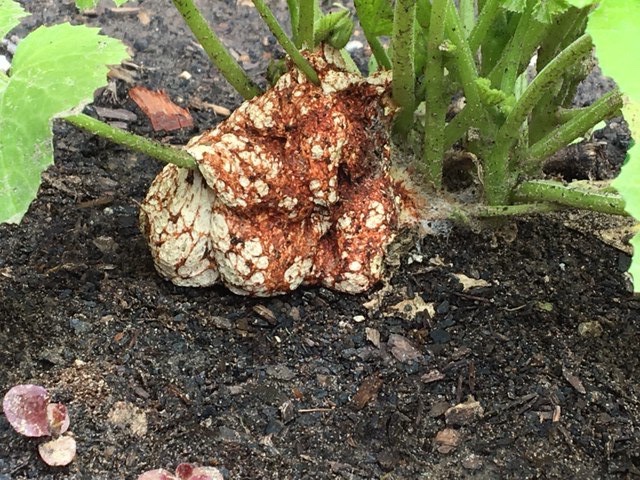
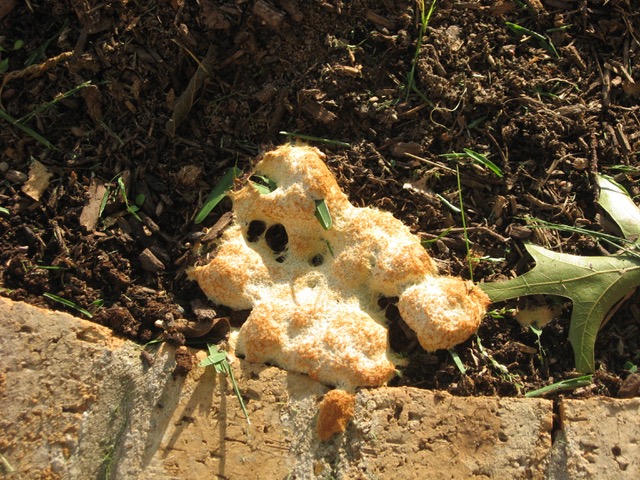
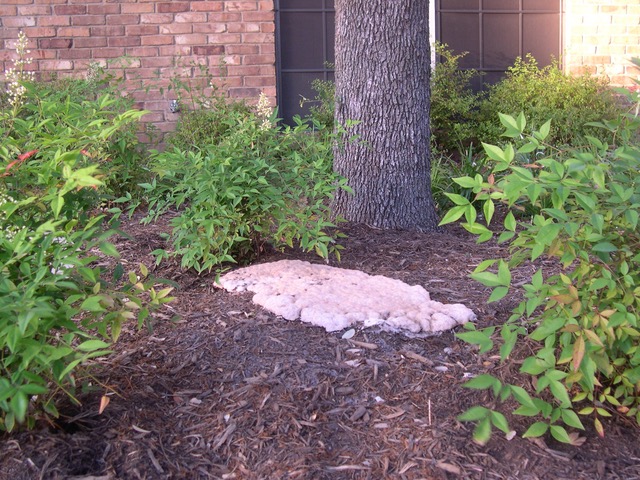
This growth is the fruiting part of a benign fungus that is breaking down dead wood or organic mulch
However, it is probably not really a fungus (though it used to be scientifically grouped that way) but now identified as a separate kingdom. This growth that often looks like animal vomit is slime mold. It usually does hurt plants unless it completely covers the foliage.
Slime molds will cover mulch or some above-ground plants with a gray, black, tan, white, red or yellow mass. There can be tiny round red or black balls scattered over the plant. If you rub these balls between your fingers, a minute sooty-like powder will explode.
Some slime molds in turf grasses look like black or gray ash and will easily rub off on shoes, socks and pants.
You can do nothing, or you can spray with garlic or cornmeal tea for control. Dusting dry or horticultural cornmeal will also help. You can also kill it by breaking it up mechanically with a cultivating tool or spraying with a rounded tablespoon of baking soda per gallon of water or even better Garrett Juice. Organic stores may have a product called potassium bicarbonate that will also work. Use it at the same rate.
From Wikipedia:
Slime molds were formerly classified as fungi but are no longer considered part of that kingdom.[2] Although not forming a single monophyletic clade, they are grouped within the paraphyletic group, Protista.
From DifferenceBetween.com, see The difference between fungi and slime molds:
The key difference between slime molds and fungi is their cell wall composition. Slime molds have a cell wall composed of cellulose while fungi have a cell wall composed of chitin.
Slime molds belong to the Kingdom Protista, and they are also called fungus-like protista. In contrast, fungi are true organisms belonging to the Kingdom Fungi. Both these organisms produce sporangia; therefore, most people are unable to identify the difference between slime molds and fungi.
By the way, use something other than that horrible chemically-dyed mulch. Shredded native cedar is the best choice.