

How To Remove Grass to Start a Garden
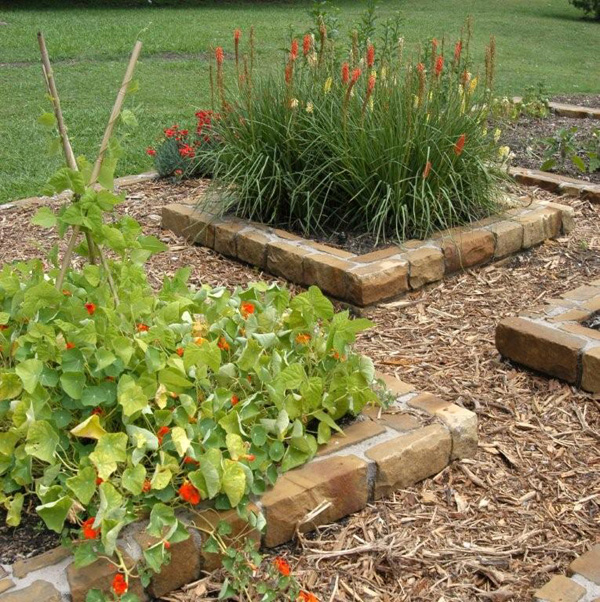
Excellent beds at the Texas Discovery Gardens. Natural stone walls and native mulch for the walks.
This question is asked quite frequently in incoming questions to my website. Here is the plan:
Remove the existing grass by scraping it away to depth of 2″. It can be done by hand, but it’s best to have a contractor do it with a sod cutter.
Do not till before removing the sod or there will be a huge weed problem forever. Tilling first drives the stems of the grass down into the ground, and the stems are the reproductive part of the grass.
Another method is to solarize the existing grass. Wet the area and cover with clear plastic tucked in securely around the edges. For best results, redo the entire process after about three weeks. Even in this case, the dead grass stubble should be raked off before adding the amendments.
Next, add the following amendments and till into the native soil to a depth of 6″ – 8″:
- 6″ of compost
- 1 – 2″ of expanded shale
- lava sand at 100 lbs. per 1000 square feet
- greensand at 40 lbs. per 1000 square feet
- alfalfa meal at 20 lbs. per 1000 square feet
- dry molasses at 20 lbs. per 1000 square feet
- horticultural cornmeal at 20 lbs. per 1000 square feet
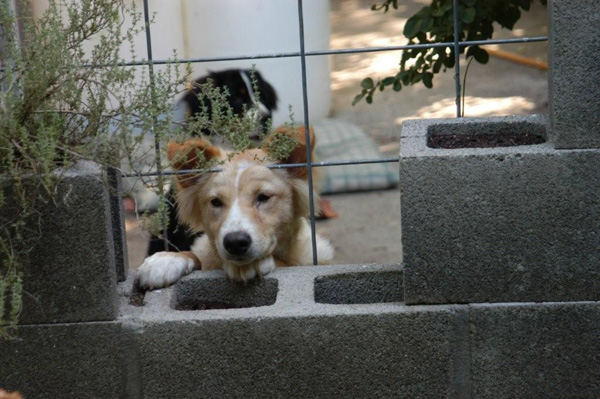
Cinder block walls have many uses.
Also, I do not recommend using wood for retaining walls. If there are not enough toxic chemicals to keep the wood from rotting, it will rot and have to be redone. If enough toxic chemicals exist to prevent rotting, the site and your vegetables and herbs will be toxic. Concrete or real stone works better, lasts forever and is non-toxic. Cinder blocks are the most economical. They can also be moved if the bed shape or size needs to be changed.
Naturally yours,

Howard Garrett