

Palm Trees – Newsletter
PALM TREES – COLD HARDY CHOICES
The top palm choices for cold hardiness are the windmill palm and the needle palm. These palms suffer little to no freeze damage in much of the country and rarely if ever need wrapping other than protection in the winter. There are some others that are pretty good. Here’s a rundown of the cold hardy palms. Click on each name for more information about each palm.
The best choices:
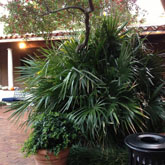 |
Needle palm (Rhapidophyllum hystrix). A trunkless palm that looks more like a shrub; cold-hardy to -10 degrees. |
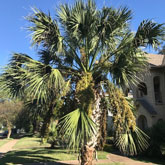 |
Texas sabal palm (Sabal texana). A slow-growing palm with spineless leaf stems; cold-hardy to 10 degrees. |
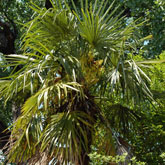 |
Windmill palm (Trachycarpus fortunei). Also called Chinese windmill palm, it is a relatively slow-growing, small, tough palm with dark green foliage; cold-hardy to 5 degrees. It is tough and easy to grow but has a puny trunk. |
Second best choices:
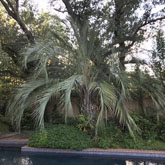 |
Pindo palm (Butia capitata). A beautiful blue-green palm that is cold-hardy to between 12 and 15 degrees. This selection made the second-choice list because some specimens came through the harsh winter just fine. |
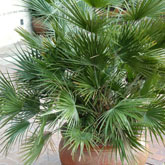 |
Mediterranean fan palm (Chamaerops humilis). Cold-hardy to 15 degrees. It is a nice, small palm that had no problems in protected spots but had significant cosmetic damage in some gardens. |
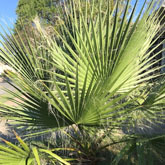 |
California fan palm (Washingtonia filifera). California fan palm is cold-hardy to 15 degrees. This palm is superior to the commonly sold Mexican fan palm (W. robusta) that is cold-hardy to only 18 degrees. Mexican and California fan palms look similar; so check the label before buying one. |