
Accessible Gardening

Raised bed design from Valley Vegetables in California
The benefits of gardening are indisputable, and when a disabled gardener gets improved access to their garden spot it helps foster mobility and independence, along with the health aspects of time spent outdoors and a feeling of purpose and accomplishment. Who doesn’t love to harvest their own vegetables?
We get questions on the Dirt Doctor social media about how to set up gardens for those with access issues. Whether it’s for wheelchair or walker access or a response to arthritis making getting up and down more difficult, there are many possible answers.
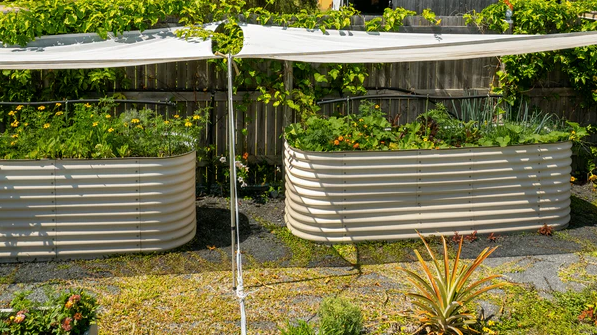
Shade cloth over raised beds, photo from several vendors |
Before we head any further down this gardening path, the most important thing to keep in mind about gardening with containers and elevated boxes is that the summer heat in North Texas will dry them out in a hurry, so part of the area design needs to include easy access to water and adequate shade to protect the sides of the containers and the plants themselves.
This question came in recently: “My husband is dealing with recovering from a broken hip at 87 years. He still wants to garden so we’re going to try some grow pots on a table outdoors. Any suggestions that will help us?” They’ve started by putting fabric smart pots on a table for easy access.
When setting up accessible gardening, the sky is the limit. The basics required are the structures or settings for containers to hold the soil and plants, along with ergonomic tools, easy access to water, and comfort features such as shade (for the garden and the gardeners) and extra seating.
This library topic was created to answer the above question and required some research because when interviewed about this topic, Howard said “I like to put everything in the ground,” then noted how hard the summer heat is on potted plants.

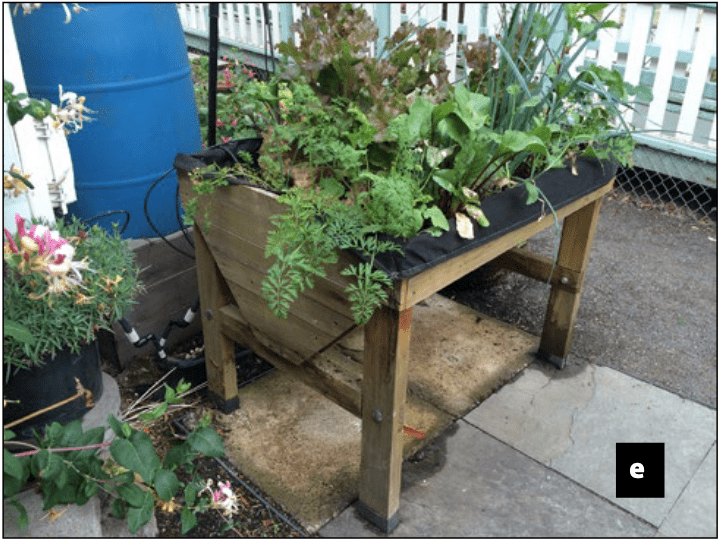
Examples of elevated beds that can be ordered as kits to assemble at home.
Left photo by Maggie Dwyer, right photo from Oregon State U. Extension.
A review of some of the online literature offers a few tips:
1. A portion of one This Old House episode shows how to make a very sturdy large raised bed made of wood beams. It’s robust and expensive in a large yard, but a great answer to putting in a durable garden where there is a long-term need for this kind of access.
2. A company in California called Valley Vegetables specializes in wheelchair accessible gardening structures, of wood and metal, but smaller in size and the amount of space necessary to set them up. Their contact information is available for those in the California region, and for everyone else, their site offers some great ideas. See the photo galleries.
3. YouTube video from Graying With Grace. Consider stacking old pallets or concrete pavers or cinderblocks or low sturdy outdoor tables to create raised areas where pots or gardening boxes or things as simple as plastic Rubbermaid bins with drain holes drilled in them can be placed so they are reachable from a wheelchair or via a walker or other assistive device. Measure the area so a wheelchair or walker can easily fit into and around the space, have the raised working surface around 30″ off the ground, and make sure the garden area is stable. This video gives details for constructing safe and durable access to and around raised beds. They also suggest posts along the bed and using shade cloth to protect both the garden and the gardeners.
When building boxes of wood, plastic liners will help extend the life of the raised bed, but adequate drainage must be engineered into the box to keep the soil at a proper moisture level. When the garden is fully operating with soil, water, and full-sized plants, it will be quite heavy. Keep the areas narrow enough so that the entire thing is within arm’s reach from any side. L or U-shaped raised structures will tend to be more stable and accessible.
How deep should the soil in the beds or pots be? At least 12″, filled enough to allow plants to grow but not so full that water runs off of the containers when watering.
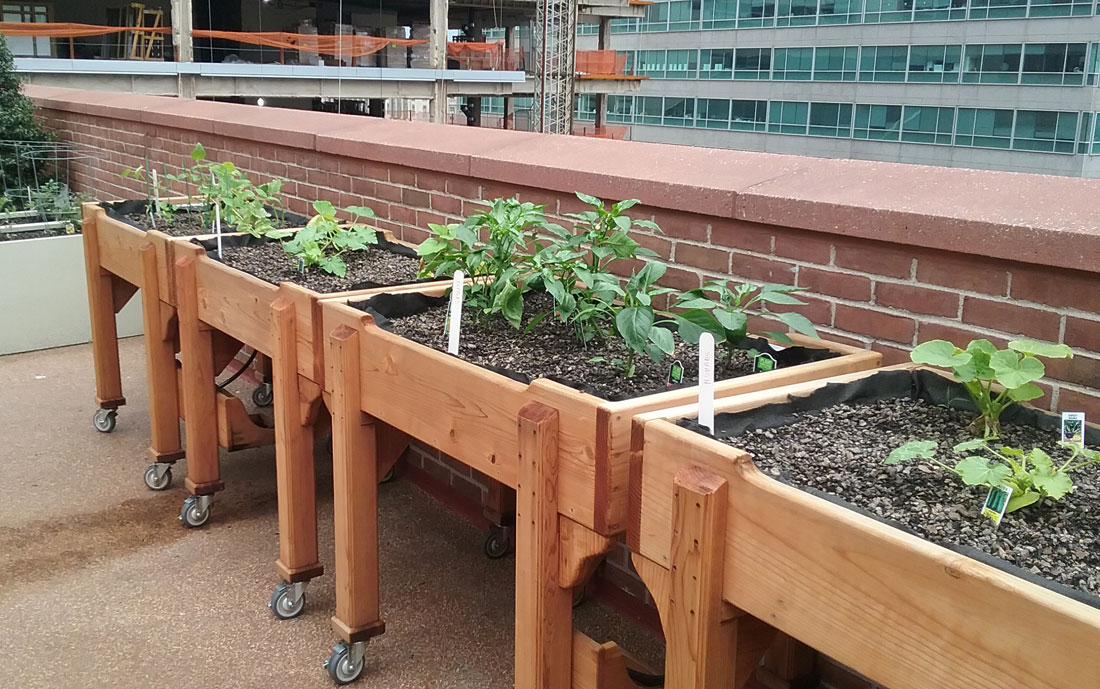
Accessible Gardens makes beds that can be moved indoors/outdoors or into shade
as needed
Dirt Doctor advice for containerized beds soil:
Use a mix of the native soil in your yard and add in the Dirt Doctor’s potting soil formula, resulting in a mix that is more lightweight than regular garden soil in order to keep the weight of the raised garden devices easier to move and dig in. Native soil has many benefits, starting with the healthy biological activity, but can be heavy to load into raised beds. Don’t use peat moss, it has anti-microbial qualities that harm the beneficial soil microbiome. The Dirt Doctor’s formula for potting soil is:
- 60% Compost (compost, humate, coconut fiber, coir, earthworm castings, coffee grounds, etc.)
- 30% Rock (lava sand, natural diatomaceous earth (DE), zeolite, granite, etc.)
- 10% Sugar (corn meal, dry molasses, wheat meal, etc.)
Other amendments that are beneficial in small amounts include greensand, beneficial microbes (bacteria and fungi) and organic fertilizers. For fertilization use fish meal, kelp meal and alfalfa meal. Garrett Juice and Garrett Juice Plus are also excellent fertilizers for plants in containers.
This Dirt Doctor library entry offers a starting place to build accessible gardening opportunities in your home. Plan ahead, and always keep in mind the safety features necessary and the individual requirements of your gardeners.

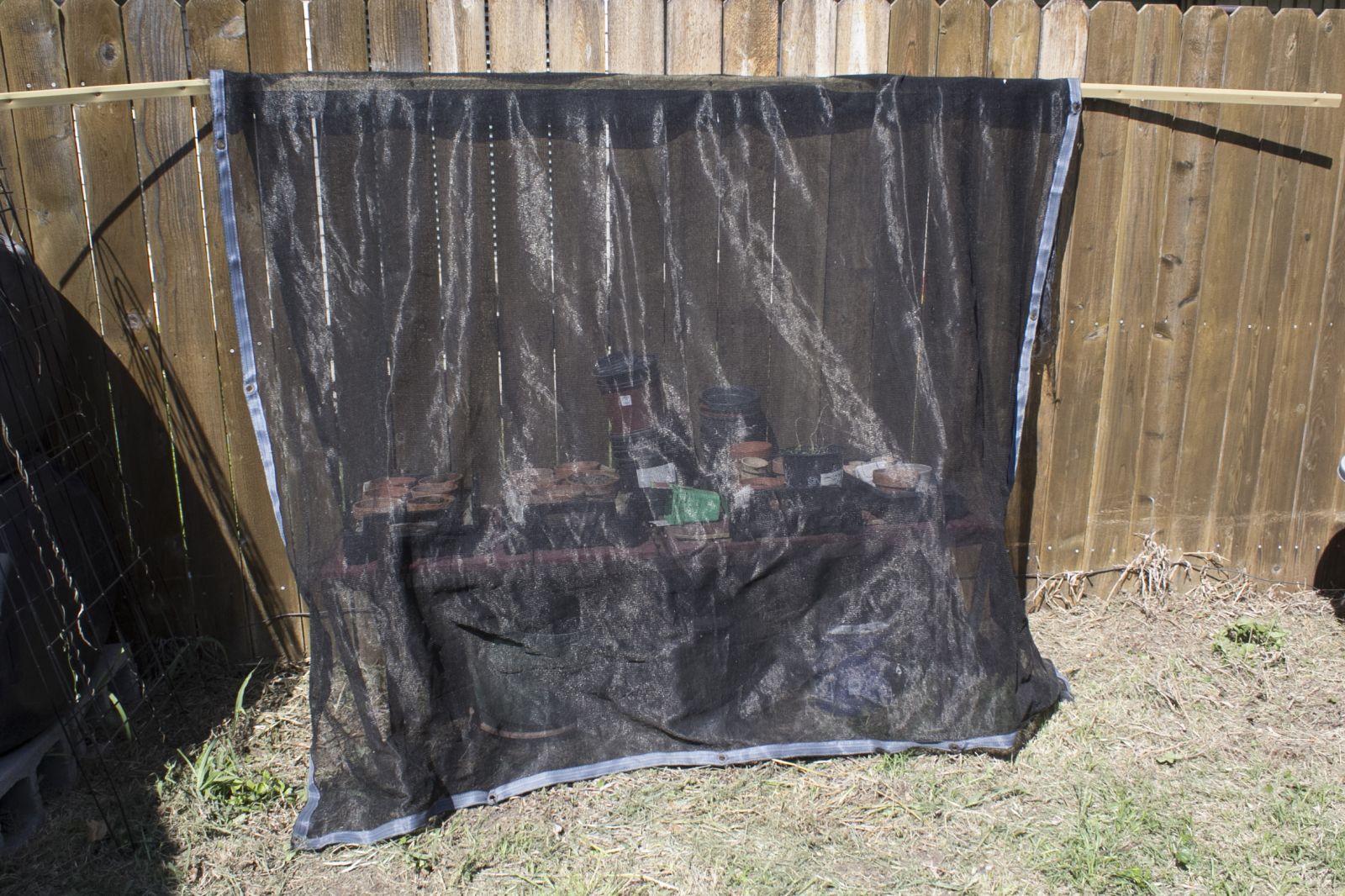
In Fort Worth: An informal potting table where small plants can grow in summer. The table is an upside-down firewood rack, the
surface is cedar planks, the shade cloth is a Harbor Freight tarp recycled from use over a patio, screwed onto the fence with leftover
trim from the patio cover. Nothing was purchased for this bench that is out of sight in a side yard. Photos by Maggie Dwyer

There are ideas for more elegant shaded elevated gardens found
on sites like Pinterest
Listener Louise Scudieri shared photos of her raised garden setup when this topic was posted on social media. It illustrates Howard Garrett’s suggestions, being tall beds on the ground instead of raised tables, so the soil and plants don’t dry out as fast. Ramps into the yard improve access.


Raised bed frames with shade where needed, narrow enough to reach from each side, and sturdy wide pavers
for chair stability. Photos by Louise Scudieri.
Places to find products and do more research:
Books recommended in the Graying With Grace video include The Lifelong Gardener by Toni Gattone; Gardening from a Wheelchair by Ben Elliott, and Accessible Gardening for People with Physical Disabilities by Janeen Adil.
VegTrug store on Amazon has several raised beds you can buy and assemble.
Vego Garden has modular raised beds to assemble. https://www.vegogarden.com/
Accessible Gardens includes products such as a rolling indoor/outdoor garden table.
For more information: https://extension.oregonstate.edu/catalog/pub/fs-270-raised-bed-gardening

Photos from Oregon St. U. Extension by Brooke Edmunds