
Organic Answers Column – February 5, 2025 – Tomato Cages
Cattle Panels & Concrete Wire for Plant Growing Cages

Photo submitted by Dirt Doctor listener.
Information about supporting tomatoes plants (and other climbing vegetables and fruits) in the garden is scattered throughout the Dirt Doctor site, including descriptions of various types of tomato cages. The “garden variety” cone-shaped wire cages sold in nurseries and hardware stores are handy to put in when the plants are first put out, but before long they are totally surrounded by and toppled over by the weight of mature tomato plants or other climbing crops such as cucumbers and squash.
Resourceful gardeners have many other methods of keeping the plants upright to keep limbs and ripening crops off of the ground, including teepee shaped structures and larger commercial versions of the traditional tomato cage. The type of supporting cage that is truly up to the job are the very large ones built at home using concrete reinforcing wire, and the really large ones using robust cattle panels. Some of the indeterminate tomato plants (they flower and produce fruit all season) can grow very large. SuperFantastic and Celebrity are just two of them, that if not supported by an enclosure can form a large hedge by the end of the growing season. Even cherry and grape variety tomatoes benefit from being kept up in enclosures. Keeping the fruit off of the ground means it is less likely to be attacked by rodents and other ground-level garden pests.
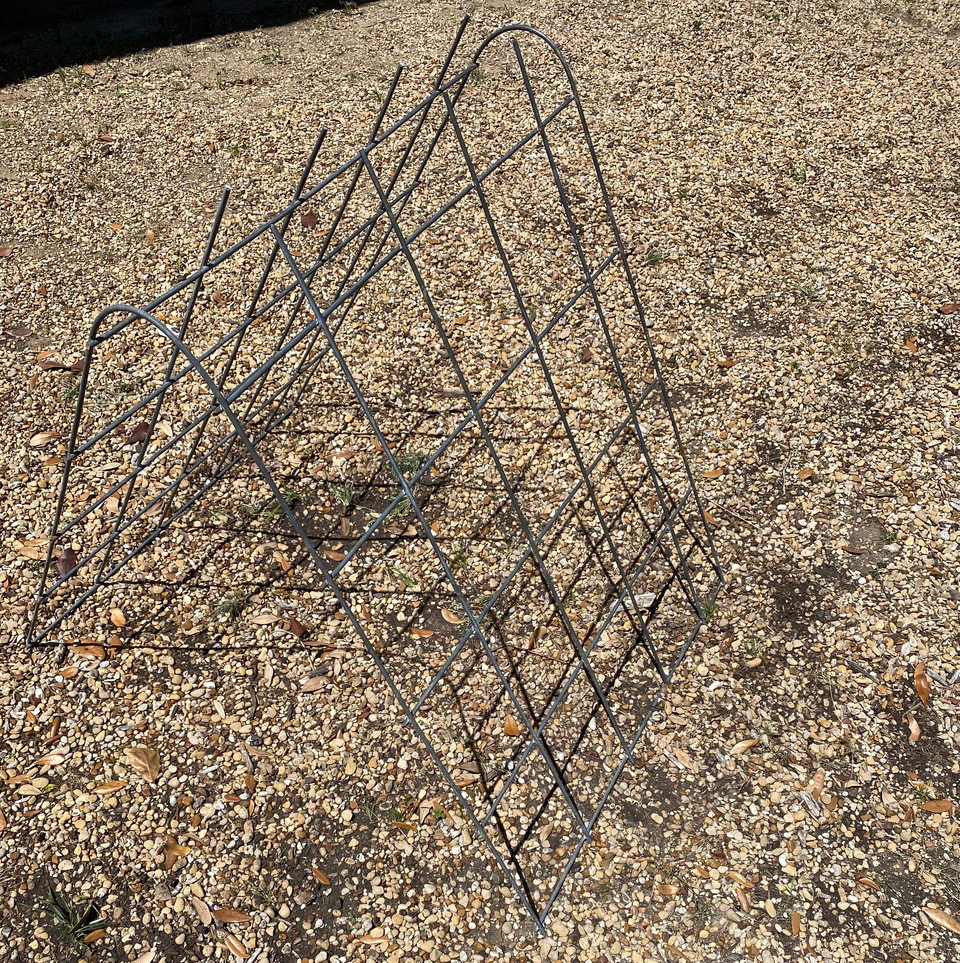

Cattle panels bent and trimmed to place over crops in the garden
Cattle panels come in many sizes, anywhere from eight to 16 feet long, usually around four feet wide, and the heavy-gauge wire grid is typically four to six inch square or rectangle. They are sold in many places, nurseries, feed stores, specialized fencing businesses, and online. They come in large panels or can be sold in huge rolls of expensive welded wire, and are sometimes called “utility panels.” Shop carefully and you may need help having them delivered.

Howard securing floating row cover over his homemade tomato cages
One of the oldest photos of Howard Garrett that accompanies text about using floating row cover shows a surreal glowing object in a night-time photo. This was a cattle panel in place that was completely wrapped with floating row cover to protect the tomatoes inside the cage. Many of the larger varieties of panels can be bent into squares or teepee shapes that can be put over two or three or four plants. Buy enough of the material, whether concrete reinforcing wire or welded panels to make at least an 18″ cylinder that is five feet tall.
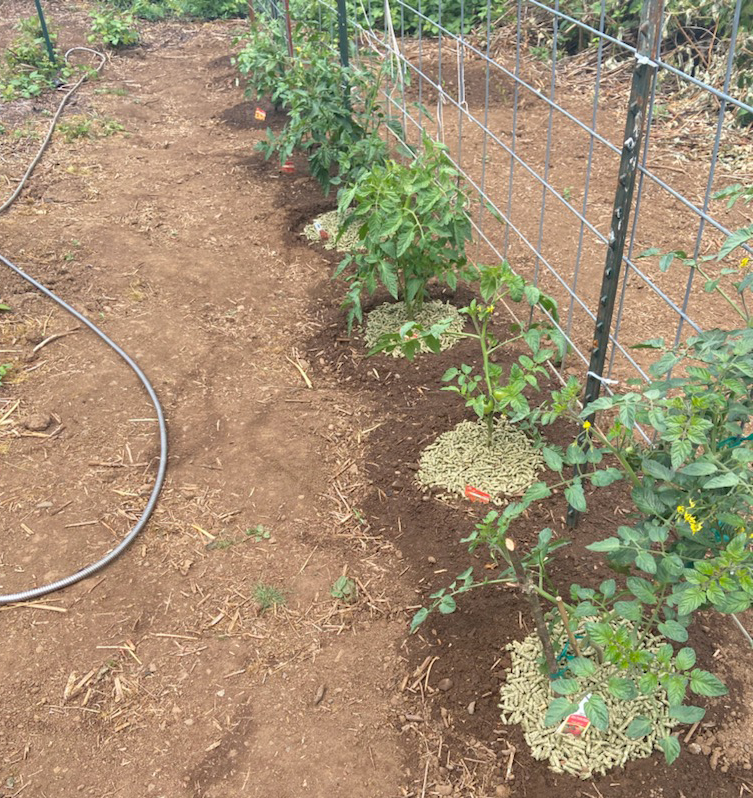

Tomato tags can go in the soil only to be lost sight of. Clip them to the cage instead.
The size of the trellis or cage or enclosure is entirely up to the gardener and the size of panel or roll of wire they choose. The beauty of these devices is that they are extremely durable and will work for many years. Use them to enclose tomatoes to keep fruit off of the ground or arch them over a raised bed to create a small greenhouse or to top with floating row cover to provide some shade in the hottest time of year. In early spring row cover over large cages can keep the wind from damaging tender plants.
These panels can be put up like fences with posts to allow large heavy vines to grow (e.g. for some of the large squash such as the popular Indian Long Squash and various gourds.)

Listeners have sent in photos of various ideas for creating trellises and cages for their vegetable gardens, and this is the kind of project where it’s easier to show photos than to try to describe them (the third paragraph above describing cattle panels is a case in point).
For more about specifically growing and supporting tomatoes, visit the Tomato newsletter and scroll down on that page for more about tomato structures.
