
Dallas Morning News – March 30, 2017
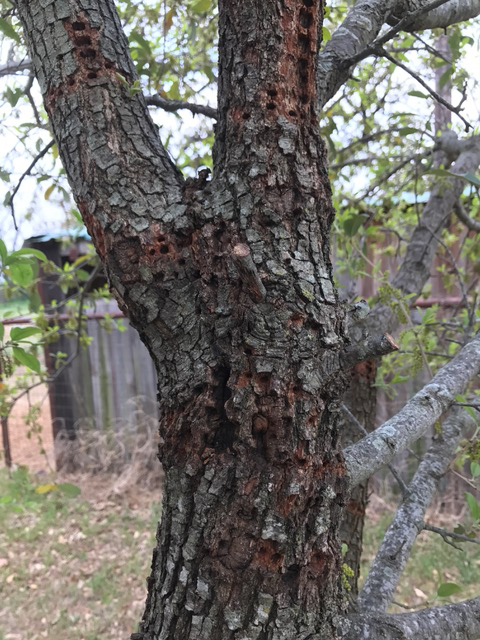
Q. Here is a picture of my oak tree that is in trouble. It has been growing great with no problems until now. I found this problem today. Please help me. Thanks. K. L. Dallas, TX
A. The culprit is the sapsucker, a pretty woodpecker that drills holes in rows, columns or rings around the trunks or limbs of your trees. They really like young live oaks but will attack many tree species. Do they hurt anything? You bet they do. The damage can kill limbs or entire trunks. There is a solution – help get the tree out of stress. Relieve the tree’s stress by applying the Sick Tree Treatment with the first and most important step being the dramatic exposure of the root flare. Here’s more detailed info for you.
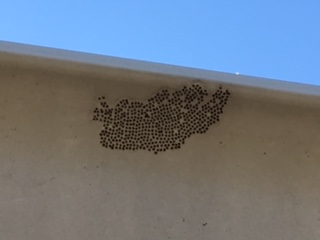
Q. Howard, I saw these under my gutter. Any idea what they are? A. B. Dallas, TX
A. Insect eggs for sure and probably some kind of small moth. Not beneficial so OK to smash and kill. You could rear them out and see for sure. Scrape some of the eggs off into a glass or plastic cup and cover with a perforated lid. Let us know what hatches.

Q. This thistle is in a couple of places on our property in Navarro County. We mowed over it after taking the picture. It looked like it was creating a pod for the body snatchers. C. R. Navarro Co., TX
A. That pretty weed is called variegated thistle or blessed thistle. It’s from Tasmania so how the heck did you get it in your yard? It has some herbal value, as many wild plants do, but you probably don’t want to encourage it or plant any more. I’d remove it if necessary with a hoe or mattox.
Here’s a good site with more about the plant
and I will add it to our site.
Q. You recently indicated that to treat nutgrass, 3% hydrogen peroxide would help with 1/2 cup molasses per gallon of water but I could find nowhere where a quantity was given for the hydrogen peroxide. What quantity of hydrogen peroxide is mixed with the 1/2 cup liquid molasses in a gallon of water to treat nutgrass? N. B. Dallas, TX
A. Add 1/2 cup of liquid molasses per gallon of the 3% grocery store hydrogen peroxide. Drench the nutsedge thoroughly.
Q. I have been using Garrett Juice for my lawn. What dye could I use to help me direct my spray to areas I have not already sprayed. To avoid overspraying. J. B. San Antonio, TX
A. I never worry about that because precise coverage is not critical with the organic sprays. Overlapping a bit is probably the best policy. Using a little more in some spots than others is no problem at all. The two organic materials that could be added to show exactly where the spraying has been done are kaolin clay and natural diatomaceous earth. Both would leave a particle film on the plants that is easily seen and both would provide beneficial trace minerals.
Q. I have removed some soil from the base of my tree. Do I need more. I’m afraid of hurting the trees. M. H. Dallas, TX
A. The tree is still too deep. Go ahead and remove more soil from the flare and don’t worry about hurting the tree. Just be careful about damaging the flare as you do the work. The result will be dramatic growth this next growing system.
Q. Howard suggests red pepper, but I have found that Irish Spring soap deters mice and rats. They apparently don’t like the smell, and it’s cheap and safer than red pepper. Throw a few bars in the attic and garage, and even the car if they are a problem there. D. Dallas, TX
A. Thanks for the tip. We’ll give it a try.
Q. Have you ever soaked the cornmeal in water for a few days and use the liquid as a spray? B.Y. Dallas, TX
A. Yes indeed! What I do is put about a cup of whole ground cornmeal in a 5 gallon bucket of water and let it sit an hour or two. Some argue that a longer soaking makes it even better and they may be right. There would definitely be more biological activity created. Stir it well, strain out the solids and spray away for the control of most plant diseases. The creation and stimulation of the beneficial fungus trichoderma is the main thing going on but there are other beneficial microbes at work as well.

Q. Thanks for all the good information you provide. This is our raised garden using cinder blocks as you recommend. K.H. Dallas, TX
A. Thanks for the shot and congrats. Your garden looks great. The blocks are a much better choice than wood for most homeowners.
Q. Our grass is dying under our oak tree. Do not know why. What can we do? Please help. Thank you. L. O. Dallas, TX
A. That’s a common problem. Turf needs sun and will slowly die away as the light decreases and the root competition increases. To grow grass after this condition develops, you have to remove trees. Trimming and lifting might help for a short time but not long term. I would keep the trees and plant shade loving groundcovers and perennials such as wood fern and holly fern that can take the shade. The best groundcovers for shade include ophiopogon, liriope, English ivy, Persian ivy, Asian jasmine and horseherb.
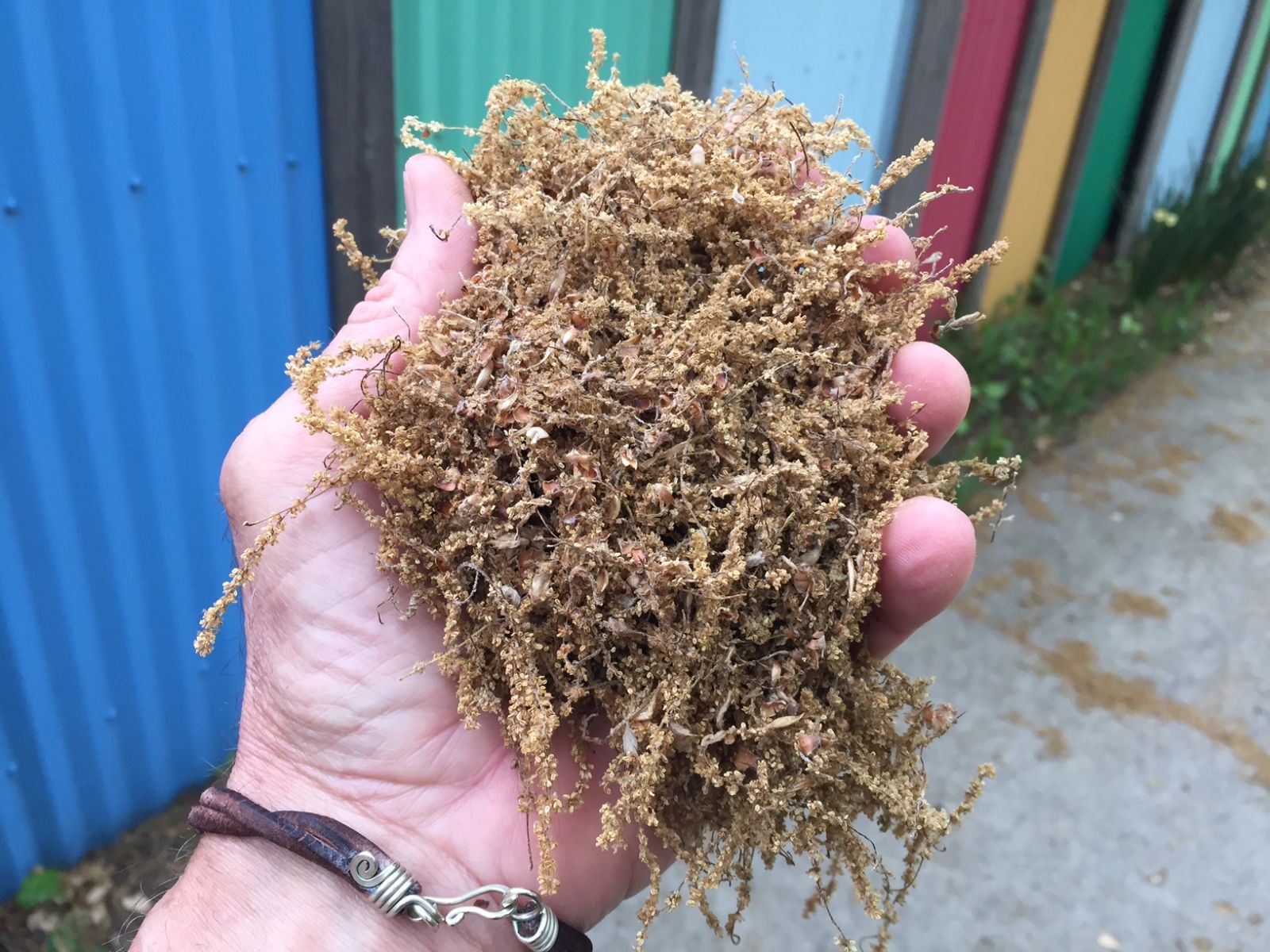
Q. I have noticed many of my neighbors raking up the oak pollen/droppings and bagging them. I want to collect those bags and add the pollen to my compost as I would think this stuff is good for use as an organic fertilizer. Am I wrong on this? A. B. Dallas, TX
A. It’s a great material to use as mulch or in the compost pile. Having it hauled to the landfill should be against the law. Help yourself to a wonderful asset. Their loss.