
Dallas Morning News – May 4, 2017
Q: To distribute beneficial nematodes do I put them in a five-gallon bucket full or half full of water and stir them around a bit first? Everything I’ve been reading says that I need to add food coloring in order to know were I have sprayed? If so, is there any color to avoid that could harm them? And is there something to help with mosquitoes, gnats and horse flies? It looked like a small dome that you purée liquid into. Would something like nematodes help with mosquitoes, gnats, horse flies and such? E. B. Midlothian, TX
A: Add as much water as necessary for each application. Dye isn’t needed. Even coverage is not critical. I usually overlap or even spray some areas a second time. The other thing I often do is mix portions of the nematodes in a big watering can, then just walk around slosh the nematode mixture out. The trap will help with flies but Bti products should be used for mosquitoes and fungus gnats. Nematodes help control fleas, ticks, termites, grubs, fire ants and al other pests that have at least one of their life cycles in the soil.
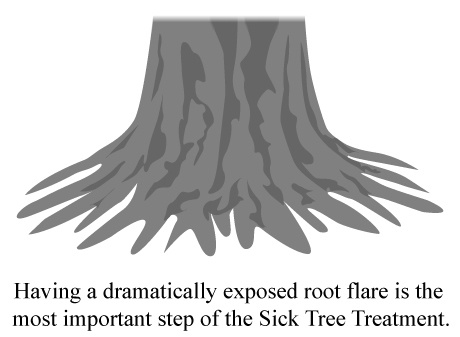
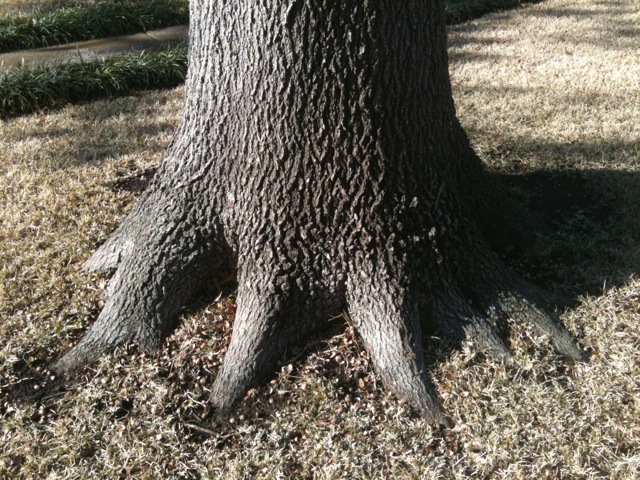
Q: How do I find something that contains the fatty acids Howard is always talking about? Where can I find a picture of a proper tree trunk flare? T. H. Dallas, TX
A: Here’s your answer on fatty acids. We’ll put this in the Library under
Soaps, Insecticidal Soaps and Fatty Acid Products
. There’s lots of root flare and trunk flare information on the site but we will cross reference under tree flare and tree trunk flare as well. Thanks for the head’s up. Insecticidal soap is sold commercially for aphid and other small insect pest control. These products may not always use the word soap, but they will list “potassium salts of fatty acids” or “potassium laurate” as the active ingredient. Certain types of household soaps (not synthetic detergents) are also suitable for pest control. Potassium-based soaps can be soft or liquid. Insecticidal soap is most effective if it is dissolved in soft water, since the fatty acids in soap tend to precipitate in hard water, thereby reducing the efficacy.
Q: We have huge ant problems but don’t want to use any toxic products. Is there a product or method you can recommend? Richardson, TX
A: It would be worth trying dry molasses as a repellent. Broadcast it on the entire site at 20 lbs. per 1000 sq. ft. Next – with that many ants, I’d try the mound drench formula (2 oz. of orange oil into a gallon of Garrett Juice). If that doesn’t work, use one of the spinosad products. It will kill them for sure.
Q: I have five-year-old 10′ burr oak tree that I have exposed the root flare. Do I need to expose it even more? There’s a 15 mile per hour wind blowing today, and you can see the base moving when the wind blows. Have I exposed too much? When is too much? N. A., Dallas, TX
A: Good start but more is needed. Because the tree is loose in the ground already, you might have to stake it for a while until the flare and roots expand and can hold the tree firmly.


Q: This little beast is overtaking my lawn, and other than hand pulling it, I’m not sure what can be done. My property is total organic going on 20 years now and following your advice. G. C. Arlington, TX
A: Looks like it might be roadside aster. The product Agralawn Crabgrass Killer will probably kill it without hurting the turf. I’d apply it and then a 1/2″ application of compost.
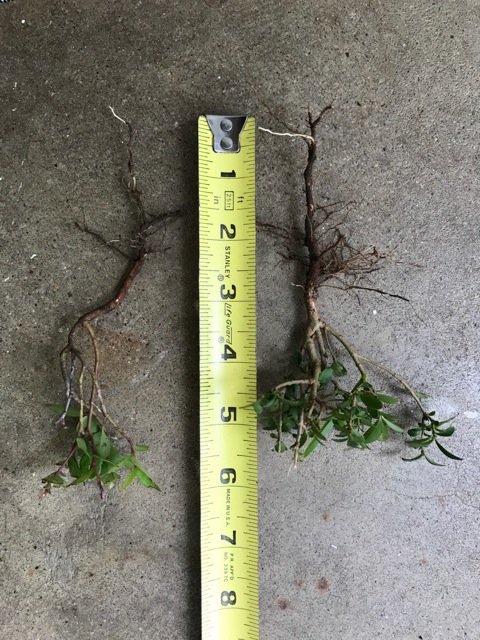
Q: Would you tell me the name of this invasive vine that has troubled us for the past five or six years? The vine itself is rather attractive with bright green leaves and small white flowers that develop into small red berries, but it would take over the yard, trees, and shrubs if we let it. We battle it constantly during the growing season especially in the privacy hedges around our back yard. Sometimes we can pull the vine out of the shrubs and from under the grass and there will be an underground stem as thick as a pinky finger with roots and shoots all along it. Mowing the lawn keeps the vine under control in the grass but those long, thick stems seem to crisscross all over our property underground. I have tried spraying the vine leaves with the white vinegar/orange oil/dish soap herbicide solution that you recommend for other weeds but it does not work on this vine. My neighbor said that even Round-Up won’t touch it. Do you have any suggestions for getting rid of it? We do follow your organic program for our yard and everything seems rather healthy, so I don’t think that it is here because of sick soil. Many thanks. J. J. Irving, TX
A: This is also the most troublesome weed in the gardens at our office. It’s called Carolina snailseed. Ours was here when we bought the place and we’ve been fighting it ever since. The key to control is physical removal and not letting it get a foothold. I chop it out of the ground with a hand tool like an adze. Consistency is the key because this plant will grow back from any pieces of the underground stems that are not removed. Wish I had a magic bullet but I don’t. Here’s the information about this weed vine –
. Here’s what the plant looks like when loaded with fruit. You never want to let it get to this point because the birds will spread the seeds and they germinate at about 100%.

