
Dallas Morning News – June 15, 2017
Good and Bad Trees
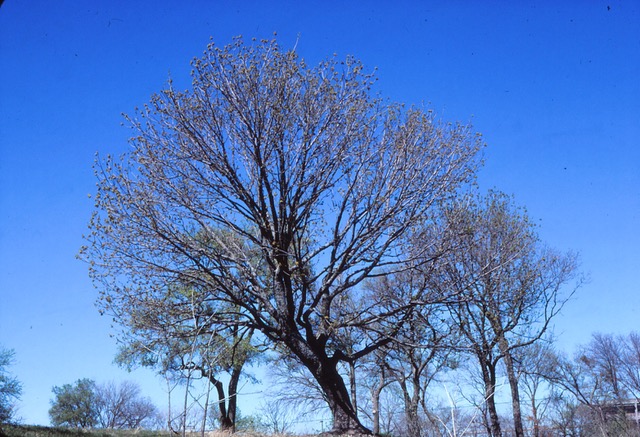
Graceful structure of Texas ash in winter.
Years before I became a landscape architect and arborist my love affair with trees began. As a kid I loved to climb trees and my favorite two were mimosa and catalpa. Liked them best because the bark was smooth and easy on the skin. I went to school at a little college in Lubbock and it was during my trips back home to Pittsburg, Texas that it hit me how cool trees big beautiful green trees are.
My first horticulture course was the start of my rebellion to go along with what I was told. My teacher, while explaining various trees, went on a rant about the terrible tree catalpa. Little did he know that I was a catalpa tree expert. My first smoking experience was a catalpa bean pod. It was during these early years that I heard how terrible ash trees are. Well, some are and some aren’t. Let’s review.
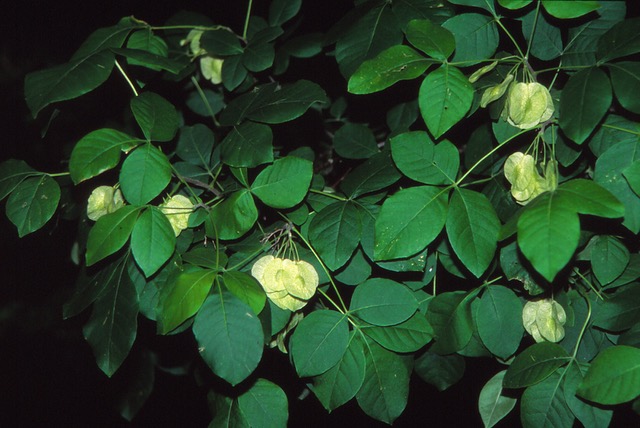
Intersting foliage and seed pods of wafer ash.
Arizona ash, found naturally in canyon and riverbanks, is a terrible tree choice for homeowners. Like cottonwoods they are appropriate to their native sites but no good at home. The reason? They don’t live long enough and have several built in problems. Some of my contemporaries agree with that assessment but make a serious mistake by saying that all ash trees are bad. I agree with them that Arizona ash and the bottomland green ash are not good landscape trees. But – there are some excellent ash trees that should be promoted and used more often.
Top of the good ash list is Texas ash (
Fraxinus texensis
). It is tolerant of most soils, relatively pest free, drought tolerant, has beautiful fall color that ranges from yellow to deep reds and is a strikingly graceful and beautiful tree. It also lives a long time.

Multiple fall foliage colors of Texas ash.
The other good ash trees are wafer ash, prickly ash and fragrant ash. Wafer ash (
Ptelea trifoliate
), also called hoptree, is an excellent small tree for use from Texas to Chicago. Prickly ash or toothache tree (
Zanthoxylum clava-herculis
) is another small deciduous tree normally found along hedgerows, in thickets and on edges of forests in the central and eastern portion of the country. It is host to the wonderful giant swallowtail butterfly.

Foliage of the giant swallowtail butterfly’s favorite prickly ash.
Fragrant ash (
Fraxinus cuspidata
) is a true ash and a terrific tree that grows from Texas to Nevada. It has strongly fragrant white flowers that resemble those of the fringe tree (
Chionanthus spp
). These are all worth trying and there’s more detailed information on dirtdoctor.com.

Foliage and the sweet smelling flowers of the beautiful fragrant ash.