
Organic Answers Column – November 29, 2023 – Christmas trees
How to Choose A Live Christmas Tree
For those celebrating Christmas, it’s time for tree decisions. There are basically three choices for the holiday trees. 1) artificial trees, 2) cut trees and 3) living trees for planting outdoors after the holidays. There are pros and cons for each choice.
Artificial Christmas trees are just that – artificial. Out of convenience or due to allergies, some people decide to go this route. Today’s artificial trees look pretty realistic, and being able store the trees after the holidays and save them for use again in following years is definitely a benefit that some people enjoy.

Italian stone pine sold in big box stores as living Christmas trees.
Young trees have spiky spruce-like needles, perfect for a holiday tree.
Cut trees farms tend to get a bad rap as being anti-environmental, but that’s really not true. Cut trees primarily come from farms that grow trees just for the holiday purpose. They come in many sizes and species and as an agricultural product (versus trees grown for timber) they are pruned and trimmed for an extremely dense branch growth. There is not an environmental issue – except for the toxic chemicals used on many of the farms. Fraser fir and noble fir are the two most popular cut trees but other varieties include Douglas fir, Afghan (Eldarica) pine, Virginia pine, Leyland cypress, and Eastern red cedar. Cut trees can make quite a dent in your wallet each year and they require sturdy stands and daily water to keep them fresh. These trees are sometimes cut weeks or months ahead of the season, so choose carefully.
With the exception of Virginia pine and Douglas fir, all the trees mentioned above can be purchased as living trees and planted in the north Texas landscape after the holidays. Add to this list Italian Stone Pine, that at Christmas is typically only sold as small living trees. They are also for sale as larger specimen trees in nurseries, but the needles change and the trees are more gangly once they are several feet tall. Also for sale in a trimmed tree form is evergreen upright rosemary.
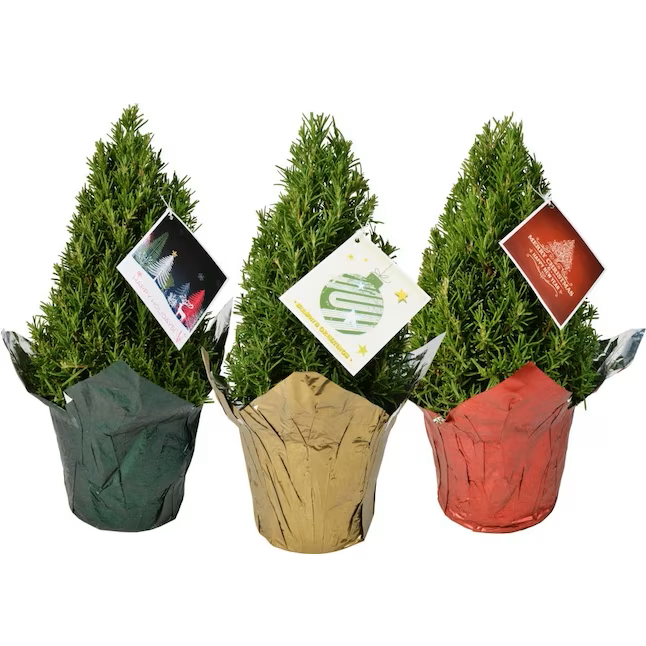
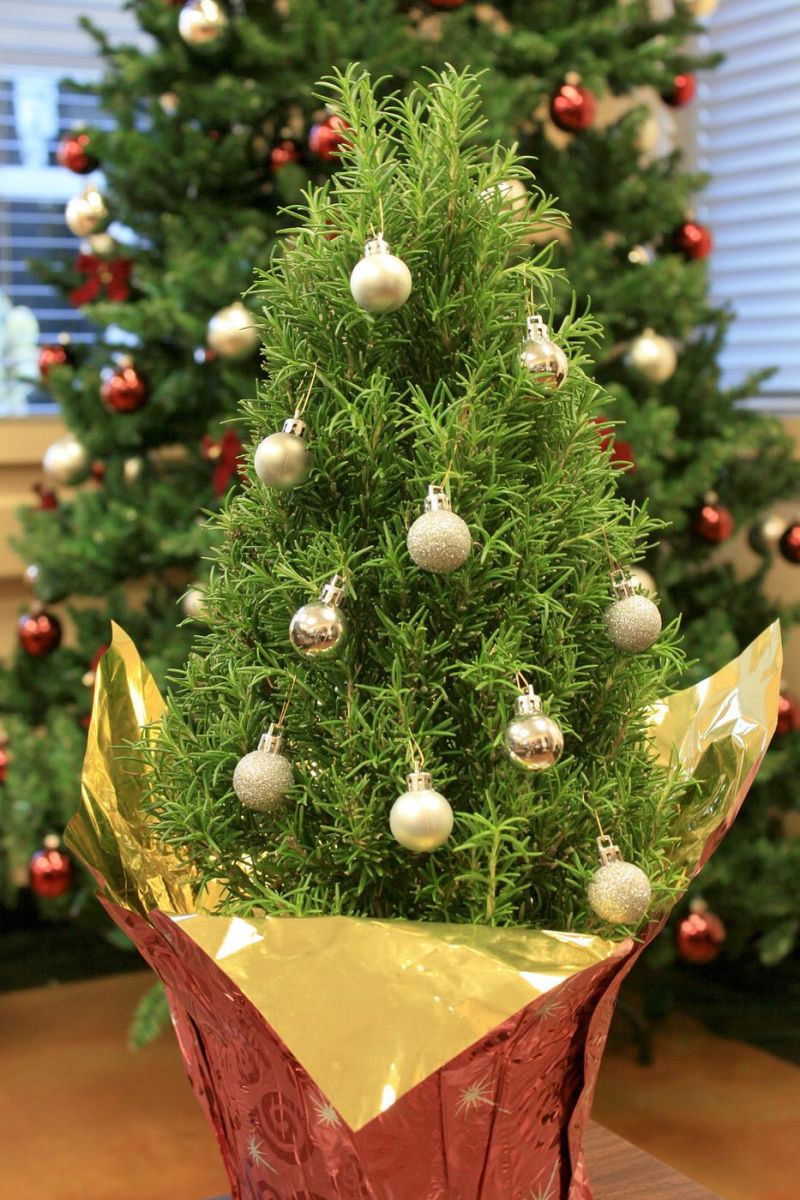
Rosemary is a woody shrub shaped for the holidays and is a great “living tree”
For a live Christmas tree, Leyland cypress is not on my good list to plant anymore. It is in serious trouble from a fungal disease and dying out in many areas. Eldarica pine is not much better; it should only be planted in arid conditions matching the its native region (the deserts of Afghanistan and SW Russia). During rainy periods, it can get in trouble from too much water here in North Texas – especially when being irrigated as well. It’s a much better choice for west Texas. For North Texas, there is a better tree.
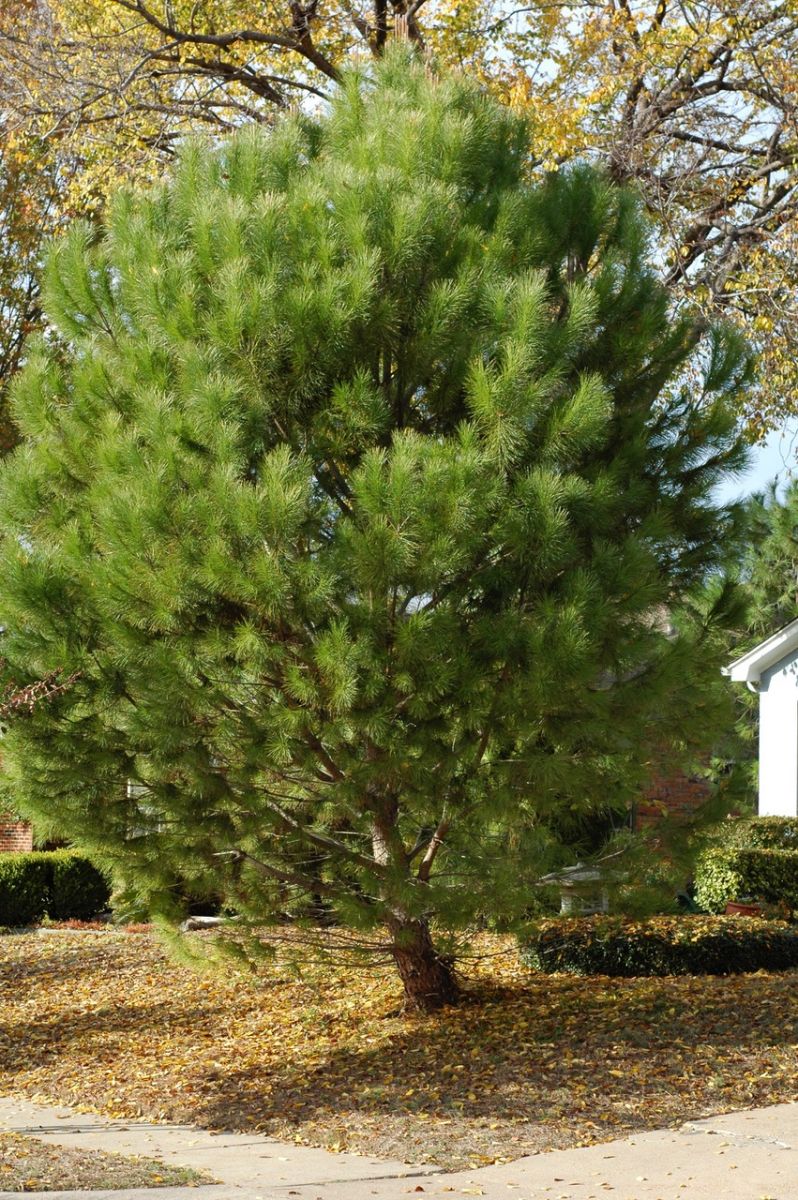
Italian Stone Pine a few years old: well-adapted to
North Texas yards. As the trees mature the leaves
change to long needles in bracts (seen here).
The very best choices for living trees to be planted in the North Texas landscape after Christmas are Eastern red cedar, Italian stone pine, and Rosemary. The native cedar is available in many sizes and smells great in the house. When planted outside, it can take sun or shade. Pollen causing allergies will not be a problem on the small trees, but some people could possibly be allergic to the aromatic fragrance of the foliage. Italian stone pine a good choice and will grow beautifully in all soils and most conditions here. Rosemary plants make terrific tabletop Christmas trees and can be moved to the herb garden, patio pot or the landscape bed after Christmas.
Remember to set up the living tree in the house just before Christmas and then move it outdoors immediately after removing the ornaments. The longer living trees of any kind are left inside, the weaker it will become and the harder to establish in the new outdoor home. Plant right away, or later in winter or early spring. (If you’re looking for more Italian stone pines to plant, they typically go on sale right after Christmas).
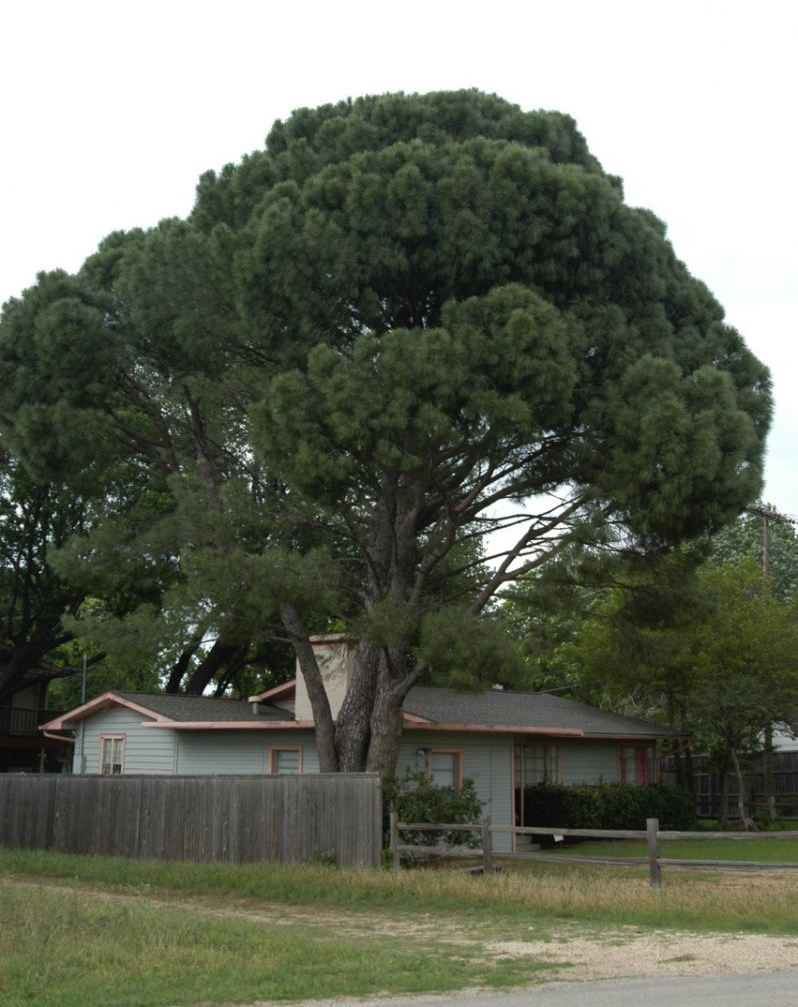
This mature Italian stone pine is in a North Texas yard. They
take on the “umbrella” look famous in Italian landscapes
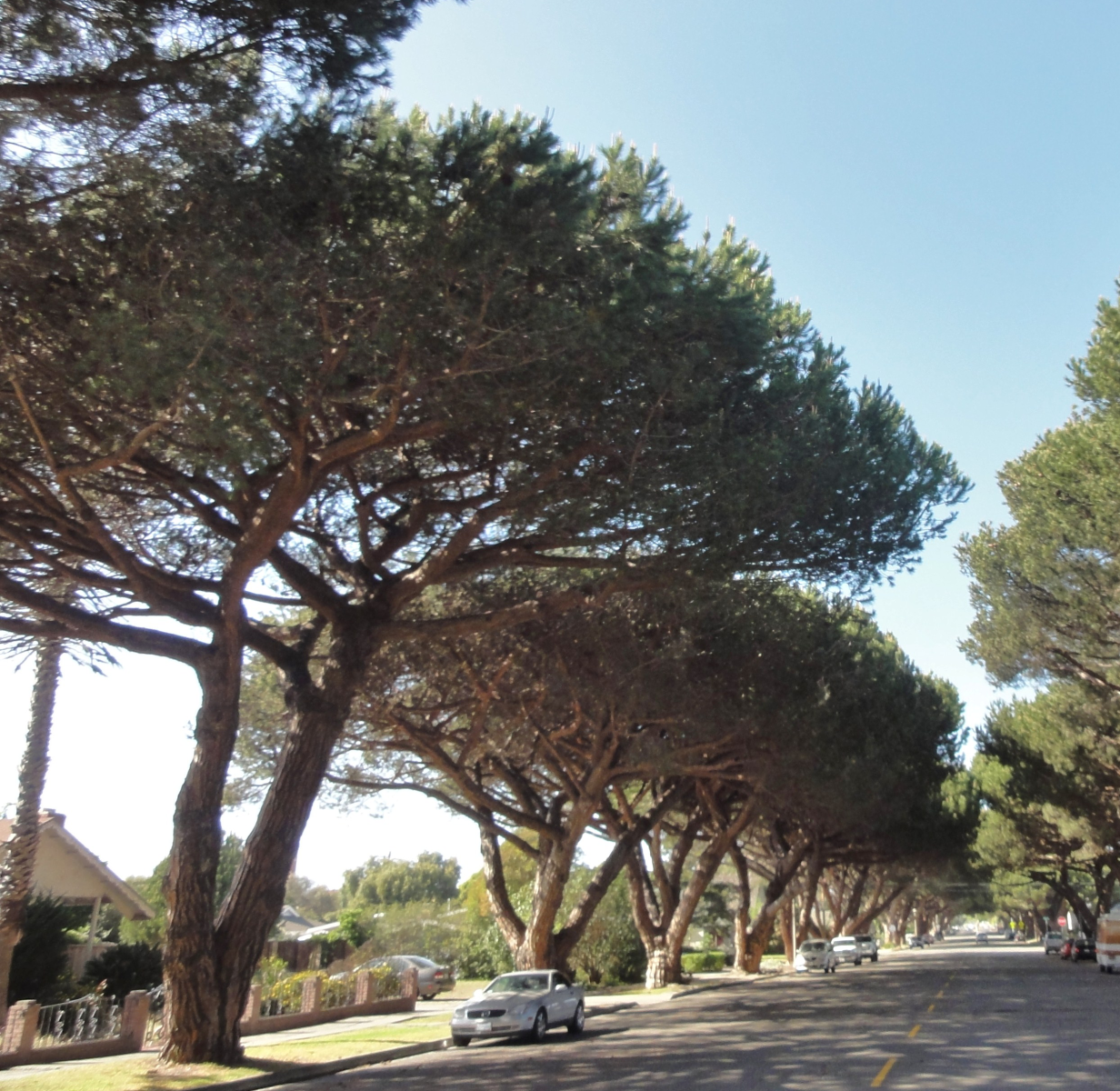
Mature Italian stone pines in Stanford, CA. Adapted well to warm, dry climates.
Read more about tree choices here