
Dallas Morning News – June 1, 2017
Mexican Sycamore – Better than our Native Tree
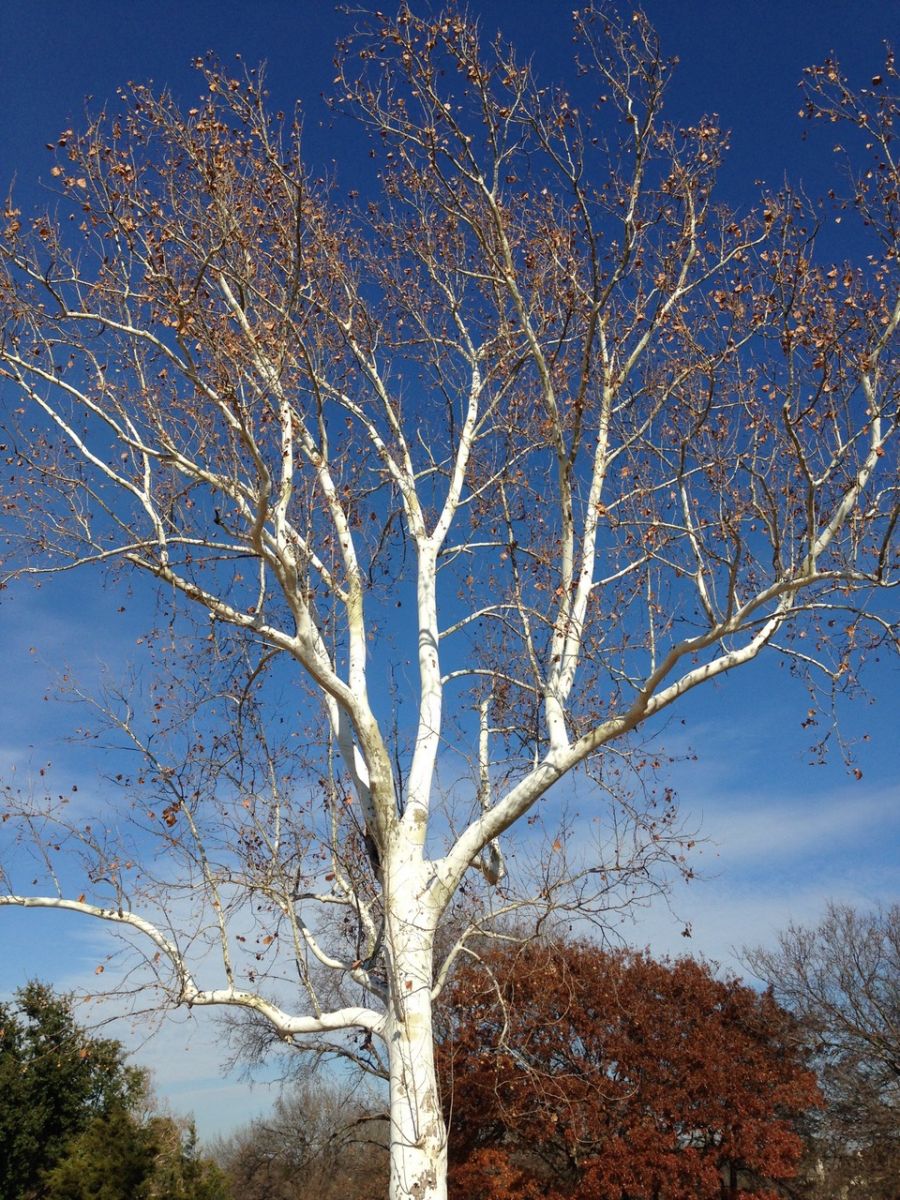
American sycamore in winter.
When healthy, there are few trees that are more dramatically beautiful than our American sycamore (Platanus occidentalis). They are large growing, majestic in structure, have dramatic foliage and striking white bark in the winter. Years ago this tree was one of main street trees planted in new developments like Highland Park and Lakewood. It would have been much better if the developers had planted native oaks and elms because most of the sycamores are dead now. Some gone because they were planted too low in the ground, other because of disease issues. Those two things were probably related.
Through the years as a landscape architect, I would have ongoing arguments with some my buddies and fellow designers. I saw that the native sycamores and the similar London plane trees were problematic and just not holding up long term. The culprits seemed to be basically two diseases.
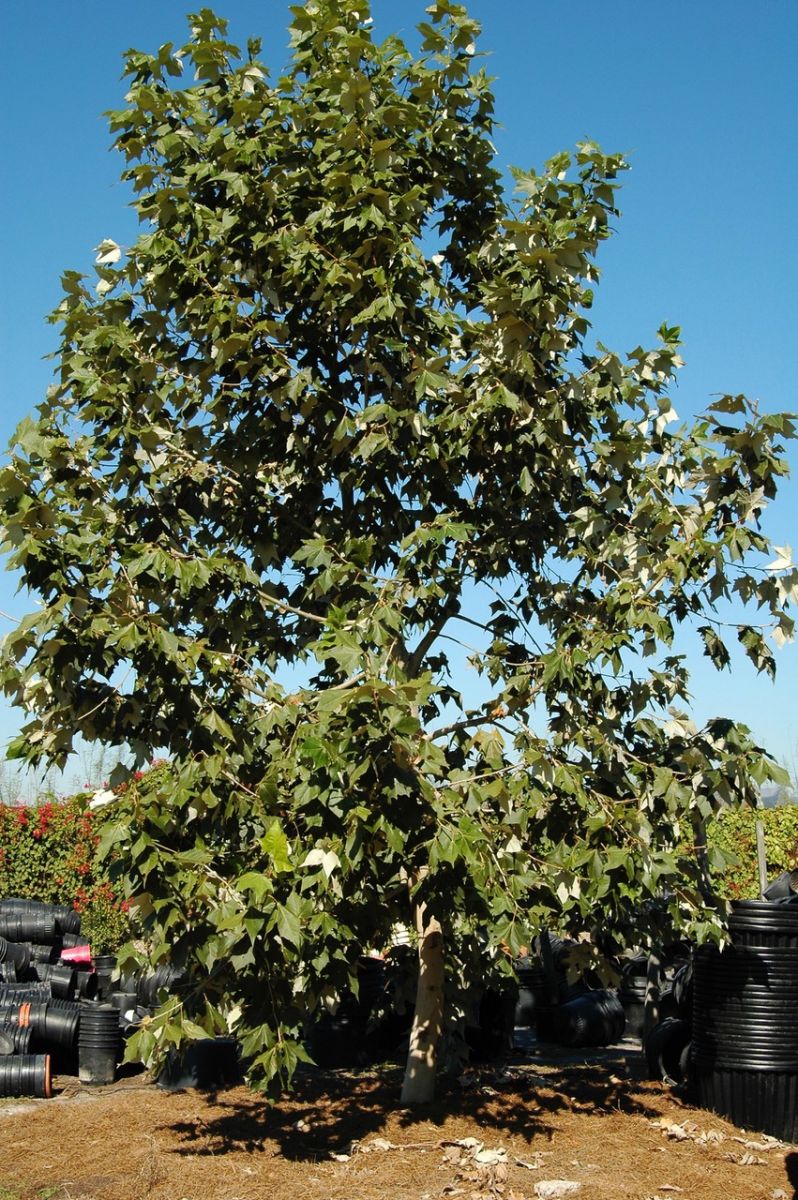
Mexican sycamore.
Sycamore anthracnose, Gnomonia leptostyla, is a fungal disease that affects sycamores across the country. It’s rarely deadly but makes the trees unsightly and causes large areas of the canopy to die back. The fungus attacks the buds and twigs, so infected trees often have “witches brooms” on the ends of their branches.
Sycamore and London plane leaf scorch is more deadly and hits in late June or July with olive green discoloration of leaf margins followed by margin death. Affected leaves remain attached. The leaves at the branch tips are the last to scorch or may not scorch at all. Trees with this issue are slow to leaf out in the spring and develop fewer leaves and smaller leaves than scorch-free trees. Branch dieback and tree death can eventually occur.

Mexican sycamore.
However there is a better choice – a sycamore that doesn’t have these problems. Mexican sycamore (
Platanus Mexicana
) is a fantastic shade tree that is fast and large-growing. Its large lobed leaves are smooth green on the top and dramatically cottony white to silvery below. The exfoliating bark is white in winter and can be quite dramatic. Some might argue that the native tree has all those characteristics and would be right to a degree, but there are other issues. Although native to northeastern Mexico the Mexican sycamore is well adapted to dry, rocky alkaline soils but also adapts to moist soils. Native sycamores are not as adaptable. Both trees grow in full sun and need a little extra water during establishment but the Mexican native is much less problematic long term – and I recommend it highly.