
More Vines for Color – Organic Answer Column – July 17, 2024
More Good Vines to Consider for Your Yard
I recently reviewed vines to plant in yards with heavy shade, but the list is long; here are more good (or pretty good) vines to consider.
Confederate jasmine (Trachelospermum jasminoides) resembles sweet autumn clematis but is evergreen and a good choice even though subject to cold damage in harsh winters. It has dark green leaves, white flowers in summer and will bloom in sun or shade. Yellow jasmine (T. mandaianum) is lemon scented and even more cold tolerant.
Coral Vine (Antigonon leptopus) is a spectacular large growing deciduous vine for sun to light shade. It has pretty foliage and bright pink, white or red flowers from late summer through fall. Freezes to the ground in most of Texas but returns dependably, especially the pink and red ones.
There is a big asterisk with this one – it can become invasive planted in zones where it isn’t killed off every winter. In Texas the climate will keep this plant under control, freezing it to the ground every winter, but as freeze days shift (NOAA researcher’s maps show that we have a shorter freeze season by about a week now) be aware that it may shift to be an aggressive pest like Trumpet Vine or, in areas to our east, Kudzu.

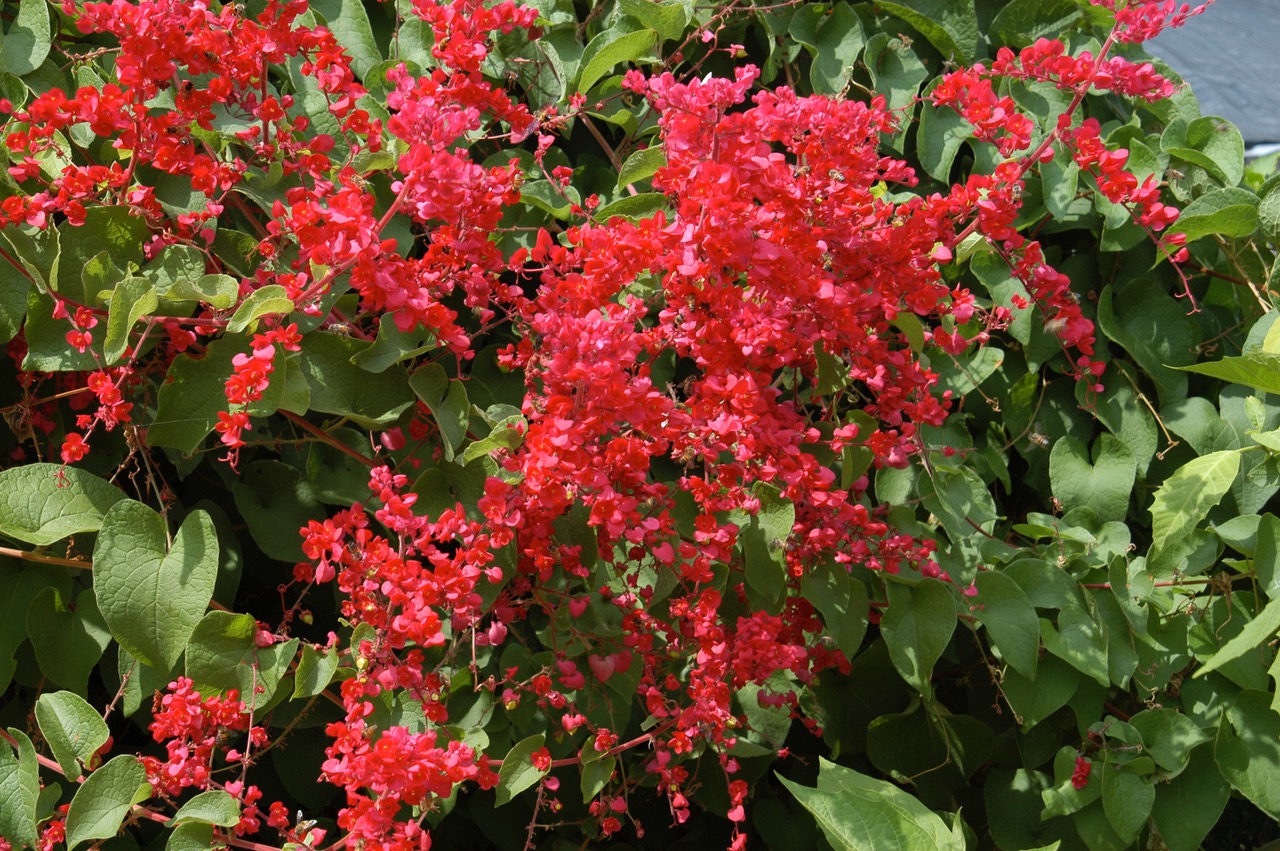
Confederate jasmine (left) and Coral vine.
Silver Lacevine (Polygonum aubertii) is a native from China that adapts well here. It is a deciduous fast growing vine for full sun. White flowers in summer are showy and it is not fussy about water and fertilizer requirements. It can even be a little aggressive and weed-like but not overly difficult to control.
Chinese Wisteria (Wisteria sinensis) is a fast growing, large, deciduous vine for sun or filtered light. It can grow to great heights. Purple spring flowers appear before the foliage emerges. Japanese Wisteria (W. floribunda) has longer white flowers that don’t open until foliage has emerged. Many gardeners have difficulty getting wisteria to bloom. Depending on where you live, look into planting Chinese wisteria – in some places the USDA has classed it as invasive. (Visit the Chinese Wisteria topic in the Dirt Doctor library for non-invasive native recommendations.)
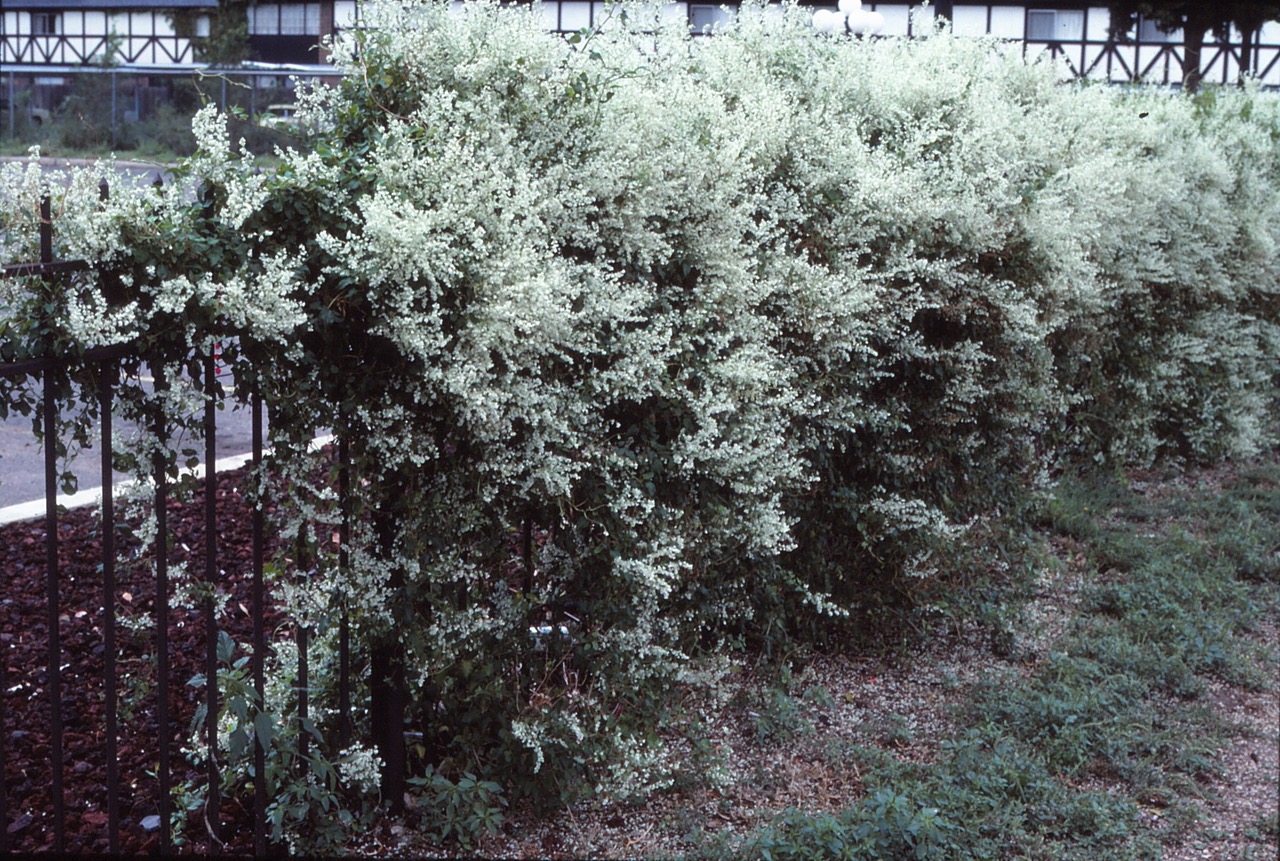
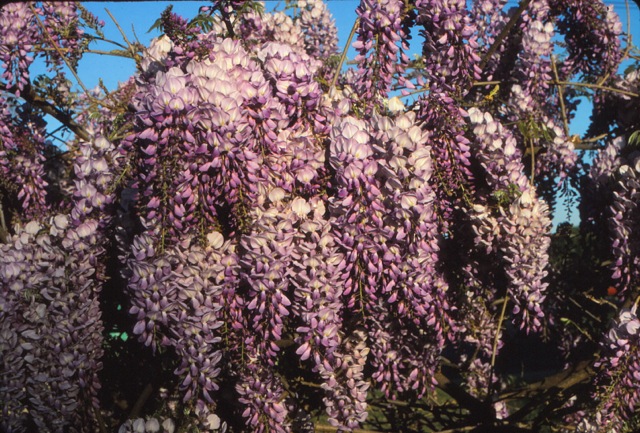
Silver Lacevine (left) and Chinese wisteria.
Grapes (Vitis spp.) are fast-growing climbers for the trellis or overhead structure. They are deciduous vines with edible leaves and fruit but are also effective for use in the landscape. They need support to get started.
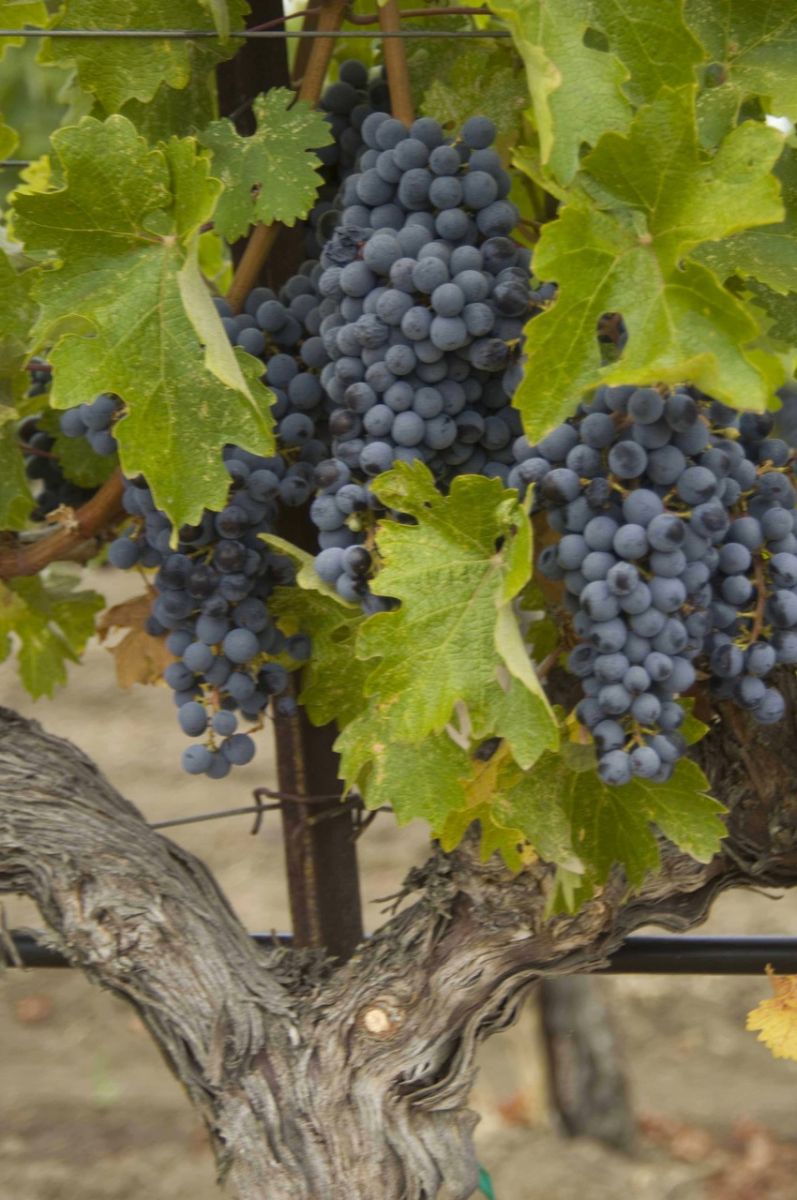
Grapes (Vitis spp.)
White-Veined Pipevine (Aristilochia fimbriata) or White-Veined Dutchman’s Pipe, unlike the larger growing Dutchman’s Pipe, only gets about two feet long with small yellow brown flowers. It is perennial with oval, white-veined leaves and unique brownish flowers resembling, as the common name suggests, an old-fashioned meerschaum pipe. The larger growing Dutchman’s Pipevine (A. macrophylla) has green leaves and big dramatic flowers. Both attract the beautiful blue and black pipevine swallowtail butterflies but be careful to avoid planting the tropical Giant Pipevine (A. gigantea) that is toxic to the butterflies.
Butterfly Vine (Mascagnia macroptera) is an evergreen vine that will easily train itself to a trellis or fence. It has clusters of yellow or orange blooms from April to September. Relatively easy to grow in any soil but does not grow well in pots. Butterflies love it as the name implies.
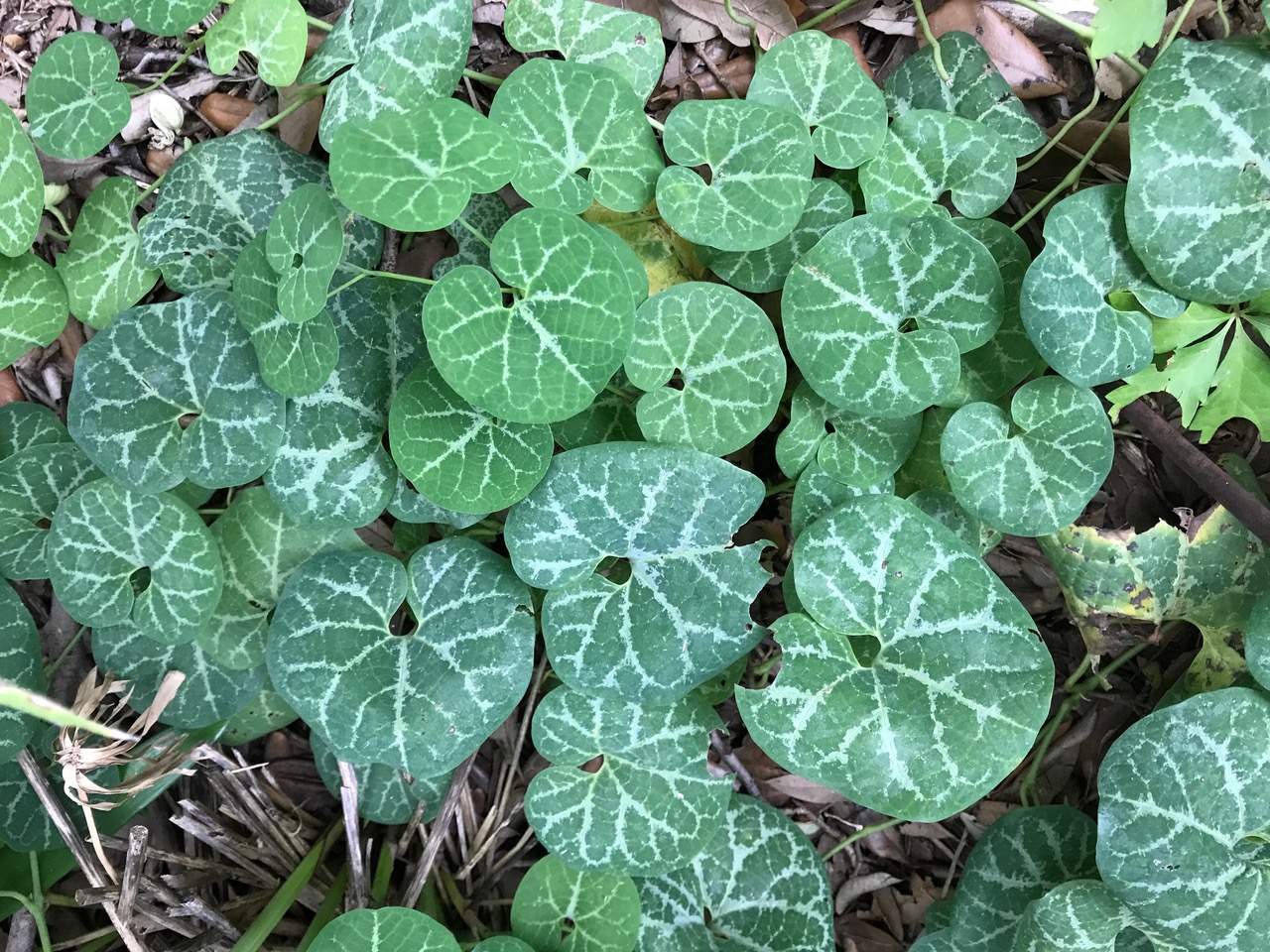

White-veined pipevine (left) and Butterfly vine
Morning Glories (Ipomoea spp.) are fast-growing annuals available in many colors. Ipomoea alba is the night-blooming moonflower. Ipomoea tricolor is the common morning glory. Ipomoea quamoclit is the cypress vine or cardinal climber. Morning glory is easy to grow from seeds in most soils and is a kissing cousin to field bindweed, one of the weed vines I add to my list of problem vines. Control by increasing organic matter in the soil.
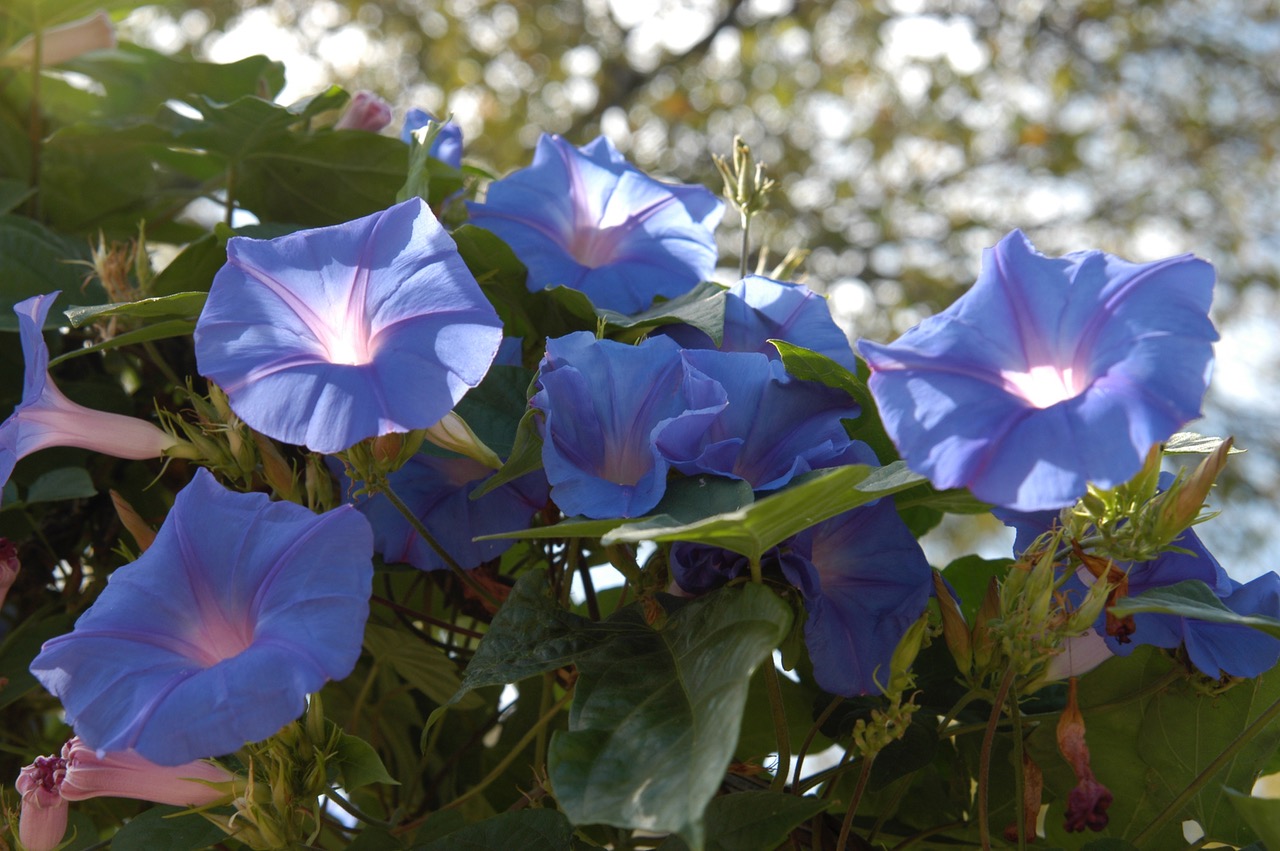
Morning glory
