
Organic Answers Column – August 10, 2022
MULCHES – Why Shredded Tree Trimmings are Best
Shredded tree mulches are something special. They insulate the soil and plant roots, prevent winter weeds, have good balance of carbon and nitrogen, are loaded with nutrients and trace minerals, stay in place well, buffer soil temperature, hold moisture in the soil, breathe properly and break down appropriately to feed microbes. Microbes in turn produce true natural fertilizer in the soil.
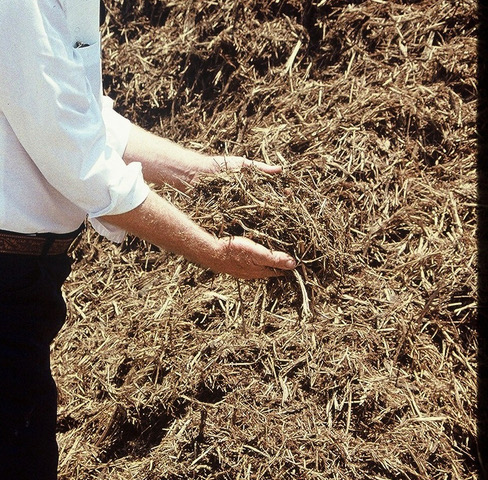
Mulch is a blanket, made of organic material that is applied atop bare soil around plants. Effective mulches include shredded hardwood bark, pine needles, coarse compost and shredded native tree trimmings.
Plastic sheets and weed blocking fabrics are the worst choices of soil covering and should never be used. These artificial materials provide nothing beneficial, but do cause harm. Soil microbes at the soil surface and plant roots are damaged from heat buildup. Plastic also fouls up moisture levels and the flow of oxygen in and carbon dioxide out of the soil.
The absolute best mulch is grounded up or shredded and recycled plant material (leaves, twigs, spent plants, buds, bark, flowers and other plant debris) from your own property. That’s the natural way it is done in the forest and on the prairie.
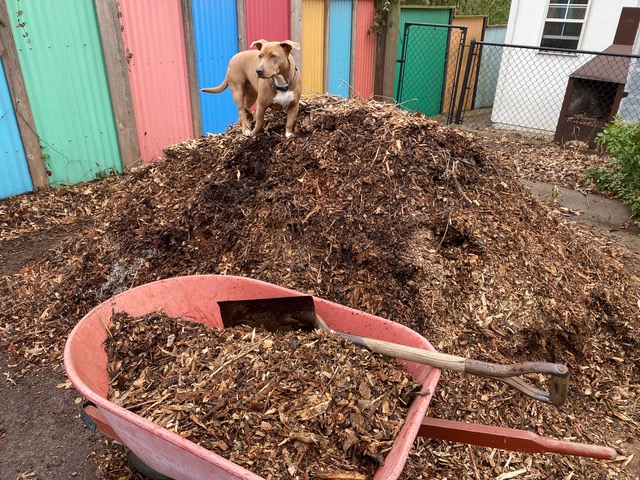
The second best and most practical choice is purchased shredded tree trimmings. It holds in place well and is an excellent blend of carbon and nitrogen. The wood and the cellulose of pruned limbs is mostly carbon. Green leaves, buds, stems and cambium layers are protein, thus high in nitrogen. Not only is the carbon to nitrogen ratio close to perfect, these materials also contain many other nutrients and trace minerals. So, not only does the shredded tree trimmings mulch hold in place well from wind and water erosion, it acts as a slow release organic fertilizer to feed the soil and the plants.
Cedar is one of the best shredded choices because it smells great and helps to ward off insect pests. The fresher the better with cedar mulch. Freshly cut cedar has more oil, which provides the fragrance and repels insects. All parts of any cedar trees make excellent mulch, as is the case with most trees.
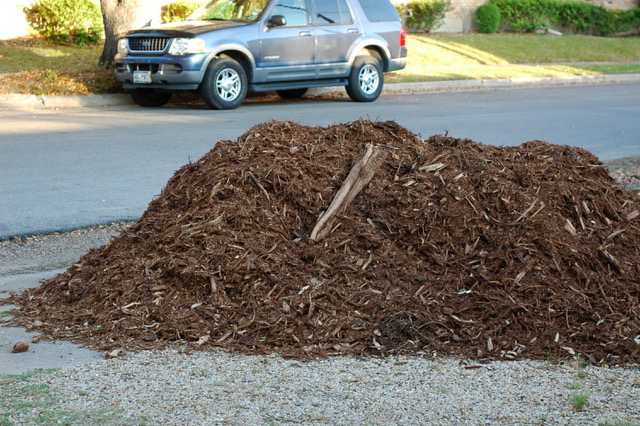
A mix of trees in the shredded mulch is also fine. Hardwoods, softwoods, trash trees and even trees that have died of insects or disease pathogens can all go in the shredded tree trimmings mix with no problem. Native trees are best, but the foreigners are ok to use too.
Third in line of quality mulches is shredded hardwood bark. Like the shredded tree trimmings, this good looking mulch holds in place well and breaks down properly. It sometimes has an interesting fermentation fragrance but that doesn’t last long. It’s a good mulch but not nearly as effective as shredded tree trimmings.
Then there is a group of commonly used mulches that should be avoided. This group includes cypress which does not break down well, pecan shells that move around too much, and fresh shells that can attract fire ants. Shredded rubber and dyed wood products are in the same “do not use” category. Both trash products can, or usually do, have toxic ingredients and neither provide beneficial nutrients or microbe stimulation for the soil. Rubber has no useful carbon and dyed wood chips have too much carbon, being made from lumber, pallets and other waste wood products, and no protein which results in a nitrogen draft to the soil.
Pine bark is an interestingly popular mulch – but it’s not very good at all. First, it won’t stay in place – it washes and blows away. Plus, it has natural chemicals that do not promote healthy microbe and root growth. Pine needles on the other hand makes good mulch but look a little out of place when used on a property where no pine trees are growing.
Some companies grind rough-textured shredded tree trimmings into a finer textured, prettier product but the material right out of the tree care company’s grinder is fine for all plantings other than very small plants. For the little plants the double ground material or coarse textured compost is better.
Lava gravel can function as mulch in a category by itself. It works almost as well as shredded organic mulches and helps to keep the neighborhood cats out of the beds. However, it doesn’t break down to feed the soil. If lava gravel (red or black) is used as mulch, a little more organic fertilizer might be needed to provide the proper nutrition to plants.
An important recommendation to new property owners or to people wanting to transition acreage over to an organic program is to broadcast-apply shredded tree trimmings to the entire property. This mulch is low cost from suppliers and can often be free of charge from arborists and other contractors willing to dump it on your property rather than travel and pay shipping charges at the landfills.
Piles of shredded tree trimmings are also the most effective tools for making inexpensive, high-quality compost. All you have to do is let the pile sit idly for nine months or so – voila! Beautiful, well-balanced compost. Turning the pile occasionally will speed up the process, but it isn’t critical.
