
Mullein
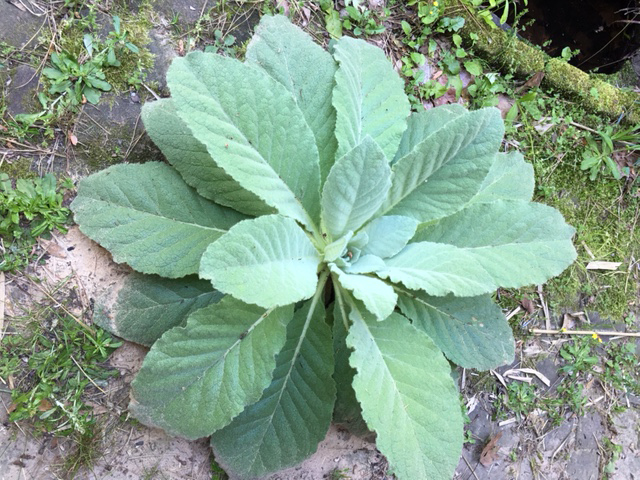
MULLEIN
Verbascum Thapsus (ver-BAS-kum THAP-sus)
Common Names: Mullein, Flannel Leaf, Old Man’s Flannel
Family: Scrophulariaceae
Type: Hardy biennial
Location: Full sun
Planting: Plant the seeds anytime, best time is fall or early spring.
Height: 6 to 7 feet
Spread: 12 to 18 inches
Final Spacing: One here and one there or about 3 feet apart.
Bloom/Fruit: Yellow, white or purple flowers on tall spikes that form the second year. First year is only a rosette of low leaves.
Growth Habits/Culture: Large grey fuzzy leaves, upright growth, yellow, white or purple flowers on our native plant. Treat like a wildflower – very easy to grow in most any soil.
Problems: Leaf chewing insects, cosmetic damage only.
Harvest/Storage: Harvest leaves anytime, harvest flowers when they first open.
Culinary Uses: Tea ingredient. Flowers are sweet, leaves are bitter, but both are aromatic.
Medicinal Uses: Coughs, asthma, allergies, and respiratory diseases are helped by drinking mullein tea. Oil made from the flowers is supposed to be good for earaches. Leaves are used as bandages.
Landscape Uses: Ornamental specimen plants. Use in the wildflower garden. Use as a dramatic background plant.
Insight: Plant in well-drained area in full sun and forget it. You will pretty much have it from now on. Don’t harvest this or any other herb from the roadside because of environmental pollution. Mullein is pronounced to rhyme with “sullen”.