
Organic Answers Column – April 20, 2022
Oak Flower Management Update
I’ve written about managing oak flower production before, but this year takes the cake. Red oaks, live oaks, bur oaks, Mexican white oaks, Lacey oaks, and in our back yard the camby oak – and most other oaks have given us the biggest flower production ever.
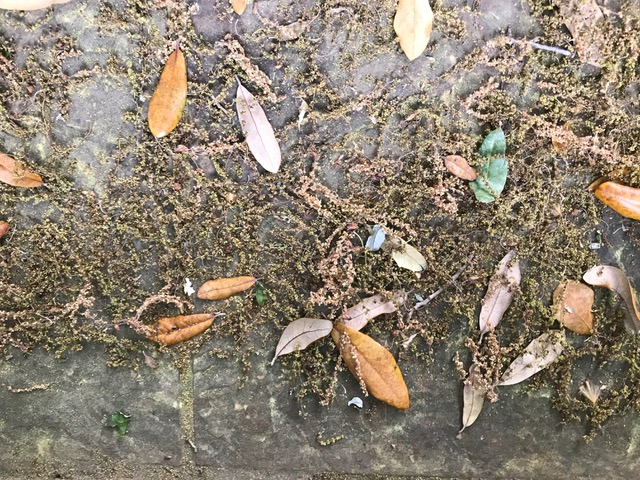 Management of fallen oak flowers can vary |
It has been like catkin rain. The yellow/beige, wormlike danglers (aments) are the male flower parts. The little bumps on these catkins are male flower consisting of a bract (a highly modified leaf), a lobed calyx and some pollen-producing stamens. I’m sure you have noticed the yellow pollen all over the plants, decks, cars and everything else. Once the stamens have released their pollen, the catkins fall from the trees.
 Red oak female flowers |
 Mexican white oak female flowers |
The female flowers are much smaller, in fact hardly viable. They appear on new growth and are the future acorns. The amount of acorn production next fall is dependent on the quantity of the flowers and the quality of the pollination. Wind is a good thing for pollination and we’ve had plenty lately; constant rain is bad for pollination and we haven’t had much. Probably big acorn crop again this fall.
You ask why was the flower production so heavy this year? Sometimes plants flower and produce seed heavily when in stress from harsh conditions. It’s a survival of the species response. But ideal conditions without late frosts can also help create the abundant production. I don’t know why exactly this year – but it probably has to do with the last two winters. Plants tend to produce more flowers and fruit when they feel they are in some trouble.
 Live oak flowers & leaves soon to be mulch |
.jpg) Female oak flowers (catkins) |
Management of the fallen flowers can vary but the easiest method is best. First of all – they should never be raked, bagged and sent to the landfill. They can be put in the compost pile, but the best method is to use them for mulch. Mow them into the turf as much as possible and rake the flowers from the hard surfaces and toss into vegetable gardens and landscape beds. There is nothing at all toxic about the material. Oak flowers make excellent mulch that protects the soil and breathes really well. As the helpful debris breaks down, it feeds the soil with nutrients and provides all-important organic matter. It can be used in the compost pile but applying directly to bare soil in beds is the best route.
 Oak flowers make excellent mulch! |
