
Organic Answers – August 31, 2022 – Reasons to stop using Peat Moss
Peat Moss – the reasons why we need to stop using it
A recent article in The Guardian details how gardeners in the United Kingdom are learning that the continued extraction of peat from vast ancient peat bogs is harmful to the environment, is a cause of climate change, and is about to be banned from being used as a mulch or compost for sale for home use. Each UK country has a separate schedule for the ban, and in England that will come in 2024, when no more peat will be sold. Landowners may still extract it, but the bottom should drop out of that market very quickly after the ban goes into effect. (The Guardian, Aug. 27, 2022)
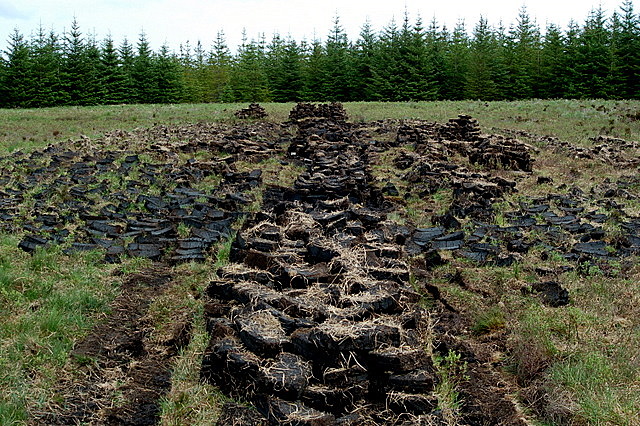
Peat cutting in the UK via Geograph.org.uk
Peat moss is widely used in gardening and horticulture but it is not the best material for the job it is used for today. In centuries past peat has been used as a fuel, for insulation, for building bricks, and more recently as a planting medium, as an ingredient in bed preparation and as a top dressing for potted plants and floral arrangements. Mining of peat requires the draining of wetlands, drying, milling, packaging and transportation of the product many miles to market.
It is from a group of plants called sphagnum. These mosses grow in wetlands in cooler climates and are an important part of the ecosystem in cleaning water, removing pollution and storing carbon dioxide from the atmosphere.
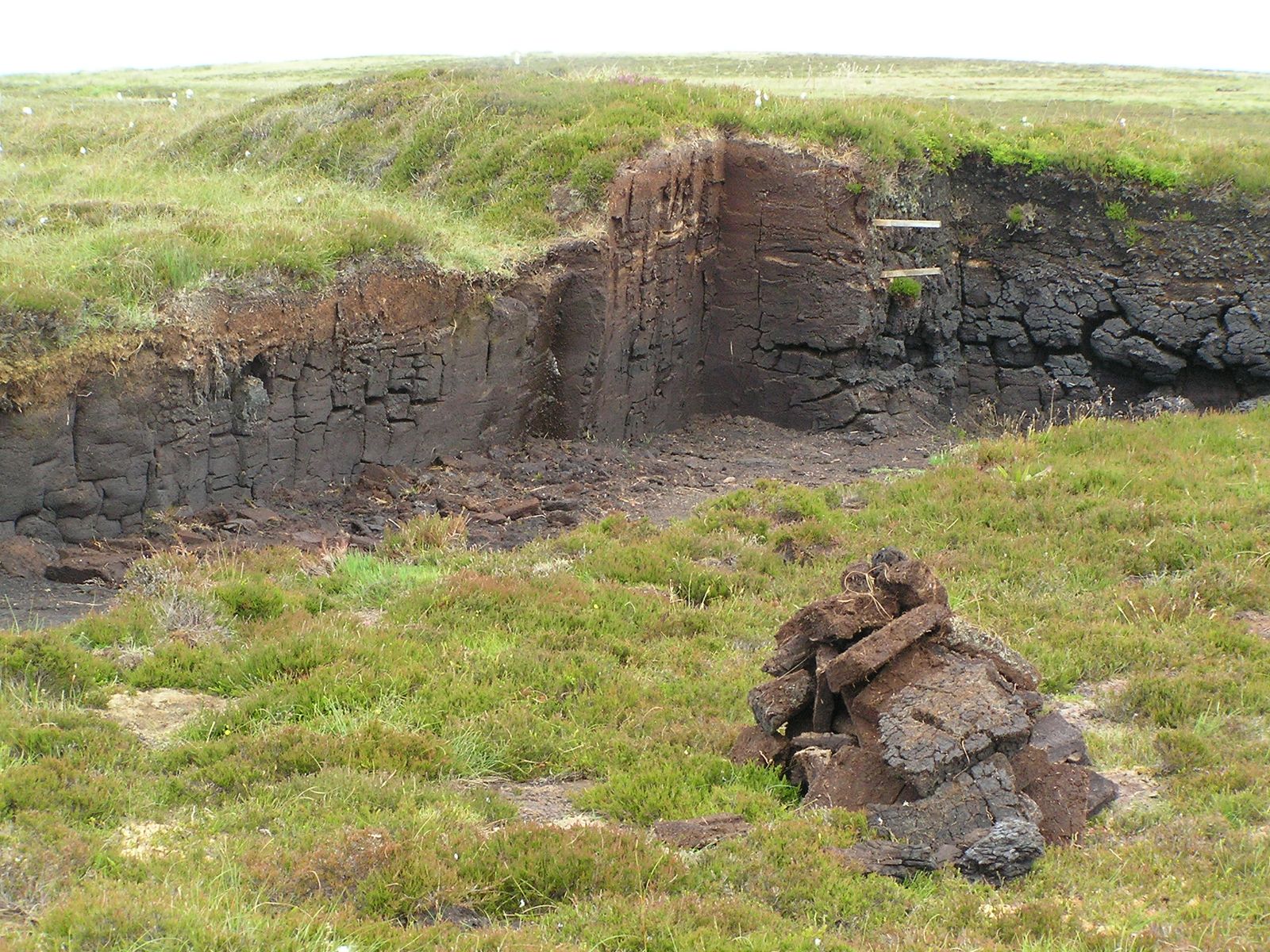
Peat cutting in UK, photo by Derek Mayes via geograph.org.uk
These bogs capture 100 tons of carbon every year from the atmosphere and store more than 500 billion tons of carbon even though they compose only 3% of the land and fresh water areas. But for what active peat bogs capture, the drained peat bogs where harvest happens “emit a dizzying two billion tons of accumulated carbon every year,” a number that will rise as peat lands dry out. (New York Times, Feb. 22, 2022)
In the UK environmental campaigners have long called for stricter laws to restore peatlands. As well as carbon capture and storage, peatlands provide habitat to some of the UK’s most threatened wildlife, and also filter water and prevent flooding downstream. But a combination of draining them for agricultural use, burning to create the right habitat for game birds and harvesting for compost means just 13% are in a near-perfect state. (Guardian)
The most valuable form of peat in horticulture is the layer that forms just under the surface with deeper layers becoming lower and lower in quality and value. This is why gardeners often see big price differences for peat moss at garden centers. The worthless low quality peat moss is sold at the lower prices because it does not work well. The surface peat moss layer can hold 16 – 20 times its dried weight in water in the cells. The low quality peat moss at the bottom does not hold near the same amount of water or have much benefit at all. It is sometimes sold under the name of “Peat Humus” as a marketing ploy.
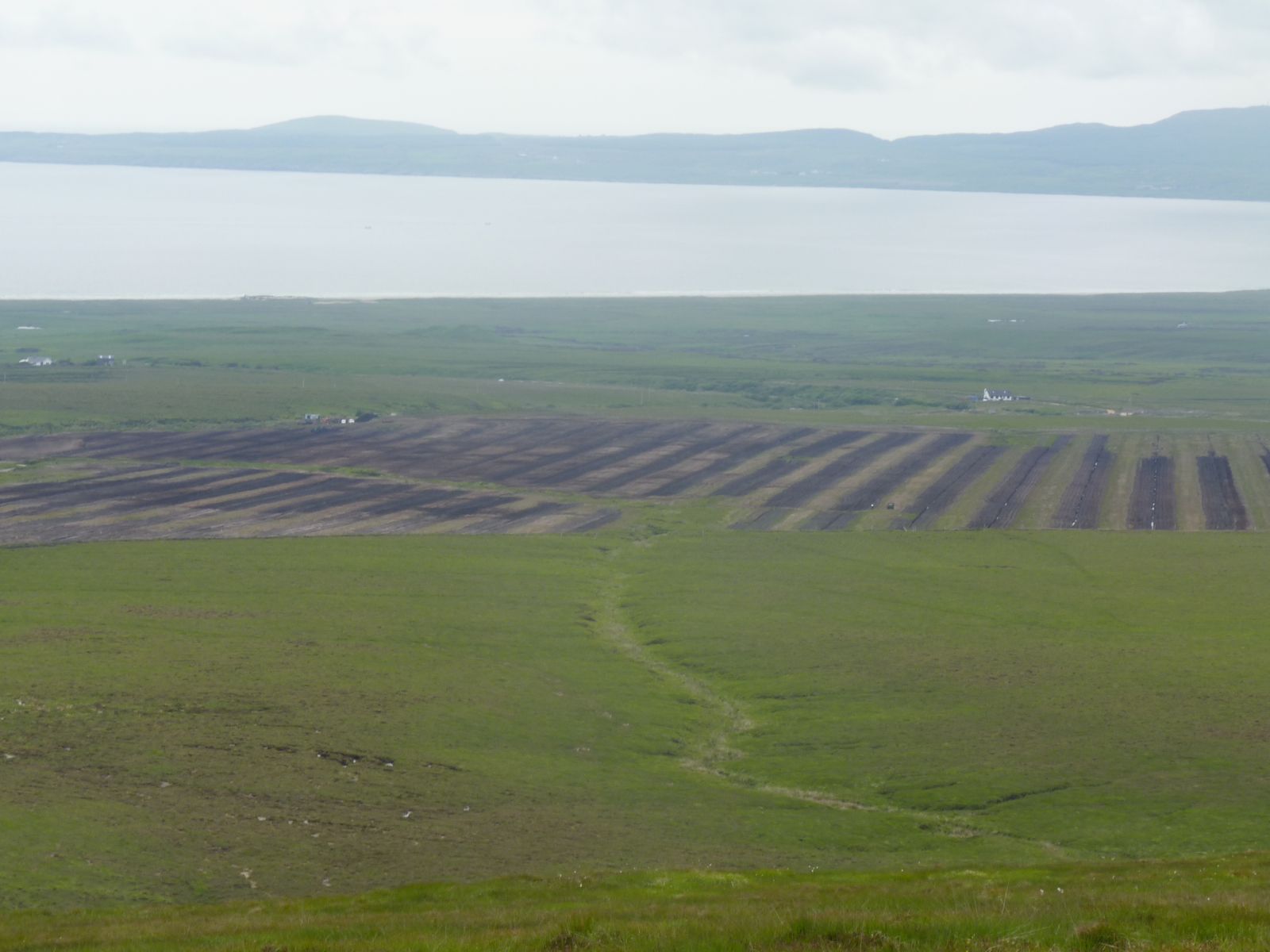
Peat cutting in Islay, UK, credit Odd Wellies
Some companies in Canada and the northern U.S. have started trying to reestablish bogs after mining. It is a step in the right direction but scientists say it takes more than 90 years to just reestablish the original biodiversity and much longer to become a fully functioning wetland. Over 10 million cubic yards of peat moss are harvested each year in Canada and another 1 million cubic yards in the U.S. It takes about 1,000 years for a one yard thick layer of peat to accumulate. Peat grows on the surface of the bog where there is oxygen. As the plants die, they settle to the bottom where there is very little if any oxygen (anaerobic) and slowly decay, forming thick mats of partially decomposed plant material.
More than 90% of the extremely valuable wetland peat bogs in England and New Zealand have been destroyed by the mining of peat. Many countries now prohibit or have placed severe restrictions on the mining of peat wetlands and the sale of peat moss.
Due to its acidity, peat moss can kill bacteria (good and bad) and as a result was used as a bandaging material in treating wounds during WWII. Here is a video of how Canadian peat moss is harvested.

Peat moss is still sold and used heavily for its use as bed preparation, potting soil and mulch. Here are the pros and cons showing why I don’t recommend it:
PROS OF PEAT MOSS
- readily available
- light in weight
- good structural stability
- able to hold water
- low in microbes
- excellent bulb and tuber winter and summer storage due to its anti-microbial properties.

Excellent bulb and tuber winter and summer storage
CONS OF PEAT MOSS
- blows and washes away easily
- virtually devoid of nutrients
- extremely acidic (low pH) and must be neutralized for use with most plants
- very difficult to re-wet once dried
- repels water when dry
- inhibits the growth of microbes initially but quickly becomes conducive for the rapid development of pathogens anti-microbial and doesn’t help build healthy soil
The UK has a target ” of restoring 35,000 hectares of peatlands by 2025 as part of its commitment to reach net zero carbon emissions by 2050.”
Andy Jasper, head of gardens and parklands at the National Trust, said: “This is very welcome news. For too long, the world’s precious, climate-fighting peatlands have been eroded, so we are pleased to see government taking action to ban the sale of peat for amateur gardeners. “Peat is of far greater use to society in our uplands, bogs and fens, where it stores vast amounts of carbon, nurtures wildlife, preserves archaeology and acts as a flood defense, than it is in bags of compost.” (Guardian)
CONCLUSION:
Research has shown that we now have many alternatives to peat moss that work better at lower cost and do not have the environmental consequences.
Peat moss is environmentally bankrupt in today’s gardening environment and shouldn’t be used except for storing materials that need protection from rotting.
For more information on this subject, read Organic Management for the Professional by John Ferguson, Michael Amaranthus and Howard Garrett.
For the sources that were used in creating this topic, read in The Guardian England’s gardeners to be banned from using peat-based compost (August 27, 2022) and in the New York Times Meet Peat, the Unsung Hero of Carbon Capture (by Sabrina Imbler, Feb. 22, 2022). This is an updated version of Howard Garrett’s topic from several years ago, Peat Moss Use Should End.
