
Organic Answers Column – August 20, 2025 – Hypoxylon
Recognizing and Treating Hypoxylon Canker
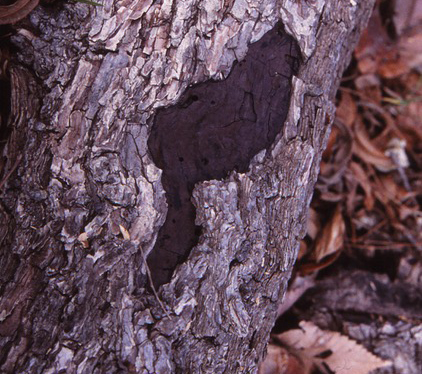
This summer hypoxylon canker has been in the news as Nebraska Game and Parks horticulturists report on the death of bur oaks in Mahoney State Park, Ponca State Park, and beyond in Nebraska’ eastern deciduous forest. This includes the historic Old Wolf Oak, possibly dating back to 1644. From a story on Nebraska Public Media:
The trees’ quickly declining appearances were out of the norm for Nebraska’s towering bur oaks. They’re some of the most common native oaks in Nebraska. But the once soaring and wide-canopied trees – known by some as the “King of the Great Plains native hardwoods,” since they’ve withstood hundreds of years of extreme Nebraska weather and varying pests – are dying en masse.
Nebraska scientists found that hypoxylon canker was the culprit, not typically known in the northern parts of Nebraska, so they contacted Mississippi State University scientists for assistance. In recent years Mississippi, like Nebraska, suffered an “exceptional drought” that weakened many trees that were then impacted by variable oakleaf caterpillars and hypoxylon canker. A Mississippi MSU Extension official said that on their own and in normal conditions, neither would have killed trees, noting that “that the caterpillars and fungus are not linked by anything other than their propensity to take advantage of stressed trees.”

Bur oaks killed by hypoxylon canker in Nebraska state parks. Photo by Jackie Ourada.
So how does hypoxylon work and what can we do about it in an organic program?
Hypoxylon canker in trees is a fungal disease that is common on many hardwoods. An opportunistic fungus, Hypoxylon atropunctatum, causes it. Red oaks are usually more susceptible than trees in the white oak group like bur, chestnut, chinquapin and white oak. It can also be found on elm, pecan, hickory, maple and sycamore. It is usually manifest as black or gray splotches where bark has been sloughed away.
Here’s the most important part of the story. Hypoxylon canker is never the cause of problems in a tree. It is basically unable to cause serious disease in healthy trees but can quickly colonize weakened trees, especially those with dying bark and wood resulting from other issues. When the trees dry out during a drought, lower moisture content means less ability to fight the fungus.
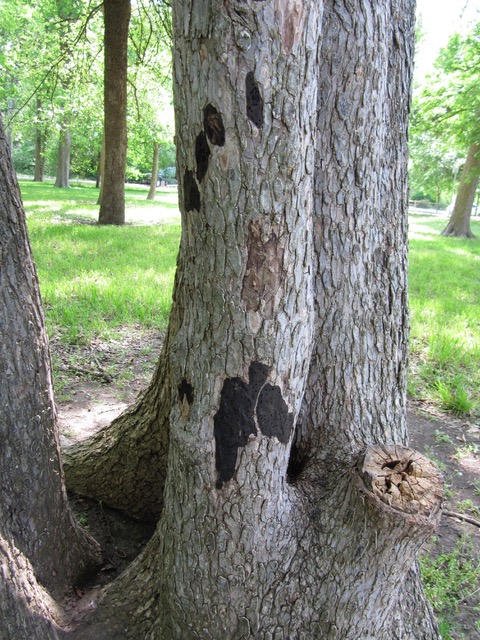
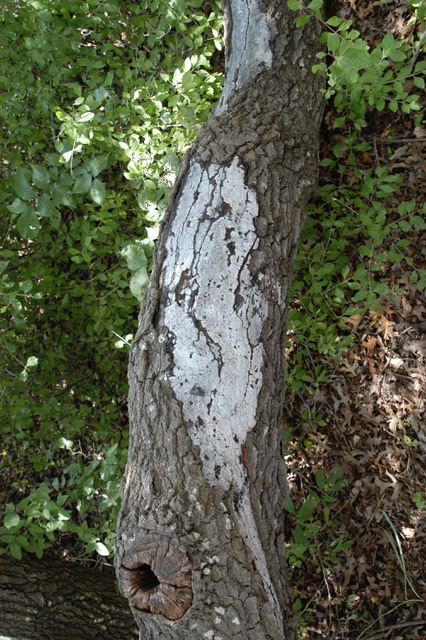
Hypoxylon canker spots
Hypoxylon sets up shop in sick trees that are weakened by drought, root disease, mechanical injury, soil contamination, construction damage or being too deep in the ground. These true causes of stress enable this opportunistic fungus to produce cankers on branches and trunks. Perfectly healthy trees can even develop this canker on lower limbs that have been shaded out by dense canopies, but that’s not a serious treat to the overall health of the tree.
 The giant bur oak in Nebraska known as the Old Wolf Oak. |
Some arborists think that there was an increase of this fungus in recent years and that more oaks and pecans have been dying across the South. That could be the case due to environmental stresses, poor site factors, drier weather, air pollution and various forms or soil contamination. It’s not however because sick trees are infecting other trees. Following the droughts of the early 2000’s for example, many trees got in trouble, got sick and were severely damaged. Post oaks were especially hard hit. Hypoxylon canker showed up on many of these trees. That’s its job – to push sick trees over the edge to death.
It is said – by people who should know better – that there is no effective control for this disease and that if over 15% of the crown is infected, the tree should be cut down, ground level, burned or be from the site. It is also said that since the fungus can remain active in dead wood, it should not be chipped and used for mulch or burned as fuel.
I don’t agree with any of that. Hypoxylon canker in the tree trimmings is not a risk and does not creep out of the pile to attack healthy trees. But when a tree is severely weakened, it can move in and be the final knife in the heart of the tree. So – keep your trees healthy by avoiding high-nitrogen synthetic fertilizers, maintain dramatically exposed root flares and apply the amendments of the Sick Tree Treatment as time and budget allow. Water deeply (infrequently) if you can in times of drought. Hypoxylon canker will not be bothering your trees.
