
Organic Answers Column – January 11, 2023 – Deadwood
Removing Deadwood from Trees
Winter is an ideal time to prune most trees. They are not as vulnerable to disease and insect pests when pruned during the dormant season. Removing co-dominant branches or trunks, damaged limbs, limb growth too heavy on one side of the tree and limbs interfering with buildings, driveways or streets are appropriate tasks. It’s never appropriate to heavily “thin out,” “gut,” “raise,” or “lion’s tail” the canopy of trees.
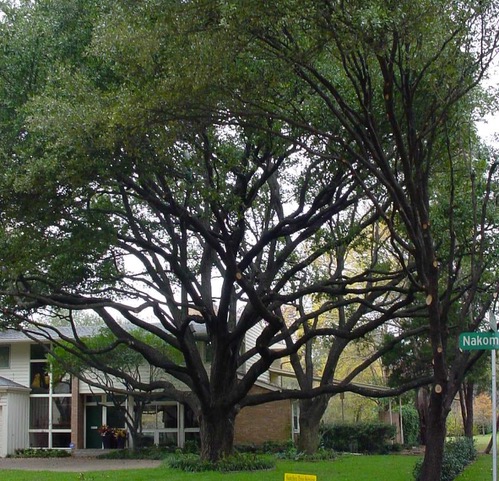
This tree was “gutted” to prune out “extra” branches. Don’t do it to your trees.
It’s also timely to remove deadwood. In trees, deadwood is a natural and common occurrence, but a buildup of the dead branches should be removed on a regular basis. It’s important for three reasons. Holding up deadwood uses energy. When removed, trees put all their energy into new healthy root and top growth. Plus, when deadwood falls from trees, it can be damaging and even dangerous to pets and people. And of course, pruning it away makes trees look cleaner and better.

This fig, killed in extreme cold, needs dead limbs removed. New growth (showing) from base will fill in.
Accessing deadwood in trees is also a good way to determine whether they are in stress or not. Dead limbs and branches can be caused by harshly cold weather, lightning, by being shaded out or by wind damage. Dead tip growth, on the other hand, can be the result of stress caused poor soil, poor drainage, too much or the wrong kind of fertilizer, or the most common cause I see – trees being too deep in the ground. Trees in stress need the Sick Tree Treatment applied as well as deadwood removal.
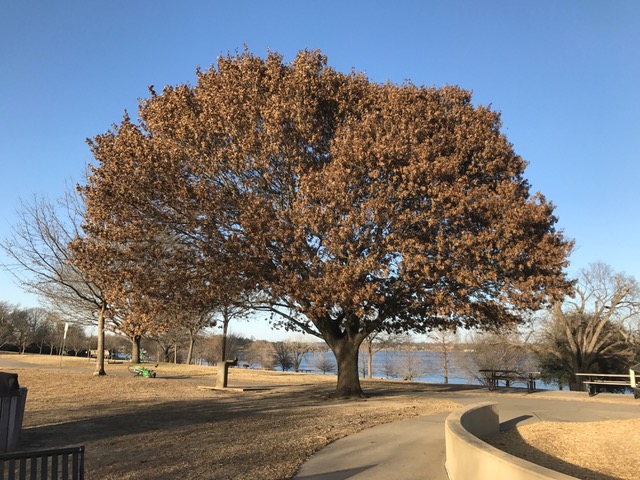
This red oak shows “marcescence” – holding onto dead leaves until the spring leaves push them off.
Deadwood is easy to see in evergreen trees like live oaks, magnolias, hollies, etc. For detecting deadwood in deciduous trees during the winter, check for branches that have held their foliage, after all other leaves have dropped. Dead branches often don’t drop their leaves. Be aware that some tree varieties hold their leaves longer into the dormant season and not a sign of deadwood, this condition is called marcescence. Some oaks, maples and other trees have this feature. Limbs lacking bark are dead. When a branch has died, new bark is not generated. Instead, the old bark falls off and exposes the wood. Broken limbs and twigs are also often a sign of dead wood.

This evergreen shrub is completely dead and should be cut off at the ground.
Doing any major pruning by homeowners is a bad idea. Large limbs and limbs high in trees should always be handled by professionals. Flush cuts should never be made because flush cutting and injuring (removing the branch collars) usually leads to decay and cavities. Wound dressing or pruning paint is normally not needed when pruning trees and shrubs in the winter.
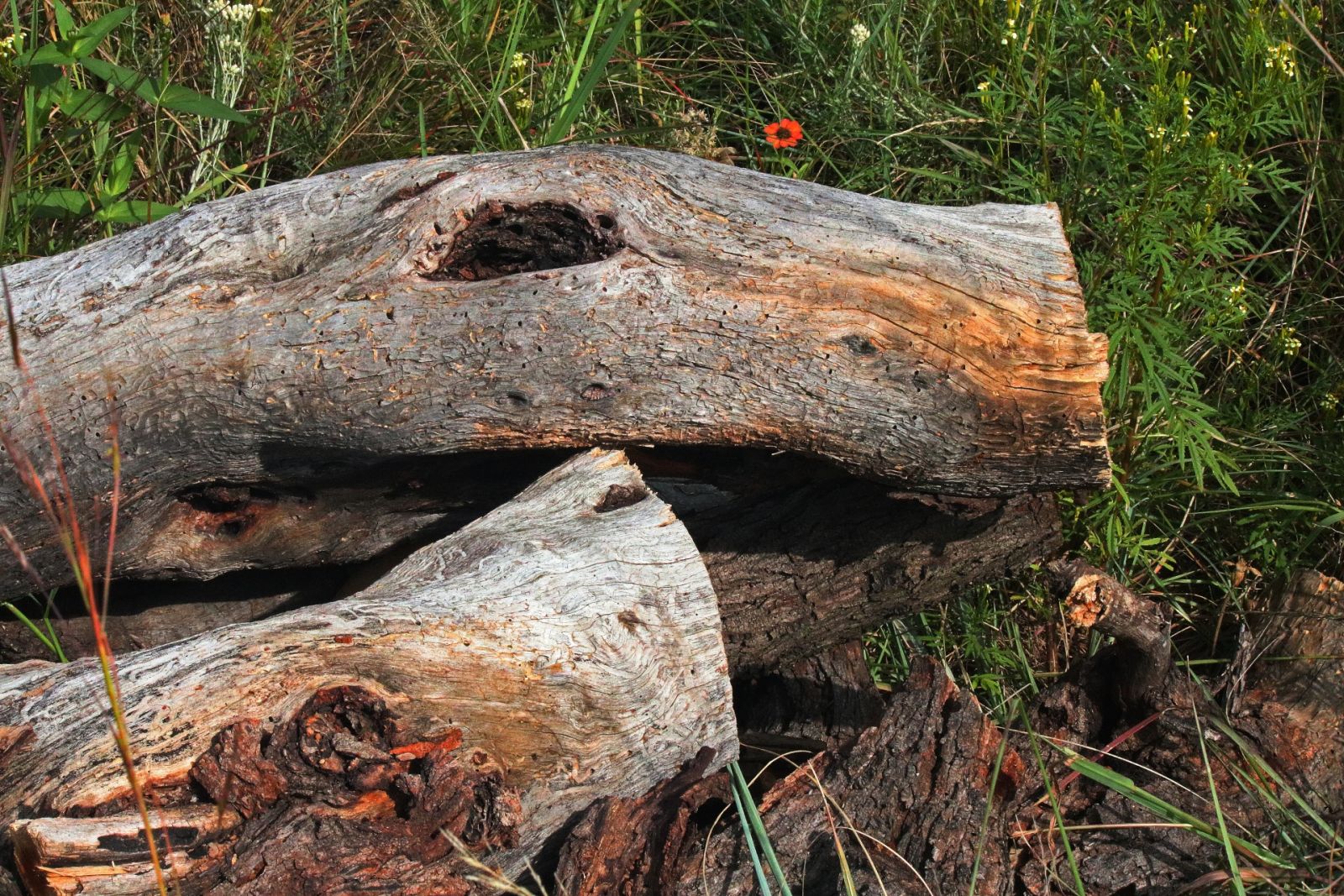
If you can turn your dead branches into chips that is your best native tree trimmings mulch.
