
Dallas Morning News – June 4, 2020
So, You Don’t Like Spiders
Should we be concerned about the spiders we see around the house? Yes and no.
There are basically two spiders in this part of the country that can hurt – brown recluse and black widow. Watch out and kill them with organic pesticides such orange oil, spinosad, neem and essential oil products like PureGro Bug Stop. Hobo and yellow sac spiders are also supposed to be somewhat dangerous but I have never run into either one of these.
 Black widow female, her dense web and a bunch of baby spiders |
Brown recluse spiders are usually found in garages, attics, closets and other dark and dusty places. They are recluses. Cleaning regularly and treating with orange oil and water is effective. Brown recluse bites are dangerous and can cause severe skin and muscle tissue damage. It’s best to get to a doctor, but there is a home treatment that can help. The sap from comfrey stems applied to a bite eases the pain and keeps the spot from atrophying. Several gardeners have reported using this technique with good results.
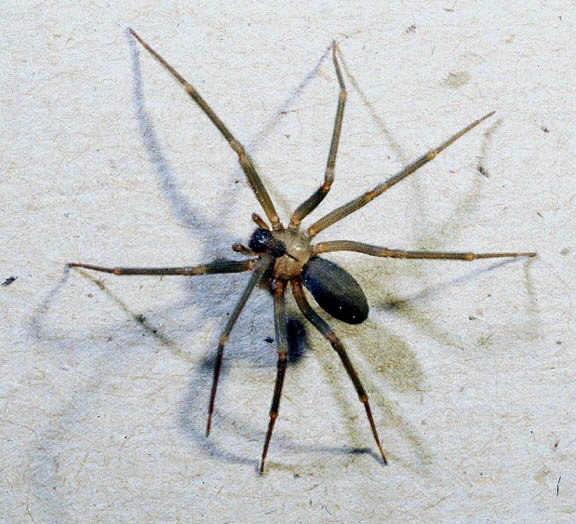 Brown recluse spider: one of the dangerous ones |
Black widows are found a little more in the open. Their distinctively dense white webs will show up even in the tomato plant foliage at times. They won’t attack you so the only way of getting bitten is to bump into a web or the spider. Just keep a sharp eye out for them. If you do receive a black widow bite, get to a doctor. Their bites are dangerous.
If you suspect your child was bitten by a black widow, get to the emergency room right away. These bites can be fatal to young children. To ease the symptoms and help prevent infection, wash the bite with soap and water, apply a cold cloth or ice pack wrapped in cloth, take an over-the-counter pain reliever, elevate an arm or leg to prevent swelling, and apply an antibiotic cream or lotion to the bite. If possible, kill or capture the spider and take it to the doctor to prove the culprit.
But what about all the other spiders? The good spiders mostly won’t bite and are not venomous – black jumping spiders, argiopes, wolf spiders, crab spiders, orb weavers and even tarantulas won’t hurt anybody and provide some helpful work controlling insect pests.
 Beneficial crab spider on fall foliage |
 Tarantulas look dangerous but are not |
The big dramatic argiopes or garden spiders are maybe the most interesting. They are dramatic looking on their own, but watching them spin silk around an unfortunate moth, grasshopper, katydid or other pest insect that crashes into the web is fascinating. It happens fast.
Spiders are like the canaries in the mineshaft since they are so delicate and easy to kill with chemical pesticides or even the killing organic products. So, the best policy as usual is to use non-killing repellents first and then the low toxicity organic pesticides sprayed surgically on the pest-infested plants or areas if needed.
Note from Victor Peck at the Dallas Zoo:
One thing you might want to change is about their being venomous: as far as I know, all spiders are venomous except the Opiliones (“Harvestmen” or “Daddy Longlegs”), and perhaps one other. However (and you probably already know this), most spiders aren’t toxic to humans because they’re fangs are too small to break our skin.