
Spiderwort

Common spiderworts are interesting perennials with pretty blue flowers.
Common Name: spiderwort, Virginia spiderwort
Botanical name: Tradescantia virginiana
Type: Herbaceous perennial
Family: Commelinaceae
Habit: Large but dainty perennial to 3 ft. with long, bright-green clumps of narrow leaves. Spiderwort flowers close by mid-day and last only one day. Blue-violet (sometimes white) three-petaled, 2” flowers with showy, yellow stamens in a terminal cluster above a pair of long, narrow, leaf-like bracts. The name comes from the angular leaf arrangement suggesting a squatting spider.
Native Range: Eastern and southern United States
Zone: 4 to 9
Height: 1.5 to 3 feet
Spread: 1 to 1.5 feet
Bloom Time: May to July
Bloom Description: Blue to violet-blue, rarely rose or white
Sun: Part shade to full shade
Water: Medium
Maintenance: Medium
Suggested Use: Naturalize
Flower: Showy
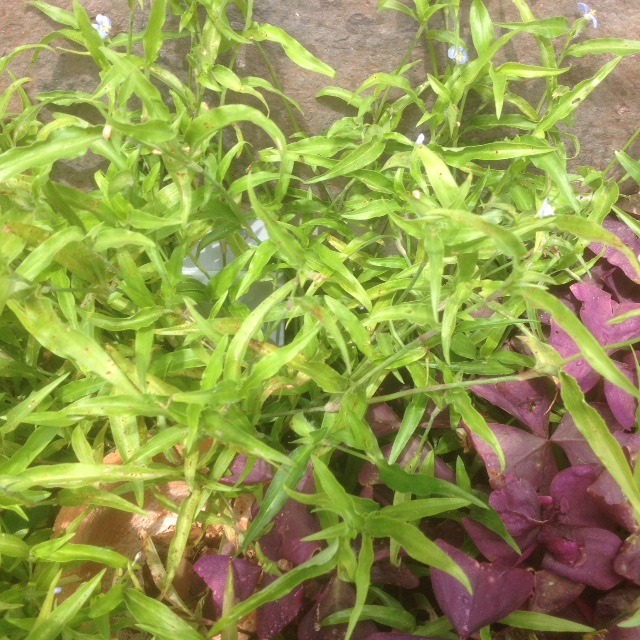
Tropical spiderwort (
Commelina benghalensis
), or benghal dayflower is the weed. It is perennial, similar in look but not related to Tradescantia spp., the ornamental spiderwort. It is a highly invasive and problematic to gardeners and farmers in the southern states and considered a noxious weed nationwide. Tropical spiderwort spreads not only by self-seeding above ground, but also produces small seed-producing flowers underground. The plant also spreads by root nodes on any broken pieces left in the soil. It is said that of the 250,000 species of flowering plants, only 36 have underground flowers. Tropical spiderwort can be controlled by spot spraying vinegar or fatty acid products or with the commercial product
By the way, it is resistant to
(one of the dangerous ingredients in Roundup) that shouldn’t be being used anyway. Tropical spiderwort is easily confused with
. Both are controlled the same way.