
Spittle Bug

Common Names: Frog Hopper, Meadow Spittlebug, Spittle Bug
Scientific Name: Order Homoptera, family Cercopidae, Philaenus spumaris
Size: Adult—up to 1/2″
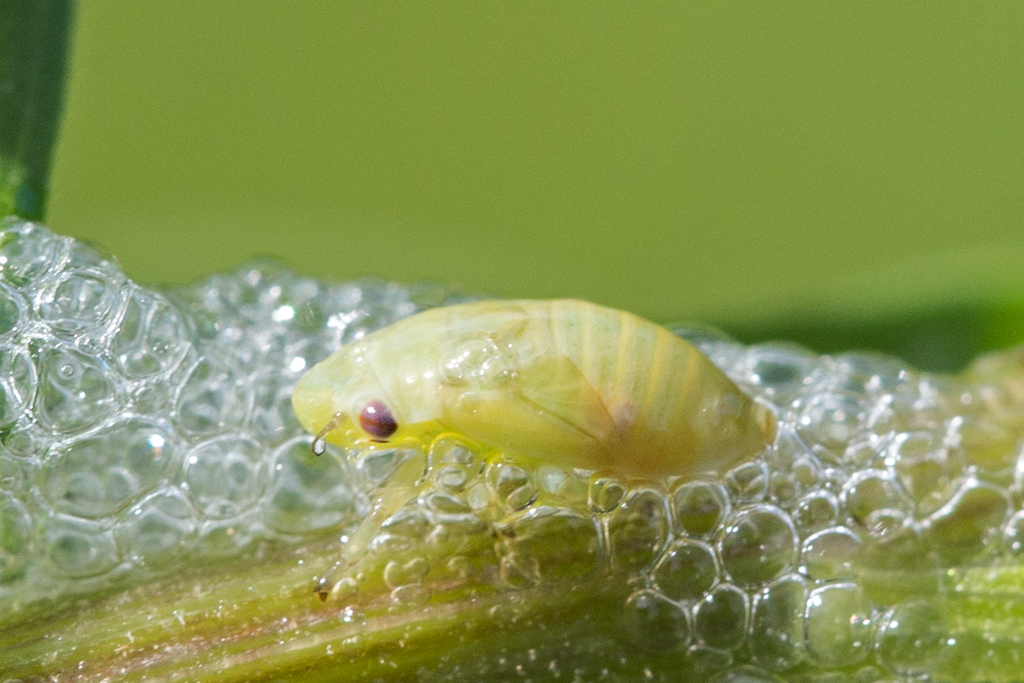

Spittlebug (photo iNaturalist) left; spittlebug nymph (photo by David Cappaert – Bugwood.org)
Identification: Adults are oval, frog-faced, tan, brown, or black; similar to leafhoppers but fatter. They have sharp spines on the hind legs and jump when disturbed. Nymphs are similar to adults but wingless; they protect themselves inside a foamy mass of “spittle.” Eggs are white.
Biology and Life Cycle: Incomplete metamorphosis. Overwinter in the egg stage, hatch in spring; nymphs develop for six to seven weeks in spittle masses on plants. Adults feed for the rest of the summer and start to lay eggs in early fall.
Habitat: Alfalfa, clover, strawberry, grass, pecan, and other ornamental plants.
Feeding Habits: Adults and nymphs suck plant juices but are rarely a serious problem.
Natural Control: No important predators have been discovered.
Organic Control: Rarely needed. Can be washed off with a strong blast of water.
Insight: Spittlebugs can be found on almost any plant. Heavy infestations distort plant tissue and can slow plant growth. More damaging to herbaceous plants than woody plants.