
Dallas Morning News – December 10, 2020
State Champion Ginkgo and Special Tips
The ginkgo trees in north Texas put on a good show this fall and that always leads to many questions about this prehistoric tree.
I have arguably the fastest growing ginkgo – but there is larger one in Texas. The State Champion Ginkgo lives in the east Texas town of New Boston under the care of by current owner Mary Miller and her daughter Donna. Their tree has been a special part of the family’s life for decades and for good reason. This beautiful and special tree is estimated it to be about 250 years old but it may be older than that.
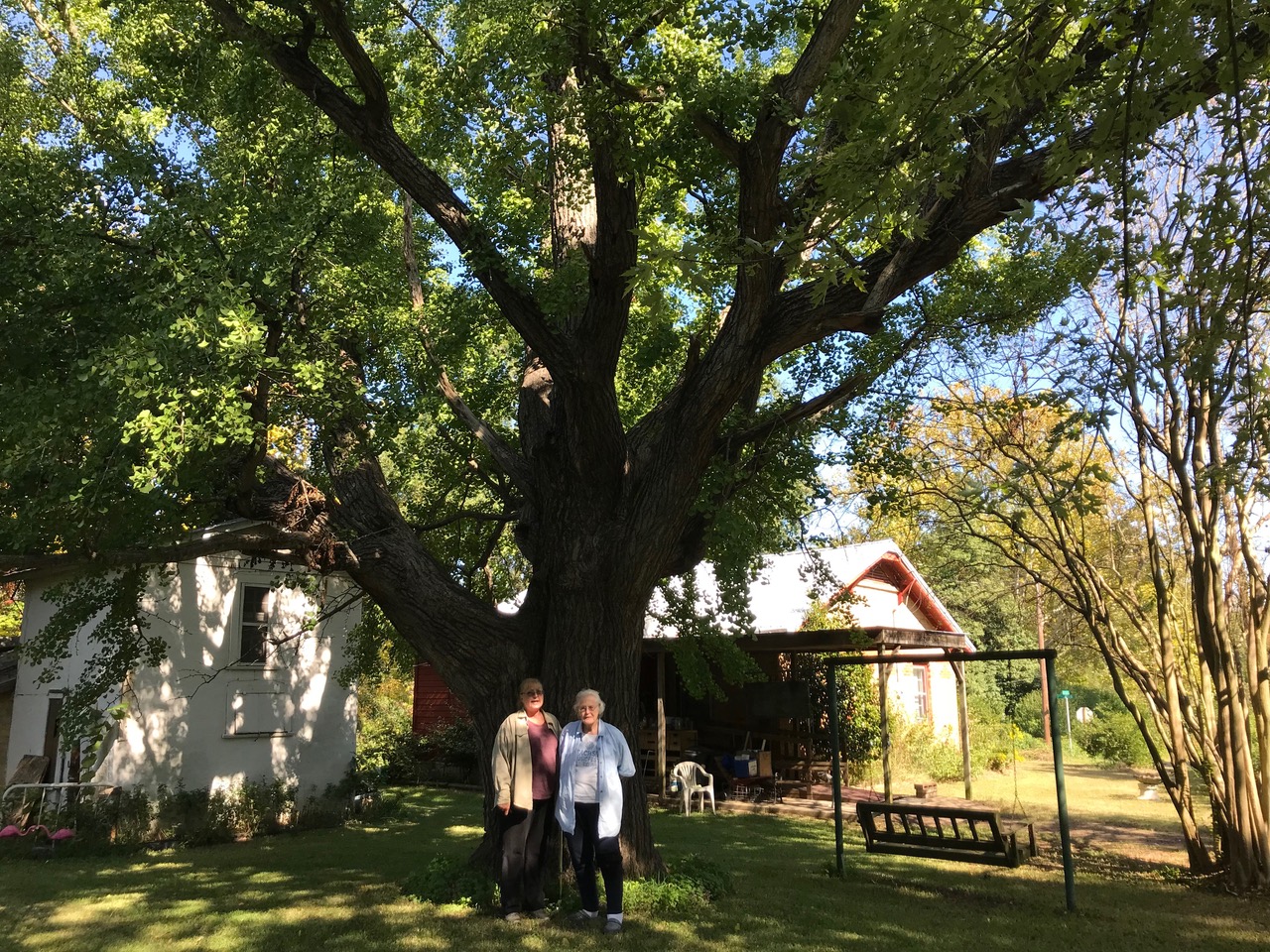 Mary and Donna Miller own the State Champion Ginkgo |
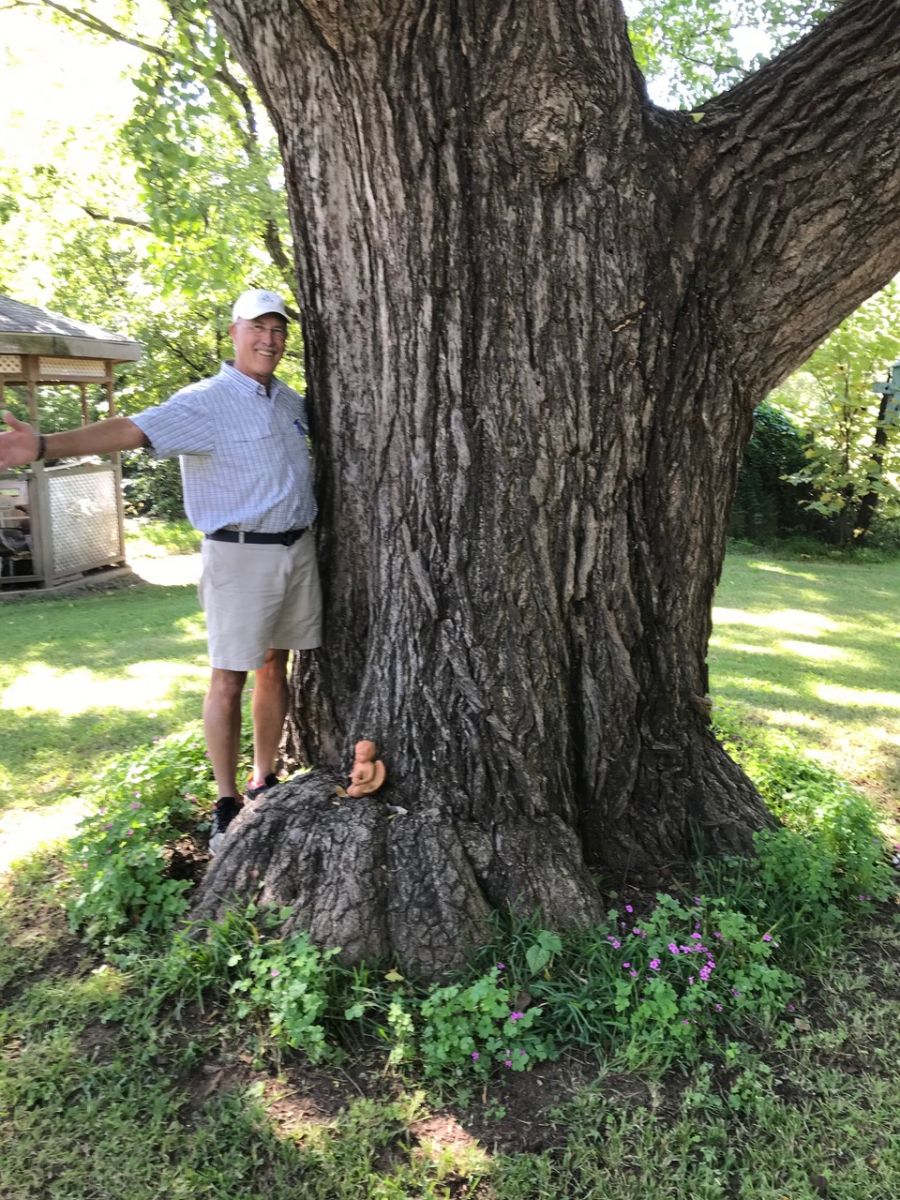 Howard visiting the State Champion Ginkgo |
Back to my tree for a bit because it has a lot to teach if you have a new ginkgo or planning to plant one or more. Mine was planted in 1985 and early on this tree was different – growing noticeable faster than other ginkgoes. The growth rate increased after I dramatically exposed the root flare. I recommend planting this fascinating tree but there are some things you need to understand.
.jpg) Gingko State Champion Fall 2020 |
 Miller’s State Champion Gingko |
First of all, ginkgo is in that unfortunate category of usually being too deep in the container when purchased. In other words, the flares of most ginkgoes are buried and need to be exposed at planting. Other trees in this “chronically deep” category are lacebark elm and Chinese pistache.
Ginkgo will grow in a wide range of soils as long as there is ample moisture and decent drainage. The only place in Texas where the plant will not grow well is in solid white rock, in unhealthy soils or in soils that are too dry. Ginkgo tolerates a wide range of rough conditions such as downtown urban sites, smoky areas, air pollution and confined root system spaces – but not dead or compacted soil.
Maybe because they are such ancient trees, ginkgoes respond well to the organic program and grow as much as 20 inches a year in ideal conditions. Those ideal conditions include soil that has plenty of carbon (organic matter), ample life (microorganisms, worms, etc.), reasonable moisture and good drainage. High nitrogen, synthetic fertilizer is the main thing to omit from your ginkgo management.
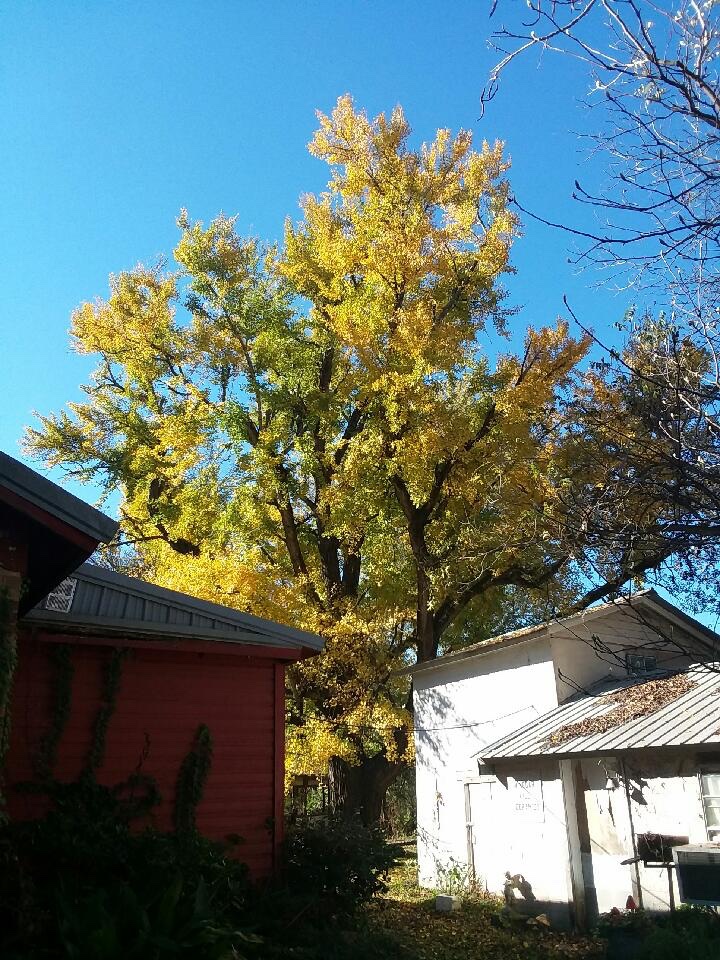 Ginkgo State Champion Fall 2020 |
Another point is that it will grow in the shade as well as in the sun. I discovered that fact when I learned the most interesting thing about ginkgoes. They can change sex.
The sex thing is important because most people want to buy only male plants to avoid the stinky fruit from female trees. Our tree was planted as a certified male clone but started producing fruit after about 12 years. I like that because I grow seedlings from the fruit and enjoy giving small progeny of my tree to friends. I also like to grow the small trees in containers – this is how I discovered they would grow in total shade as well as in full sun.