
Dallas Morning News – June 18, 2020
Strange Sightings in the Garden
Sometimes weird things show up in the garden that are no big deal, just interesting and fun to see.
Galls are in this category and quite common. Small wasps, flies and other benign insects primarily cause these growths. Most galls are more cosmetic than damaging and require no treatment. They range from puffballs and bloodshot eyeballs to stars and fuzzy masses. Some even look like severe skin deformities.
 Bloodshot eyeball galls |
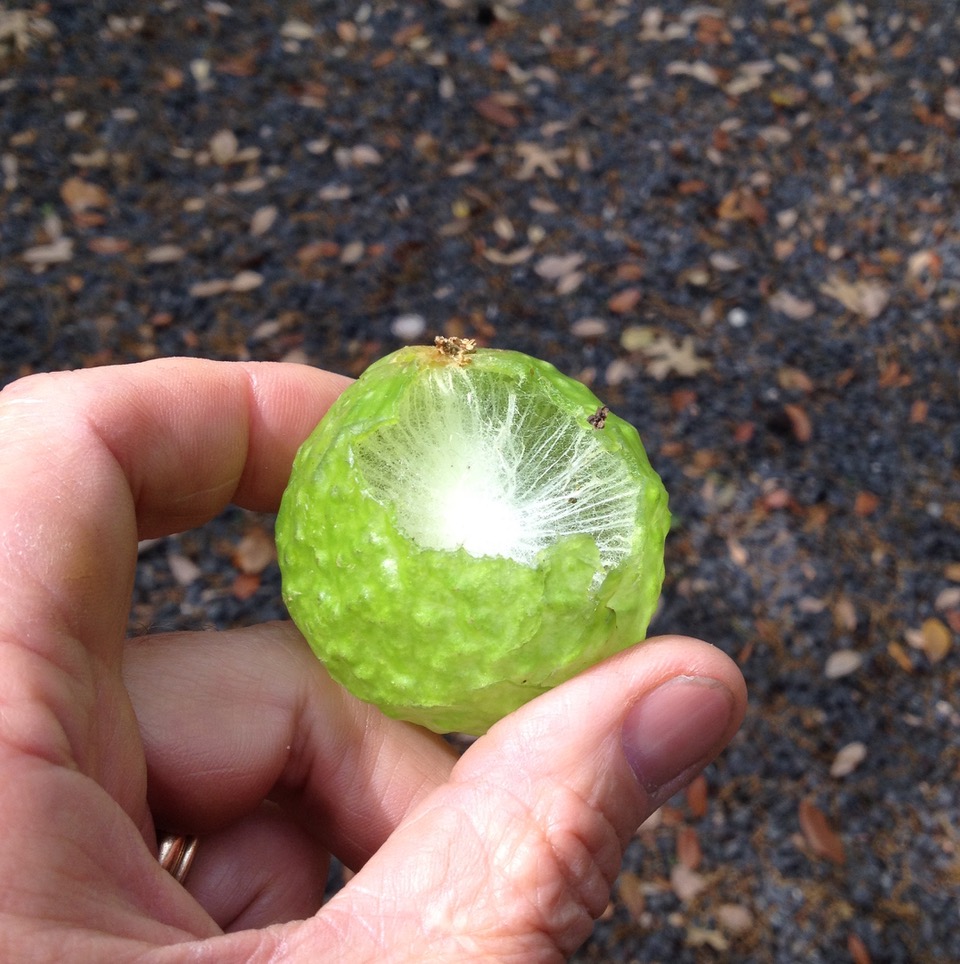 Puffball galls on red oaks start out green and mature to tan |
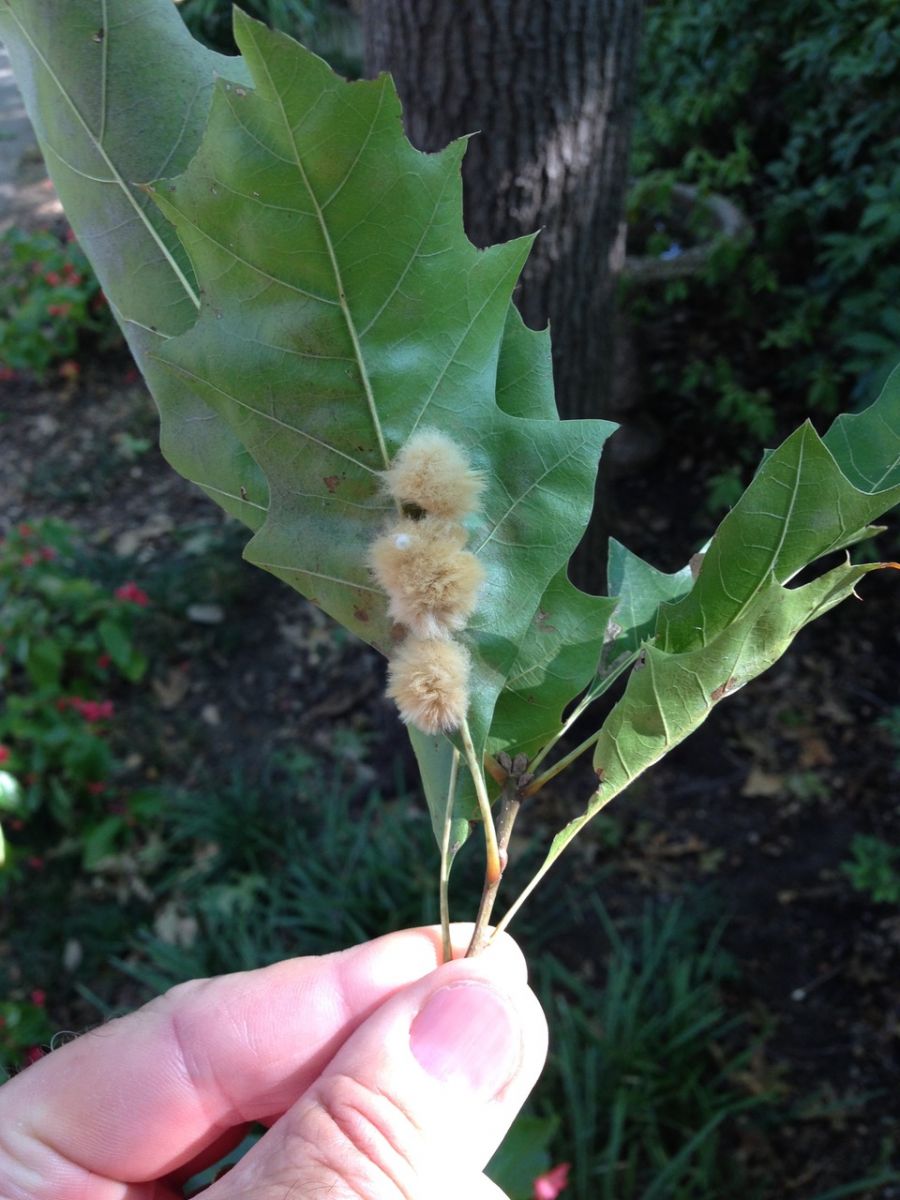 Fuzzy oak galls |
A few galls are no problem but a heavy infestation is a sign that your tree is in stress. To help your trees resist galls, use the Basic Organic Program and spray Garrett Juice occasionally. Exposing root flares of trees will prevent serious infestations and be a curative as part of the Sick Tree Treatment.
Another interesting sighting that shows up on tree trunks, rocks and other things is lichen. It is rarely if ever a problem. Lichen is a symbiotic partnership of fungi and algae. Fungus gives the lichen the majority of its characteristics. The algae partner can be either a green alga or a blue-green alga, known as cyanobacteria. Many lichens will have both types of algae. Lichens are decorative, are doing no harm and require no treatment.
 Lichen is decorative and not a problem |
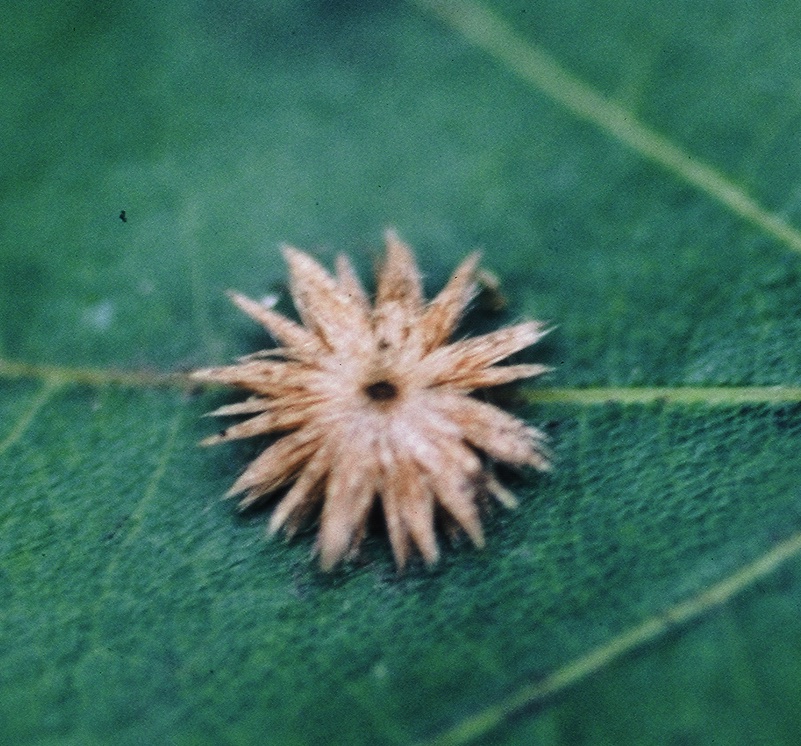 Some galls look like stars |
How about the structures that look like tiny ceramic pots? These vessels are built by the potter wasp to raise its young. Some are brownish and look like terra cotta; others are pure white like those in my ginkgo tree. The most widely used building material is mud made of a mixture of soil and regurgitated water, but chewed plant material is also used. When a pot is completed, the adult wasp typically collects beetle larvae, spiders, or caterpillars and after paralyzing them, puts them in the pot as food for the potter wasp’s larvae.
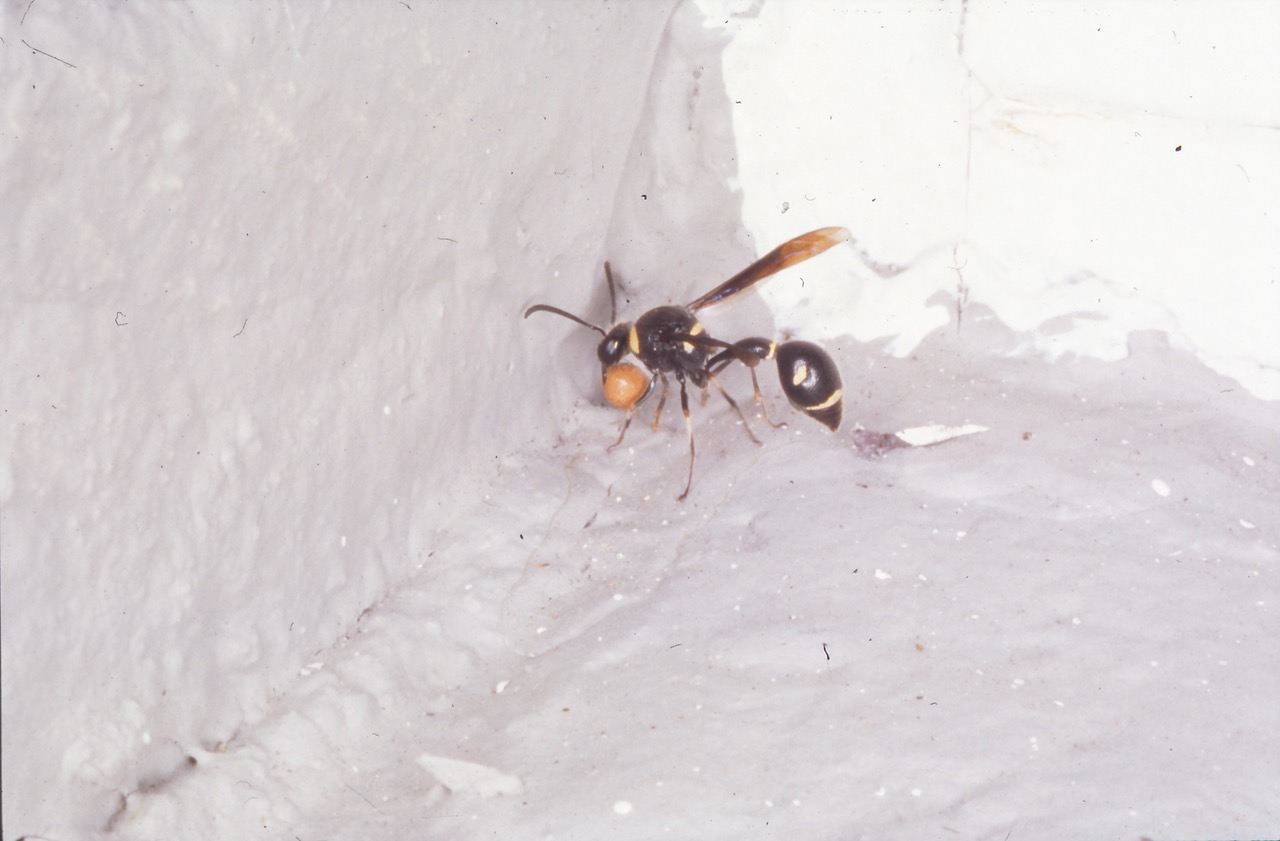 Potter wasp starting to build a pot |
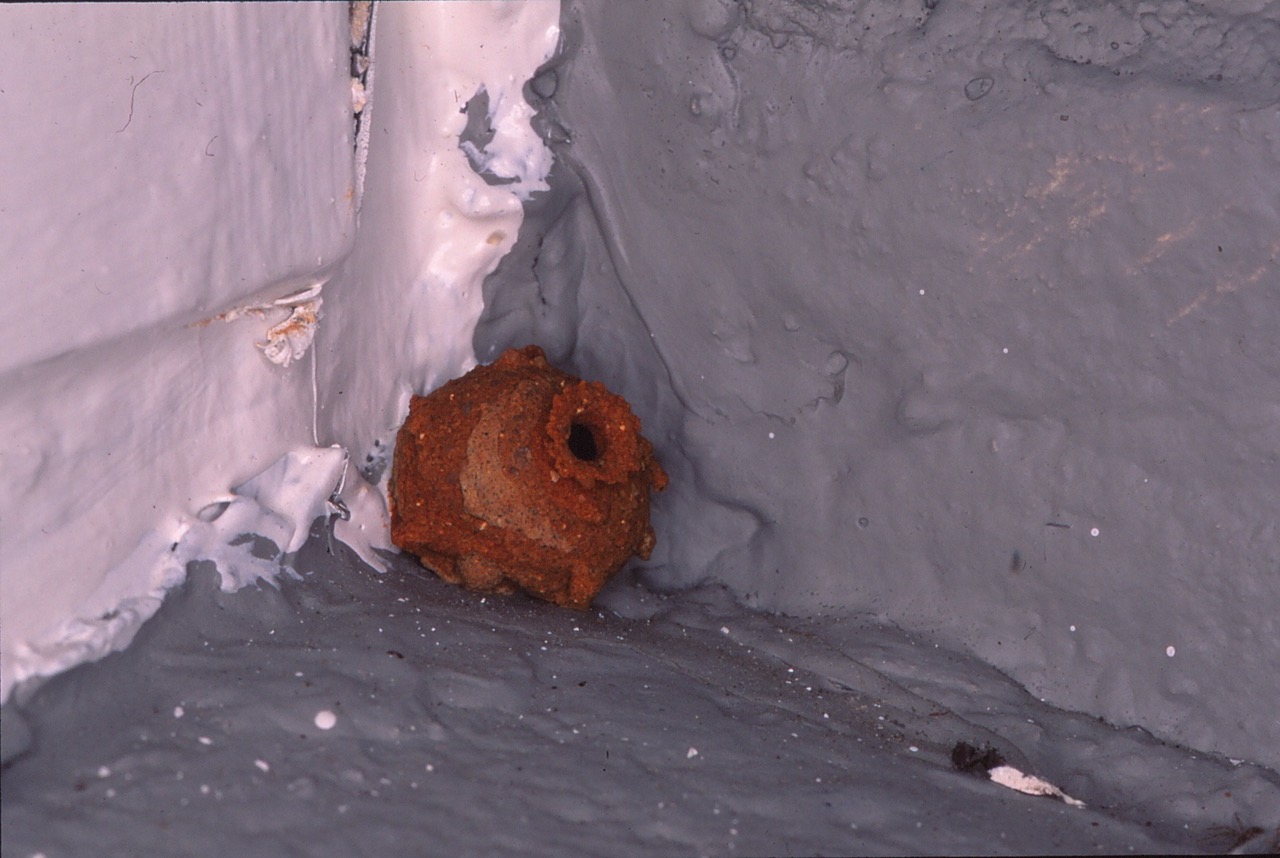 Potter wasp completed pot nest |
.jpg) Completed potter wasp pot |
 Potter wasp nest pots on ginkgo |
Did someone throw up something colorful on the mulch? No – just another interesting sighting. It is a fungus but usually not hurting anything and needs no treatment. Slime mold sounds scary but it is just a saprophytic fungus doing its job of breaking down organic matter, especially in moist environments. It can even be seen growing on hard surfaces that are staying moist. It shows up in just about any color. Often it appears in a solid mass but also can look like little bubbles or ash. Any of the organic fungus controls (baking soda, cornmeal tea, hydrogen peroxide, etc.) will kill it, but not necessary unless it’s climbing up and covering a plant.
 Slime mold creeping up on squash plant |
Enjoy the unique sightings that you have in the garden and landscape and if you get any photos of mysteries, please send them to me at info@dirtdoctor.com. I’m sure there are many surprises I haven’t seen yet – and I love to learn new stuff.