
Fall Color Organic Answers Column October 9, 2024
The Perfect Tree Planting Time – Now
This time of year we walk or drive past yards and parks and spaces with tree planted years ago that are now icons of fall color, those locations we drive by each year to get a view of their beauty. There is no hard and fast guide for getting the color you want, but . . . if you have in mind adding some fall color to your landscape, the timing is perfect right now to start your fall color plans. As the color is starting to show on the deciduous trees, let’s get ready. Although this plan isn’t foolproof, buying trees in the fall while they are displaying their fall color will give you the best odds of getting the color you crave.
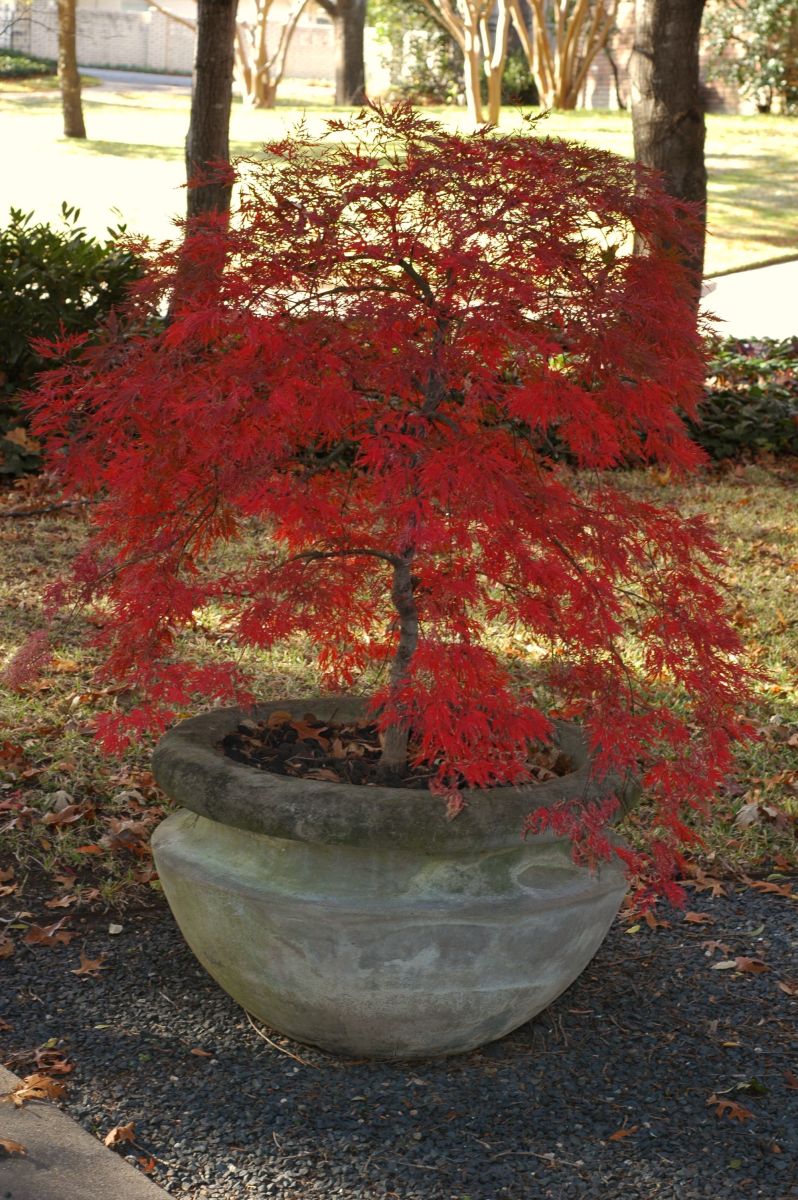
Japanese maples can produce a variety of fall colors,
depending on the variety.
The first step is to plan what to purchase. Here are some guidelines on which trees will give the best chances to get the fall color you want.
Purple colors are the hardest get, but with red Canadian chokecherry, smoke tree, sweetgum, rough leaf dogwood and some of the Japanese maples, you may be in luck. To get a certain fall color, buying the little Japanese maples in the fall is crucial. Their fall colors vary more than any tree. A note on sweetgum – don’t plant unless you have sandy soil. They don’t hold up well in the black and white alkaline soils.
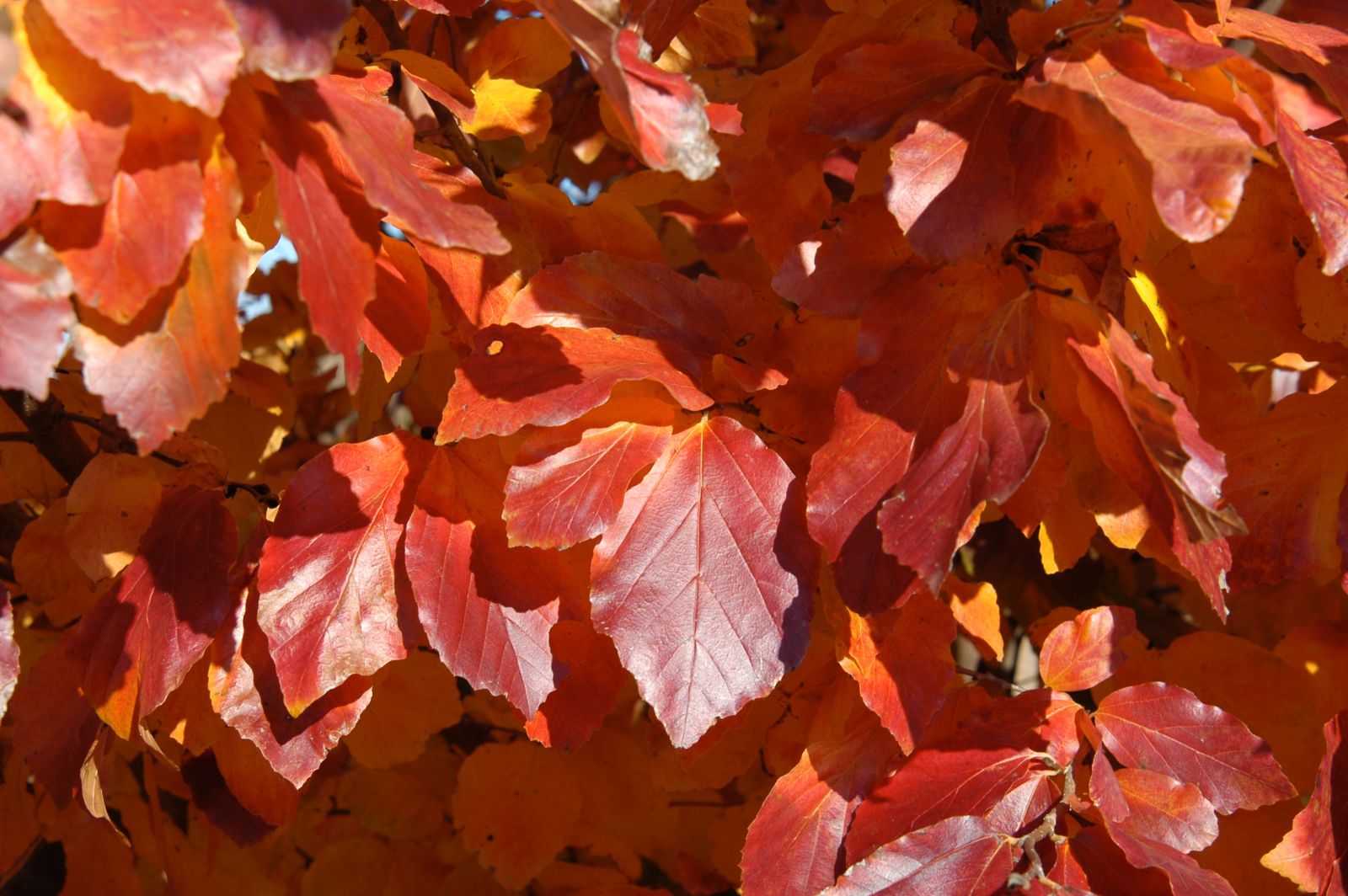

Persian Ironwood (left) ranges through shades in the fall, including reds. Flame leaf sumac is a reliable bright red.
Red fall color is a hallmark of the red oak, but there are some issues on that. There are too many red oaks out there already and they are inconsistent fall color producers. Some often have yellow or just brown leaves. Another flaw is that red oaks are notorious for cross breeding with other oaks. When crossed with ill-adapted pin oaks or northern red oaks (a common occurrence), you’ll probably be seeing unhealthy yellow foliage in the summer. For an example, look at the trees on Woodall Rodgers downtown Dallas. Other more dependable red choices include common dogwood, prairie sumac and rusty blackhaw viburnum. Texas ash is also dependable with a deep maroon after going through some yellows, oranges and reds. And many of the Japanese maples have beautiful red fall color.

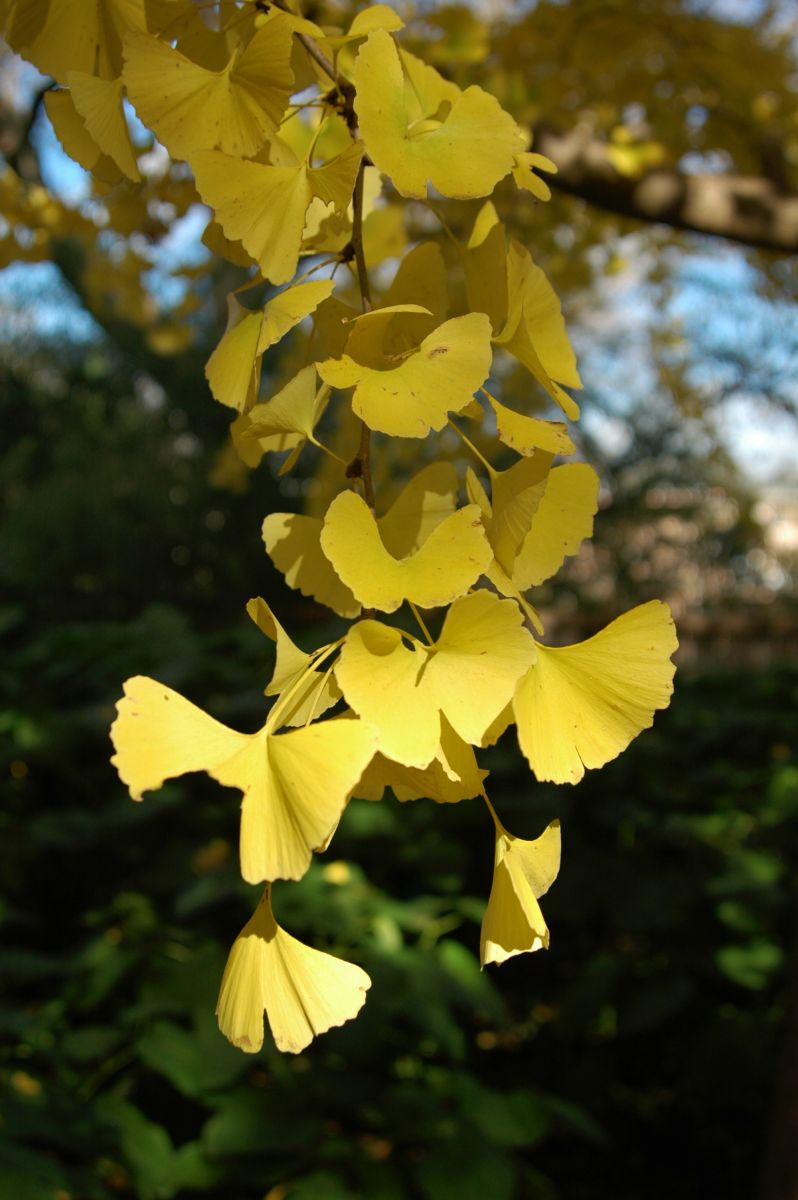
Cedar elm (left) and ginkgo are lovely yellow in the fall
Yellow is the fall color that is the easiest to bank on being the most consistent with a few exceptions. Choose elms in general, green ash, Osage orange (bois d’ arc), Eve’s necklace, and ginkgo. Persian ironwood usually has great yellow color but some varieties and/or cultivars have really nice red color.
There are relatively few orange choices, including Mexican plum, some Japanese maples, and some elms such as winged elms.
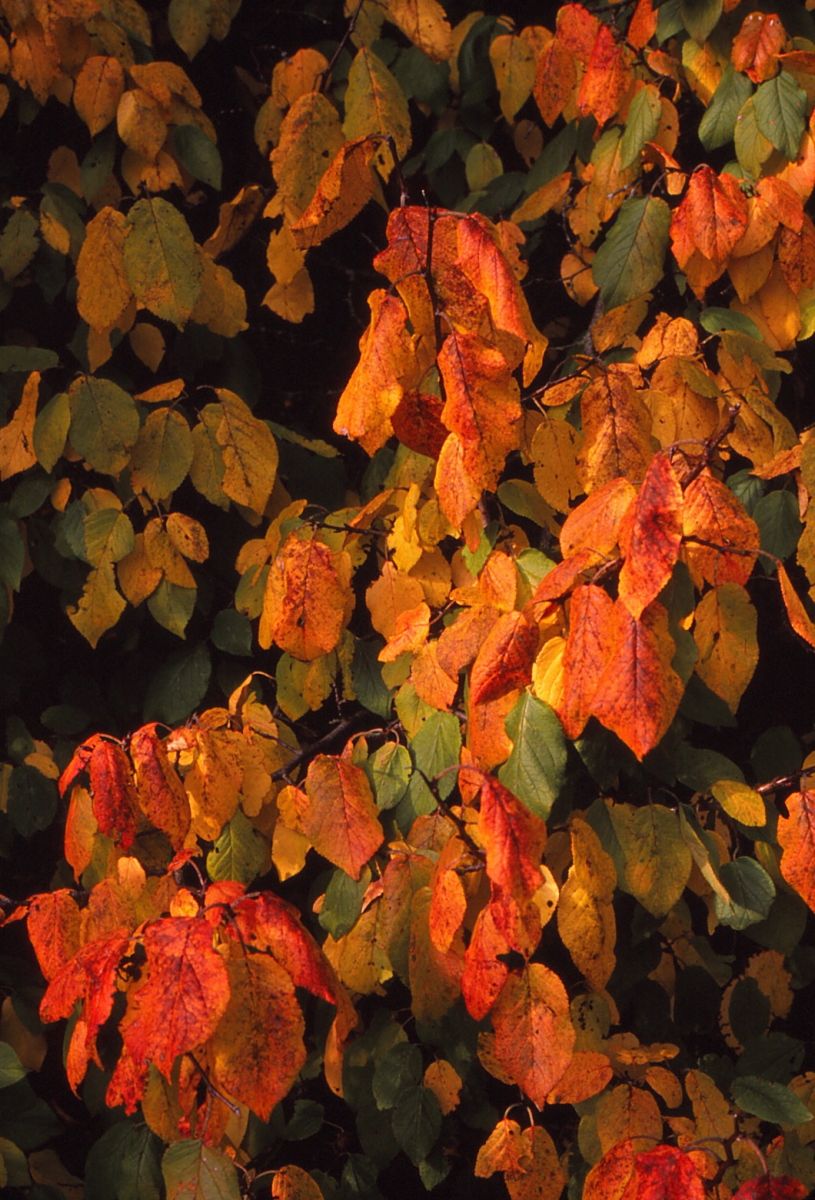
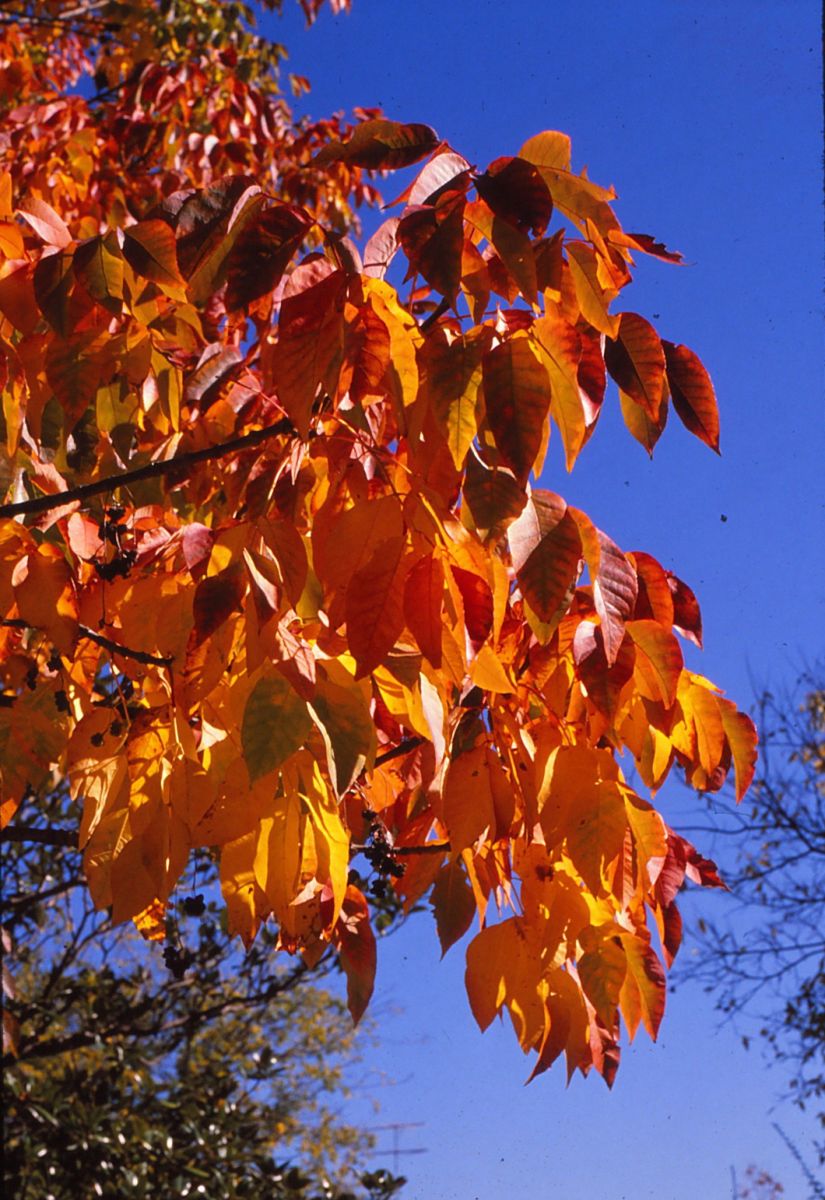
Orange colors are produced by Mexican plum (left) and Texas Ash (but ash can produce several colors)
Plan to start your shopping after the the first frost, when the fall color on the native plants strongly starts to show.
To get your newly purchased colorful tree off to the best start use the Dirt Doctor’s recommended planting routine: remove the burlap and soil from the root flare and let it soak in a bucket of water with Garrett juice. Dig wide rough-sided hole, set the tree high and spread out the roots in the shallow hole, then backfill with nothing but the native soil from the hole. Settle the soil with water, and absolutely don’t trim, don’t wrap and don’t stake unless it’s absolutely necessary as a last resort. And whatever else you do, avoid the hybrid maples.

Ginkgo is a pure play when it comes to yellow color in the fall.
