
Dallas Morning News – October 22, 2020
Tree Planting – Digging the Hole
The first step of proper tree planting is to select the tree type and decide where it should go. See that info in last week’s column. Today the subject is preparing the hole properly.
 Burlap should be removed from balled and burlapped trees |
Before starting to dig the hole, remove burlap, excess soil and mulch from the top and measure the height of the actual root ball. Dig a wide, rough-sided hole, about 2 times wider than the tree ball, especially at the soil surface. Square-shaped holes also work. The point is to have well aerated soil around the new root ball and to prevent the roots from circling in the hole. The width of the bottom of the hole isn’t as important as the top of the hole. The depth of the hole should be slightly less than the height of the ball. Measure, don’t guess.
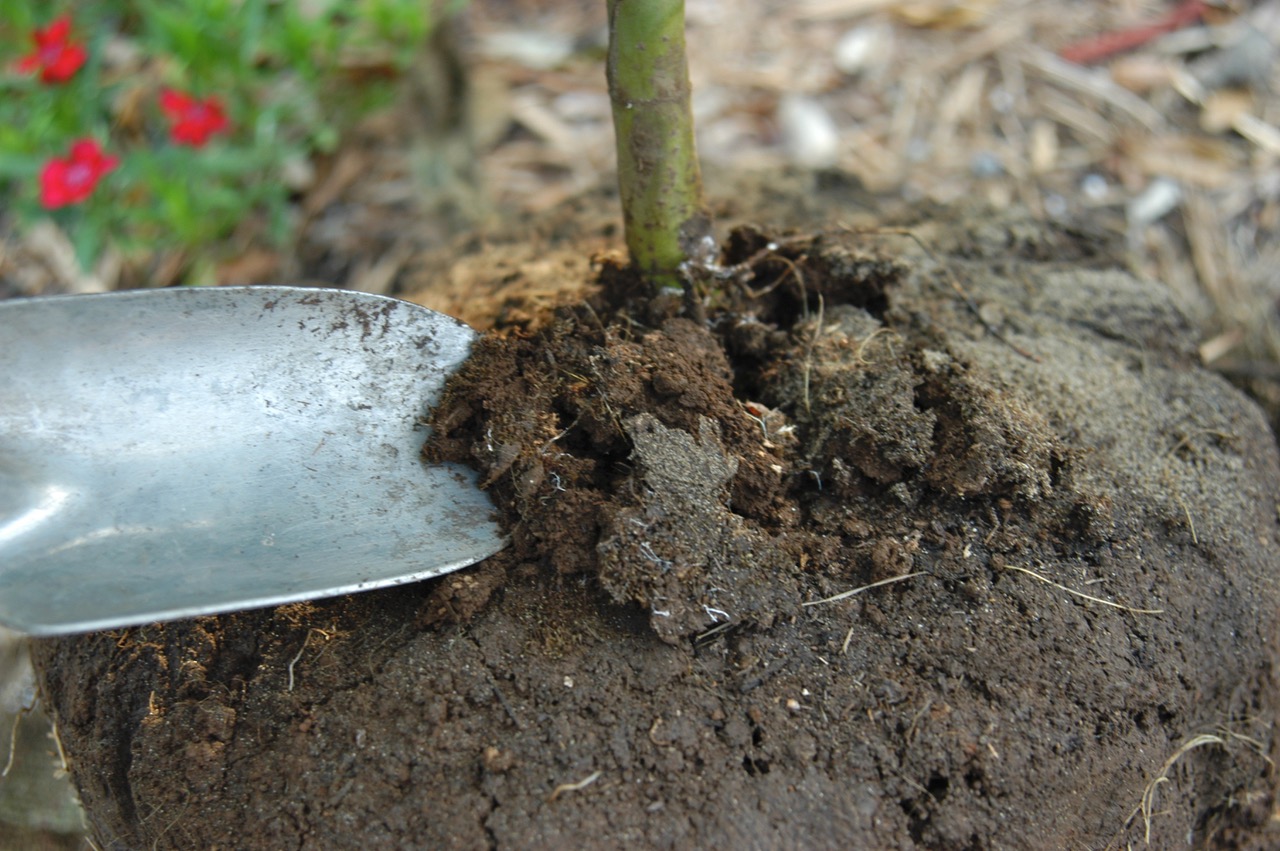 Mulch and soil should be removed from the top of container or balled and bur lapped trees |
 Flares should be exposed by carefully removing excess soil |
Digging a small, smooth-sided hole is a bad plan. Augers can be used to speed up the process, but the smooth sides need to be roughed up to create a non-glazed and aerated condition.
 Small, smooth sided holes are harmful and should never be used |
When time allows after digging the hole and before the tree is planted, fill the hole with water and wait until the next day. This is a perc or percolation test. If the water does not substantially drain away overnight, a drainage problem that would negatively affect most tree is indicated. For wet soil-adapted trees like bald cypress and willows, this procedure isn’t necessary.
If the hole doesn’t drain well, the tree needs to be relocated or have drainage added in the form of drain ditch filled with crushed gravel running from the hole to a lower point on the site. Pipes are usually unnecessary. Another draining method that sometimes works is a pier hole dug down from the bottom of the hole into a different soil type and filled with gravel. Lava gravel is the best choice.
 The true height of the rootball needs to be established before digging the planting hole |
Another technique for treating poorly draining tree pits is spraying the sides of the holes with hydrogen peroxide. It loosens the wall of the hole and creates a more receptive surface for tree roots to enter. Hydrogen peroxide (3% product from the grocery store) sprayed on the sides of holes starts the flocculation or softening of the soil. This is especially helpful in heavy clay and other poor quality soils.
More details for you next week, but the “Cliffs Notes” of the rest of the planting procedure is to set the root ball with the top sticking out of the ground slightly, the bottom of the root ball sitting on firm undisturbed or well compacted soil and the flares dramatically exposed. Backfill with only the soil from the hole, and settle the soil with water. Avoid thinning the top growth, wrapping the trunk, staking, and building watering rings. It’s the natural organic approach.