
Yams or Sweet Potatoes answered
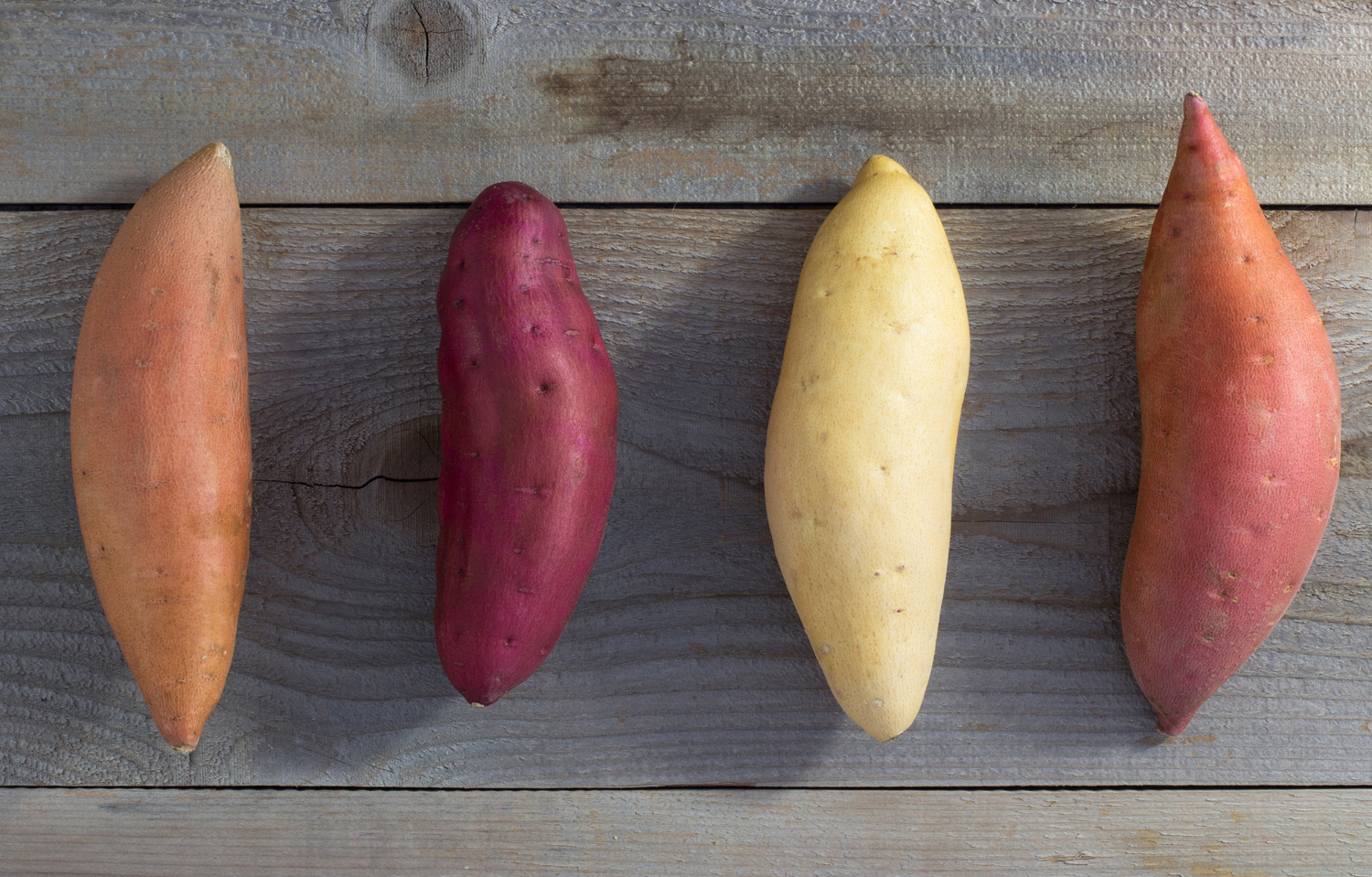
Four varieties of sweet potatoes from the California Sweet Potato Council
(l-r) Jewell, Oriental, Jersey, and Garnet.
A question that comes up regularly illustrates one of the difficulties when it comes to knowing the difference between sweet potatoes and yams: there are producers of sweet potatoes who wanted to label them as yams because of the color of the product they were growing was so different from usual colors. According to an informational page at the University of Mississippi State Extension:
You won’t find many true yams in U.S. grocery stores because they require specific growing conditions found in the Caribbean. Yams are commonly grown in Africa, South America, and Central America. Although you can find canned potatoes that are marketed as yams, you’ll notice that they are also labeled as sweet potatoes and the first ingredient is sweet potatoes. The U.S. Department of Agriculture requires this dual labeling when sweet potatoes are labeled as yams.
Sweet potatoes are a New World plant, and Ipomoea batatas is a member of the morning glory family Convolvulaceae. Take a look at the flowers and you can see the family resemblance. The plant is remarkably responsive to the development of cultivars so there are many sizes and shapes of sweet potato but they are all still Ipomoea batatas with the variety name attached. Many of these are patented, including many of the fancy leafy vines that are planted for ornamental purposes. Sweet potatoes are more more plump and moist, and more prolific than yams, producing 4-10 roots per plant versus 1-5 tubers per yam plant.


Yams (left) are tubers while sweet potatoes are roots (Photos via Wikimedia)
More about the origins of yams from a North Carolina State University page that is no longer up:
In the United States [the terms “yams” and “sweet potatoes”] are used interchangeably but refer to what are really sweet potatoes. On the other hand, there is a plant called a yam that is not even closely related to a sweet potato. . . A true yam is rare to find in grocery stores because it is a plant that is mostly grown and consumed throughout the tropics. Yams are grown in Africa and South and Central America. True yams are a starchy, dry tuber that is scaly in appearance and typically has white flesh. They are best adapted to tropical climates and do not perform well in our climate.

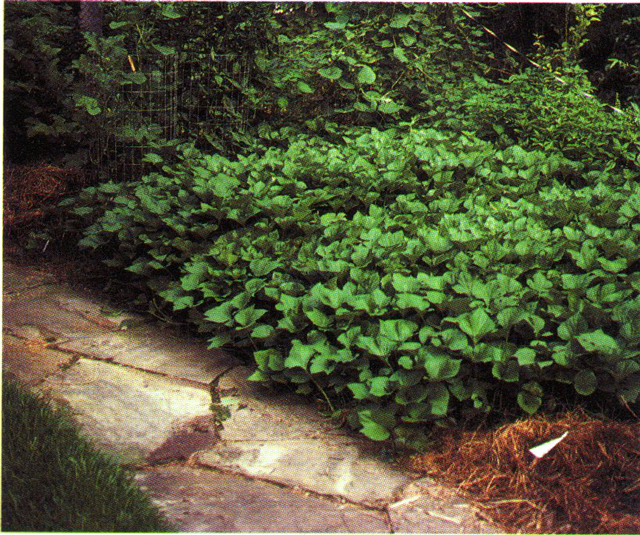
Sweet potatoes ready to harvest (left, photo U of South Dakota Ext.) and their lovely vines while growing.
Sweet potatoes have been transported around the world and are cultivated widely. The leaves as well as the roots are edible. Bookmark this topic to have handy when the “are these yams or sweet potatoes?” question comes up at the Thanksgiving table.
For more about sweet potato varieties (patented and not)
https://potatoes.cals.ncsu.edu/sweetpotato/sweetpotato-varieties/
https://en.wikipedia.org/wiki/List_of_sweet_potato_cultivars