
Organic Answers Column – February 21, 2024 – Edible Weeds
Beyond the Cultivated Garden: Edible Weeds and Flowers
What do dandelions, amaranth, purslane, chickweed, yellow sorrel, lamb’s quarters, shepherd’s purse, violets, violas, and plantain all have in common? These and more are edible weeds, many of them appearing very early in the spring when garden greens haven’t sprouted yet (or are too tender to plant before the last freeze).

Dandelion
You might choose to drop dandelion leaves and purslane into a salad, stirfry lamb’s quarters leaves and stems in a main dish, add sheep sorrel to a soup, use Turk’s cap for a tea, and much more if you learn how to use the native and well-adapted plants that one doesn’t usually consider a garden crop. When choosing what parts of plants to eat, whether weeds or your well-tended organic flowers, it all comes down to being sure that the plant you plan it eat is correctly identified and properly prepared.
The question about identifying and eating common weeds has come up a lot this year, and though we don’t (so far) have a list of just edible weeds, the Dirt Doctor Library of Organic information has many cross-referenced plants that are edible, and starting points for finding those include the Master Reference List of Weeds (not all of those are edible, but when they are it is generally noted). Another list to check out is the Edible Flowers and More newsletter.

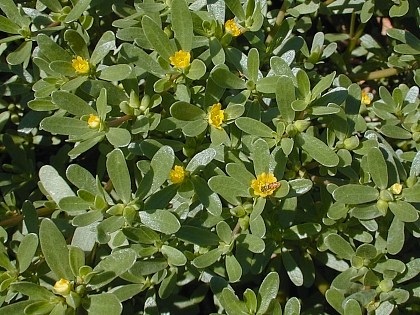
Lamb’s quarters (left) and purslane
The Old Farmer’s Almanac has a good list of 20 Edible Weeds in the Garden with information about their health benefits, nutritional and disease-fighting reputations.
We couldn’t share these lists without noting that caution should be taken when harvesting wild plants and weeds.
RULES FOR EDIBLE FLOWERS and OTHER PLANT PARTS
1. Not all flowers are edible. Some are poisonous. Learn the difference.
2. Eat flowers only when you are positive they are edible and non-toxic.
3. Eat only flowers that have been grown organically.
4. Do not eat flowers from florists, nurseries or garden centers unless you know they’ve been maintained organically.
5. Do not eat flowers if you have hay fever, asthma or allergies.
6. Do not eat flowers growing on the side of the road.
7. Remove pistils and stamens from flowers before eating. Eat only the petals of the larger flowers.
8. Introduce flowers into your diet the way you would new foods to a baby – one at a time in small quantities.
NOTE: Pregnant women should avoid all strong herbs and no plant should be ingested in excess by anyone at anytime. Edible flowers can be used to enhance food at breakfast, lunch and dinner. They can also be used in teas. Here are some of the best edible flower choices and uses.
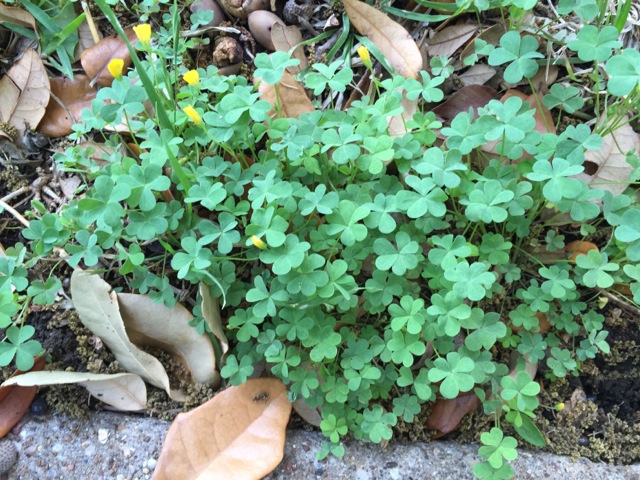
Yellow woodsorrel
