
Organic Answers Column – September 6, 2023 – Tree Liability
Can You Cut Your Neighbor’s Tree if it’s Over Your Yard?
Trees growing on your neighbors’ property aren’t yours, but the damage they might cause to your property can be your problem.
If neighbor’s tree limbs have reached out over your roof, they can be a risk and the neighbor can be responsible. Fallen tree limbs are among the leading causes of roof damage in some states. They can also be dangerous to people, pets and cars. Although most homeowners insurance policies do not cover preventative tree removal, pruning or other tree care, trimming tree limbs properly can sometimes save a lot of money in the long run.
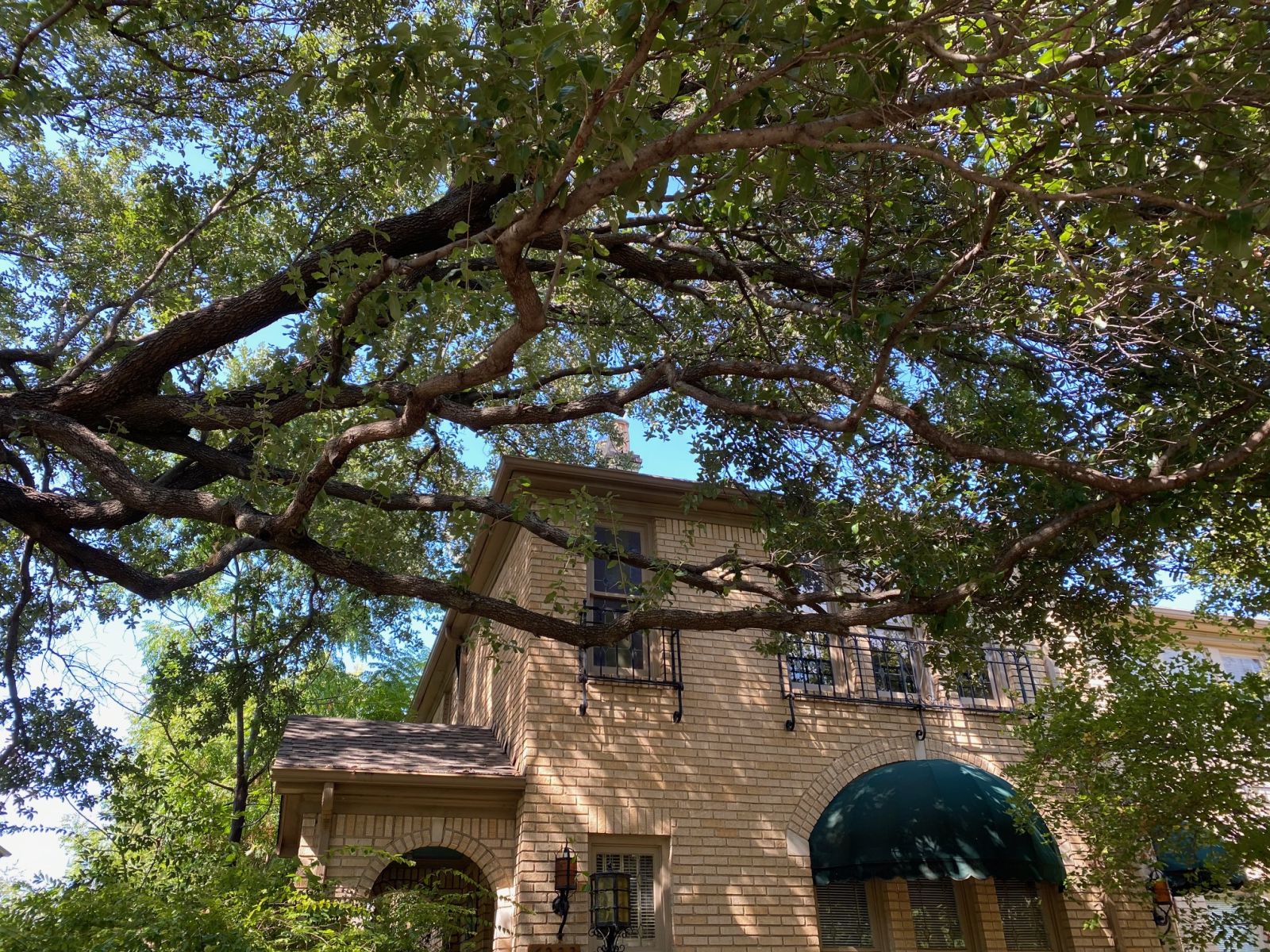
Tree limbs can extend long distances and cross property lines. What if they fall across that line?
However, just because tree limbs have reached over your property line doesn’t mean the tree is yours to trim as you wish. If the trunk is in your neighbor’s yard, the tree belongs to them.
Your neighbor is liable for any damage caused by their tree when limbs, branches or the entire tree falls on your property. You usually would have to prove that negligence on their part caused “serious harm” to buildings or other parts of your property – unless they just agreed. If the tree was decayed, diseased, dead or in any dangerous condition before a natural disaster, it would probably also be their responsibility.
Your neighbor is not normally responsible for damages that qualify as an “act of God,” according to most state law. This in many cases would mean if the tree was healthy before a natural disaster caused the tree to fall and cause “serious damage,” the tree owner would not liable.
In some cases when a neighbor is unwilling to trim their trees from your property, you can also sue to make them cut the branches even if no harm has yet been done.
You are generally allowed to trim your neighbor’s tree branches back to your property line as long as you stay out of your neighbor’s property (unless permission is granted) and don’t cause great damage to the tree that throws it into stress and/or leads to its death. But be careful. If it could be proven that you killed the tree by incorrect or overdone trimming without permission, you could owe the homeowner compensation for harm done. Loss of large trees can significantly lower property value.
Nothing is “cut and dried” on this subject. If your neighbor’s trees appear to be a risk for your property, I strongly recommend hiring a professional arborist to give you an evaluation. Discussing the situation with the neighbors first can often be the best first step. They might just solve the problem for you.
And by the way – this reasoning applies to your trees growing out over your neighbor’s property as well.
