Organic Answers Column – December 6, 2023 – Ginkgo color
Ginkgo Fall Color Can Be Spectacular
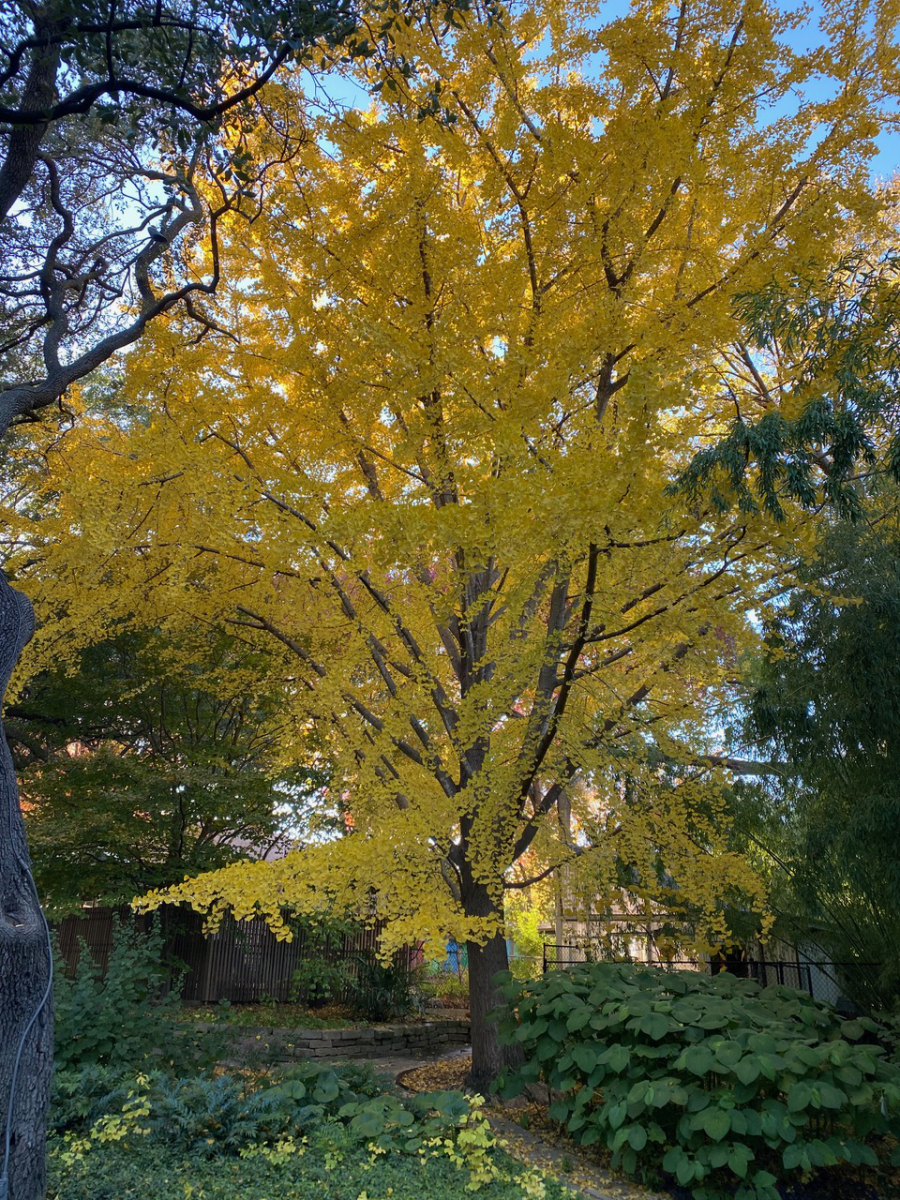
The history of my ginkgo is interesting from two standpoints. The first is because it was planted when Logan was born and she is the reason I became interested in organics. The second is how remarkably well the tree has grown over the past thirty-five years. The growth is far more aggressive than other ginkgoes I’ve ever seen. The largest ginkgo in the Dallas Fort Worth area is in Samuel Park and my tree is getting very close to having the same overall canopy size. The Samuel Park tree is probably 80+ years old.

When planted in 1985 my tree was 8 feet tall and about 1 1/2 inch caliper. At that point I didn’t know about the danger of planting trees too deep, but I did use the organic planting techniques that I had already developed, and luckily planted the tree almost high enough. The later removal of excess soil and exposure of the flare is another reason the tree has done so well. From the very beginning the tree was fertilized with organic fertilizers and mulched with compost and natural shredded tree trimmings and has never had any synthetic products anywhere near it. The tree is in an area of the garden where moisture is not excessive but good, on the downhill slope of the backyard.
I’ve learned the hard way on other projects that ginkgoes need deep soil. They do not like white rock or probably any other rock near the surface and it also not as drought tolerant as some of our native plants, but once established it is a very low maintenance plant if given reasonable moisture. The fact that the ginkgo is an ancient tree, dating back to the dinosaur ages, probably makes it more responsive to the organic approach. Under the organic program the tree responds dramatically and grows as much as 24 inches a year in ideal conditions.

I have not designed very many ginkgoes into commercial projects for two reasons. The first is that many of the ginkgoes coming from the nursery industry are tall and spindly and don’t get off to a good start planted out in the middle of parking lots. Additionally, there aren’t enough organic projects yet. I would never use ginkgo in anything but an organic project. The second reason I don’t use that many is that I plant native trees whenever possible.
One of the issues you’ll see talked about in most tree publications is a warning to always purchase grafted or cloned ginkgoes to make sure male plants are planted. However, the tree tag stating “male tree” does not always guarantee a male tree. Mine was supposed to have been male but by about year 14 it started producing fruit. I’m glad mine is a female because I collect the fruit to use in ways that are explained below and to propagate new ginkgo trees.

Nellie surveys the Garrett back yard.
Ginkgo has few pest problems; I have never seen any insect or disease damage. A problem related to female trees is that the fruit is stinky as it rots. It is difficult to know for sure whether you are buying a female because the fruit normally does not start to form until the tree is about fourteen years old. Recent research also has shown that Ginkgo trees can change sex. Read our Ginkgoes Changing Sex topic.
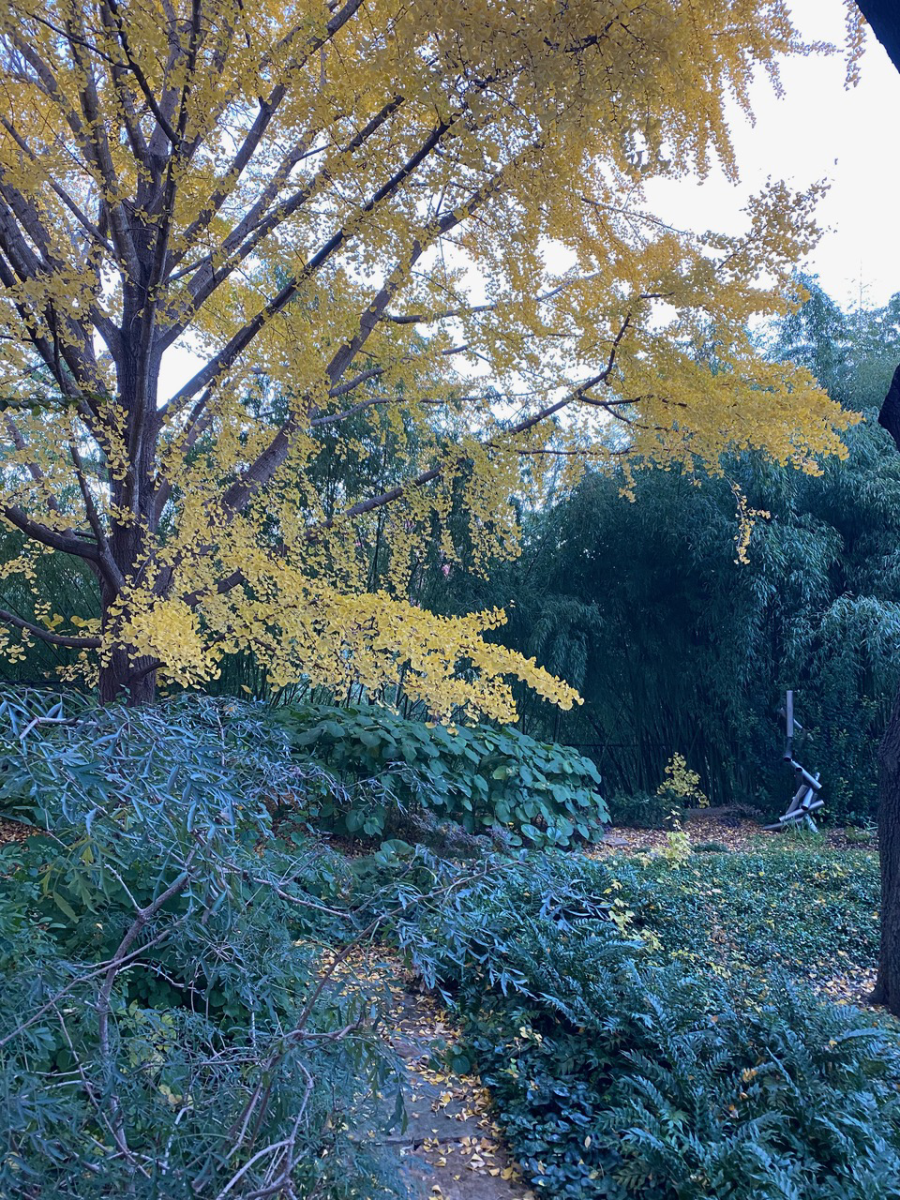
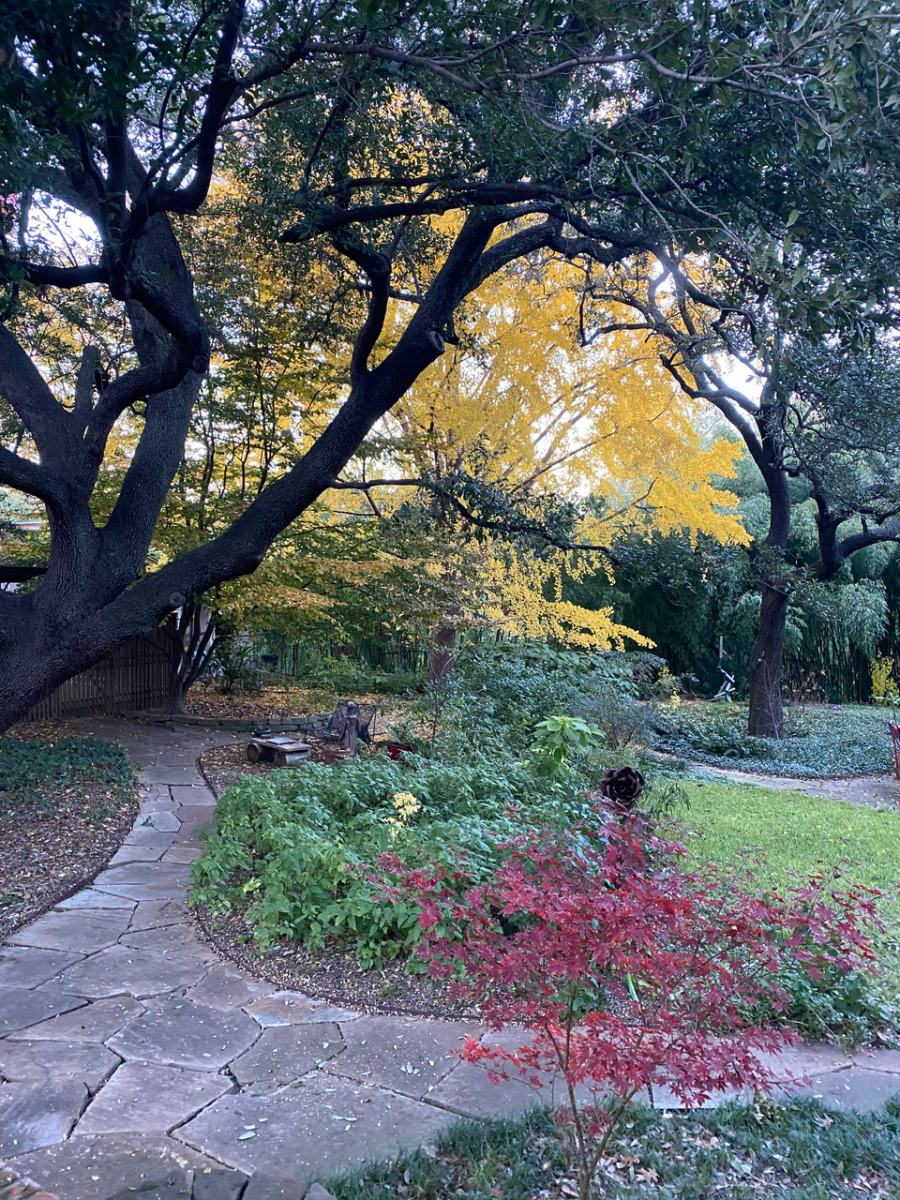
Ginkgo leaves are fan-shaped and a beautiful medium green in the summer. The fall color as you can see in these photographs is spectacular. Some years are better than others, but my favorite time of ginkgo fall color is when a substantial amount of foliage has fallen from the tree and is on the ground. The color seems to last longer on the ground than from any tree I’ve ever seen.
So, plant ginkgo but use a limited number of these trees on the property and enjoy the color and the history and the medicinal benefits from the foliage and the fruit.