
Organic Answers Column – August 24, 2022 – Major Fertilization
Major Fertilization – The Natural Way
Even though it is still summer, we are in the window for a major fertilization. One of the great advantages of the organic approach is that fertilization can be done pretty much any month of the year.
Below the ideal times are covered but an application now could be considered a late summer fertilization or an early fall treatment. Good timing based on the harsh weather we have experienced.
The natural way to fertilize is to feed the soil and let the healthy soil feed the plants. Creating biological activity is the goal. The system is to use only products and techniques that help the soil with every application. Microbe waste and dead bodies of microbes are the true natural fertilizers for the soil and the plant roots. Stimulating the life in the soil make all kinds of good things happen. The development of mycorrhizal fungus on the roots of plants is one of the most important things.
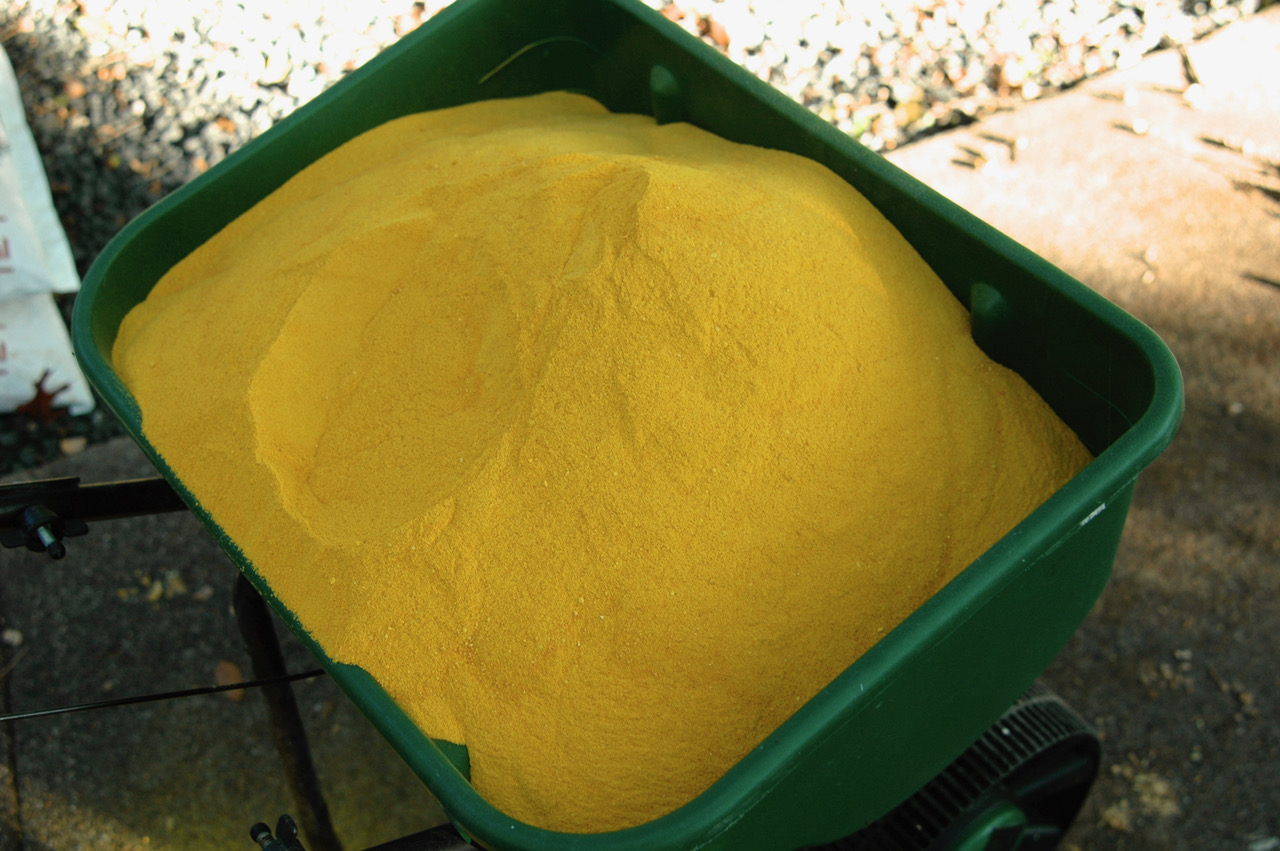 Corn gluten meal finely ground is most effective but dusty |
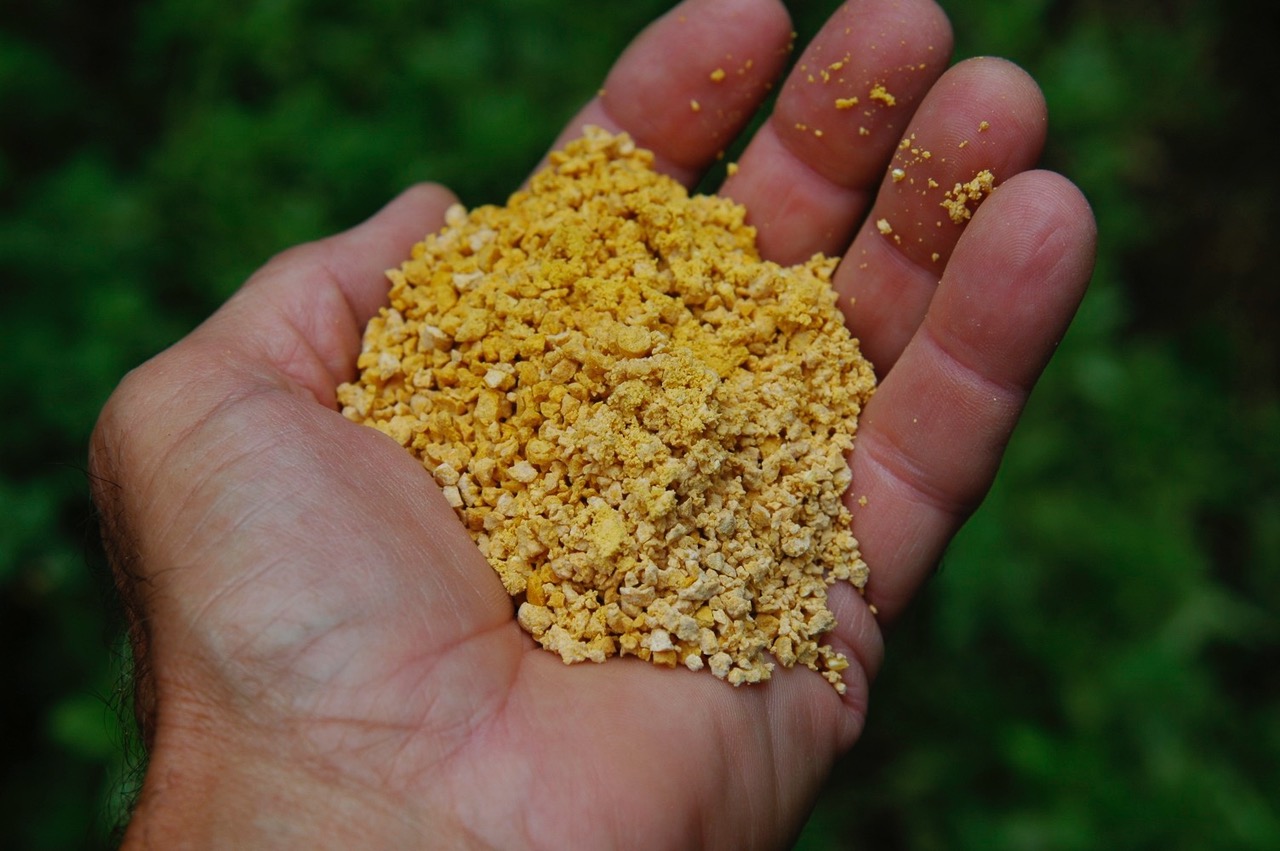 Granular corn gluten meal is cleaner but less effective |
The overall program is to apply an organic fertilizer 2 – 3 times per year at 15 – 20 lbs. per 1,000 sq ft. During the growing season, spray turf monthly with compost tea, molasses, apple cider vinegar and seaweed mix (Garrett Juice). Add volcanic and other rock mineral sands once every two to five years at 40 – 80 lbs per 1,000 sq ft was a recommendation used on many of our projects. That still works but one strong application of rock minerals will suffice for several years. The only definite change to the program is the addition of the commercial product, Azomite, at about 80 lbs per 1000 sq ft. Azomite is volcanic in origin and loaded with bio-available trace minerals, making it strongly effective.
Third Major Fertilization Of The Year
Fertilize all planting areas, including containers, with an organic fertilizer such as Medina Growin Green at approximately 15 – 20 lbs. per 1,000 sq ft. Corn gluten meal at the same rate can be used instead to help control annual winter weeds such as bluegrass, dandelion, henbit, fescue grass, ryegrass and Poa annua. To use CGM the most effectively, wait till mid-February for application (that would be for zone 8). Adjust appropriately if you are north or south of that zone.

Azomite is the newest recommendation in fertilization.
Add rock minerals if not recently done. Choices include lava sand, zeolite, granite sand, greensand, humate products, calcium products, etc. If you choose only one, opt for the Azomite.
Spray Garrett Juice or Garrett Juice Plus on all foliage and drench plant roots with Garrett Juice Plus. Add a mycorrhizal fungus product such as Organamax for even better results. Avoid all synthetic fertilizers – especially “weed and feed” types and the “nitrogen only” types. Remember that the only complete, balanced fertilizers are organic. The harsh chemical products contain no carbon and have poor compliments of trace minerals.
