
Organic Answers column – March 29, 2023 – H202
Mixing Information For Hydrogen Peroxide (H2O2)
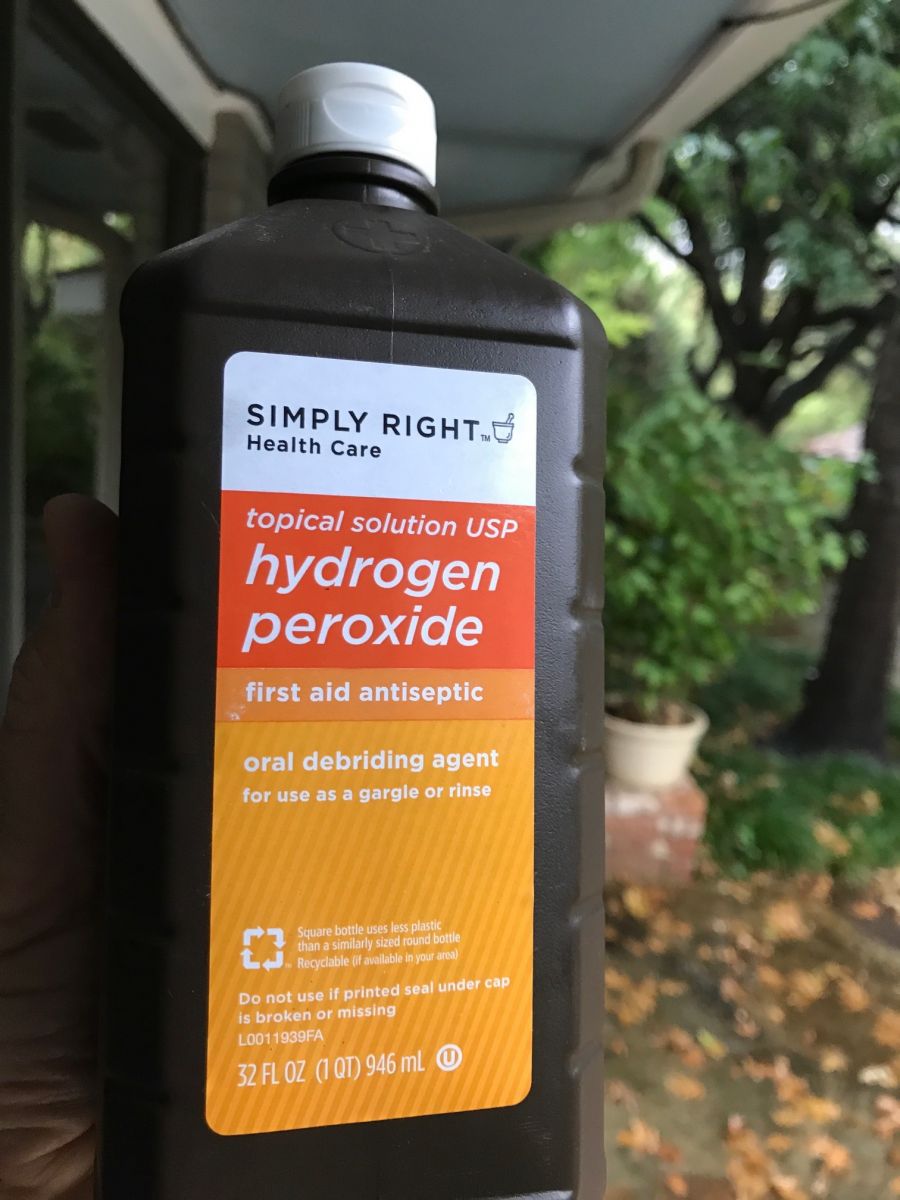
Here is an updated version of the uses and mixing rates information for using this versatile and fascinating tool.
*Always add the peroxide TO the water. Adding water to peroxide can cause dangerous splashing.
I. Uses for 3% H2O2 (the grocery store and drugstore product)
- Skin – to kill bacteria in cuts and scrapes – full strength. Use once for minor cuts and scrapes.
- Drinking water – to kill algae in rain barrels and animal drinking troughs – 8 oz. (1/2 pint) per 50 gallons of water.
- Fishponds and decorative water features – ½ gallon per 1000 gallons or 1 bottle (16 oz. or 1 pint) per 100 gallons for control of string algae and others.
- Fish aquariums – 1 ounce per 16 gallon tank, 1 pint per 66 gallon tank
- Cleaning hard surfaces – full strength.
- Earwax – full strength poured in ears or put on cotton balls.
- Washing machine and dishwasher – 4 oz. per load.
- Plant diseases – for disease such as rose rosette, replace 1 quart of water in the Garrett Juice formula with 1 quart of hydrogen peroxide.
- Soil improvement – to provide soil flocculation (fluffiness), spray and, or drench the soil or tree holes before planting with a 50/50 mixture.
II. Uses for 35% H2O2 (hydrogen peroxide or hydrogen dioxide)
- Swimming pools – for mustard algae, use 1 gallon per 5000 gallons of pool water.
- Koi and other fish ponds – use 1 cup per 1000 gallons of water.
- Weed killing – spray weeds with 10% H2O2. See formula below*.
- Disease control – spray infected plants with a mix of 1 oz. per gallon of water.
- Soil flocculation – spray soil with a mix of 2 oz. per gallon of water. Apply 1 gallon of mix to approximately 1000 sq. ft.
- General use – 1 oz. H2O2 per gallon of water when using the 27-30% hydrogen peroxide
It takes approximately 11 times as much water added to 35% hydrogen peroxide to produce 3% hydrogen peroxide. Use 1 oz. of 35% product per 11 oz. of water to make 3% hydrogen peroxide.
Other ways to look at it:
To convert 35% to 3% H2O2
- 1 part 35% H2O2 + 11 parts of water = 3% H2O2
- 1 and ¼ cups of 35% H2O2 + 14 and ¾ cups of water = 1 gallon (16 cups) of 3% H2O2.
- 1:11 ratio of H2O2 to water = 3% H2O2
**To convert 35% to 10% H2O2
92 oz. of water + 37 oz. of 35% H2O2 = 128 oz. (1gal.) of 10% H2O2.
To convert 35% to 1.6% H2O2
122 oz. water + 6 oz. 35% H2O2 = 1 gal. of 1.6% H2O2.
NOTES
: Follow label direction on all hydrogen peroxide products but especially the concentrated products. They can burn skin and injure eyes so handle with great care. The above information is based on a 35% concentration. Some concentrated products are 22 – 33% concentrations so adjust your rates as necessary. Do NOT drink 3% hydrogen peroxide or any other mix for that matter!
*From Lifehacker:
“Do what you oughta—add acid to water.”‘
Diluting certain acids produces a lot of heat, which makes this deceptively cute lil’ mnemonic incredibly important in a lab setting. Pouring water into concentrated acid generates too much heat way too quickly, which can cause the solution to bubble up or explode; adding the acid to the water instead slows the reaction process down enough that everything stays where it belongs.
The same strategy applies to household chemicals—even those that aren’t acidic at all—but for slightly different reasons. Whenever you pour one liquid into another, there’s usually at least some initial splash back—and if you’re pouring water into a chemical, the displaced liquid flying up at your unprotected eyeballs will mostly be that chemical. (This is even more likely to happen if you crank the tap full blast and stick a mostly-empty container of bleach underneath.) By reversing the order, you ensure the splash back is mostly water, which is significantly less hazardous to exposed skin and mucous membranes.