
Organic Answers Column – April 27, 2022
Organic Disease Control is About Balance
Powdery mildew on crape myrtle
Wet feet – soggy roots – is a problem for most plants so good drainage is important for the prevention of diseases. Beds or tree pits that don’t drain properly are the ideal breeding places for disease organisms. Too much water and plants too deep in the ground are other leading causes of disease issues. As with insect pests, spraying diseases only treats symptoms, not the real problems. The primary cause of problems is usually related to the soil and roots, making it critical to improve drainage, increase air circulation, and add quality organic products to stimulate and protect the living organisms in the soil.
Black spot on roses
Plant diseases are rare under the basic organic program – and easy to control if they pop up occasionally. The key is balance. Balance results from a healthy population of microorganisms in the soil. Diseases are simply an imbalance of biological activity in the soil.
Disease control in an organic program is simple and effective if problems do arise. All organic products help control diseases to some degree because they stimulate microbes. When soil and plants are healthy, there is a never-ending microscopic battle being waged between the good and bad microbes, and the good guys win, retaining the balance.
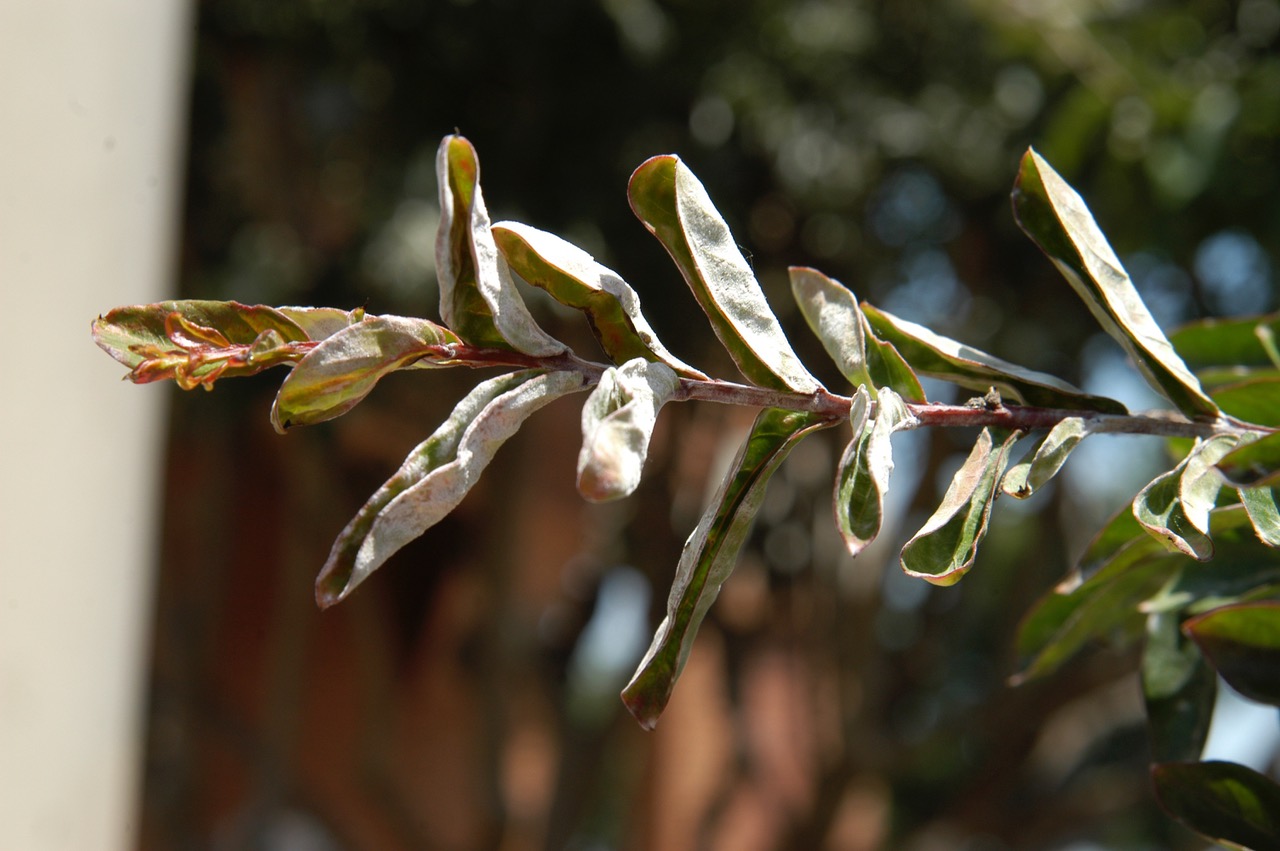 Powdery mildew on crape myrtle |
 Black spot on roses |
Gray leaf spot on St. Augustine
Fungi, bacteria, and viruses are all causes of plant diseases, with fungal diseases being the most common. These include powdery mildew, early blight, brown patch, black spot, grey leaf spot, and more. This kind of disease can be knocked back with several different organic sprays such as milk at 1 cup per gallon of water, hydrogen peroxide at a 1-2% solution with water, baking soda or potassium bicarbonate at a rounded tablespoon per gallon of water, and with commercial products.
Bacterial diseases such as fireblight can be successfully treated with hydrogen peroxide or commercial products containing hydrogen peroxide.
Viral diseases such as mosaic virus and curly top can be managed with the hydrogen peroxide spray. Several soil diseases can be overcome with whole ground cornmeal because it stimulates a beneficial fungus called trichoderma. The cornmeal can be used dry at 20 lbs per 1000 sq ft or mixed with water at 2 hands full per 5 gallons of water. Strain out the solids and spray the cornmeal “tea” on the problem plants. Toss the solids on the soil around problem plants. Rose rosette can be managed by avoiding the high nitrogen fertilizers and toxic pesticides and applying the entire Sick Tree Treatment procedure.
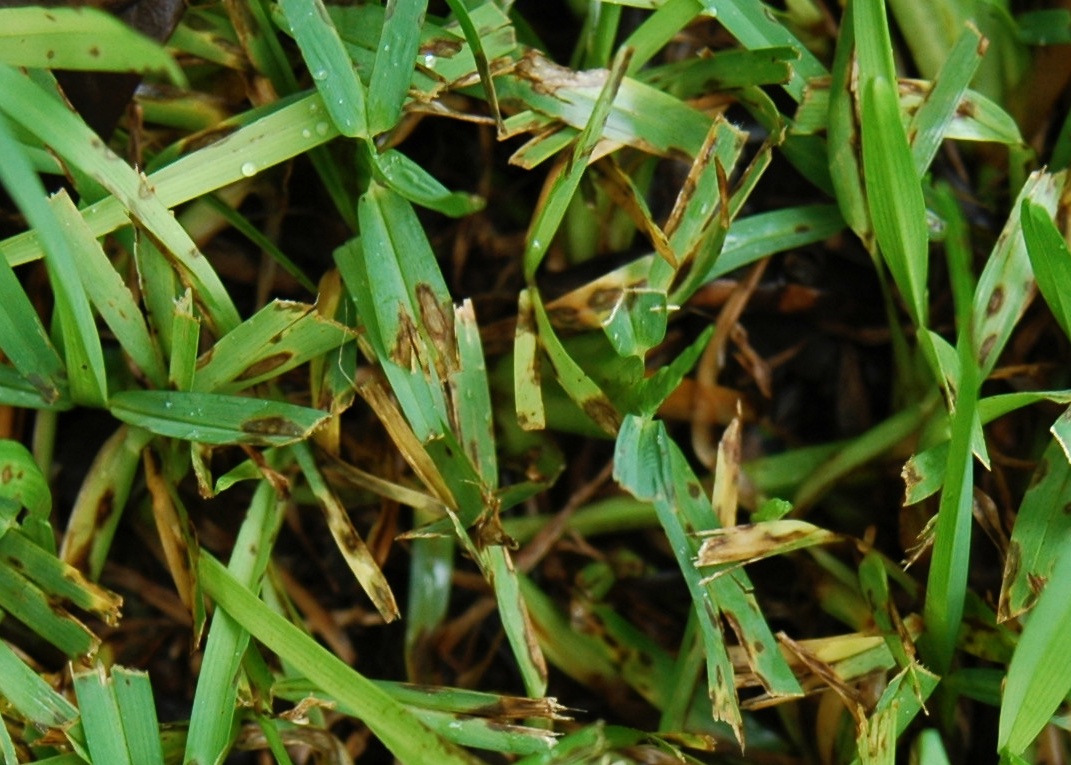 Gray leaf spot on St Augustine grass |
 Brown patch on St. Augustine grass |
Brown patch on St. Augustine
All of these techniques only work when a non-toxic organic program is being used. Toxic chemical disease control products don’t solve the problem because they are indiscriminate and kill the beneficial microbes more than the targeted pathogens, allowing the pathogens grow back faster than the beneficials.
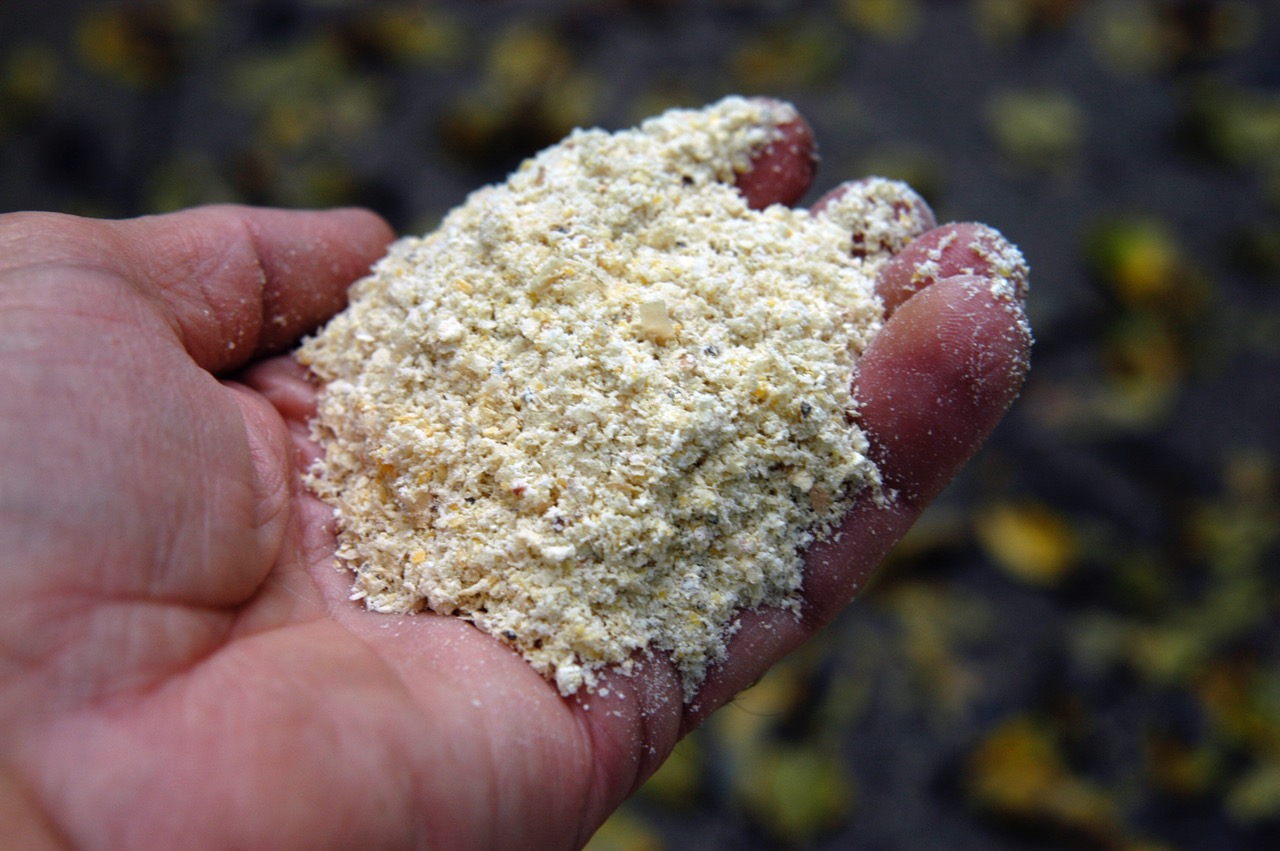 Whole ground cornmeal solves lots of plant disease problems |
One last thought
Whole ground cornmeal “tea” can be used for disease control on all plants and especially helpful when applied to the root zone of trees as part of the Sick Tree Treatment when treating for oak wilt.
So – go organic and enjoy your healthy gardens.
