
Organic Answers Column – June 29, 2022
Organic Weed Control Involves Several Approaches
New tools and techniques for weed control come on the market regularly, and a recent question about solar weed control reminded me that there are some new options for weed killing and I probably need to cover all the possible solutions for those of trying to avoid the toxic and highly destructive products like Roundup and 2,4-D.
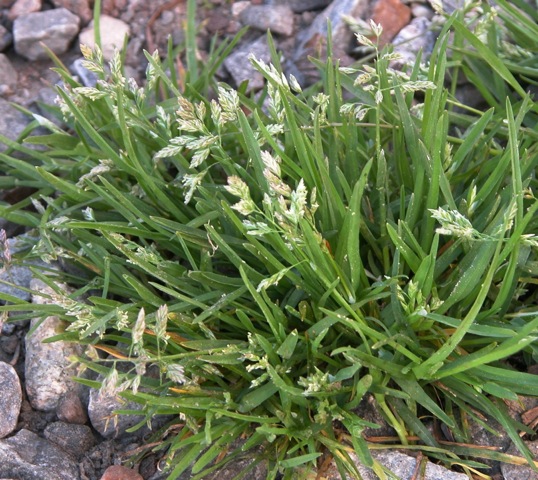
Poa annua winter weed
The question was: “What’s the best way to eradicate the Bermuda. I want to plant shrubs & perennials in this area and can wait until the fall if need be. I really don’t want to dig out the Bermuda if it isn’t necessary. Did that in other areas and it is a killer on the back. I’ve heard about solarization and cardboard/newspapers and mulch. There’s an East Palatka holly growing in the area and has nutsedge growing around it. I broadcasted dry molasses and plan on drenching soil with liquid molasses. Any advice would be greatly appreciated.”
Nutsedge will respond to the dry molasses by gradually dying out; “kill it with kindness” in that it doesn’t like the extra biological activity in the soil, but it takes a while. I have to be honest and say that the best solution is to scrape or hoe 1&1/2 – 2″ of plant growth and soil off and be done with it. Contrary to popular opinion, grasses and weeds don’t grow back from roots, only from the rhizomes (stems) of the plants that are very shallow in the ground. You might want to try one of the following alternatives.

Nutgrass or nutsedge
One issue to do with materials used is raised with solarizing soil by covering a dampened area with clear plastic then putting down the plastic secure the edges firmly with soil, stones or brick. It takes a couple of months for the plastic solarization to work, it isn’t perfect, and it doesn’t work against all weeds and pathogens. This process requires the use of chemicals and energy to make the polyethylene, and afterward it leaves a plastic waste for disposal. But it is much cleaner and safer than hazardous herbicides and fungicides and often just as effective.
Paper and cardboard can used in a similar way and will kill a percentage of grasses and weeds. The plants that survive and pop though can be spot sprayed with vinegar herbicides or fatty-acid products and some of the cinnamon powder and clove oil products. These are available in concentrates and ready-to-use by mail order and can be purchased from the manufacturers by your local retailer for more convenience. Ask at your local Dirt Doctor Destination organic nursery or feed store to see what fatty-acid products they have in stock or can order for you.
All of these techniques are not only safer for people and pets, they will not be dangerous to existing plants such as your holly tree.
