
Organic Answers Column – March 26, 2025 – Verbena-Mistflower
Pollinator Magnets – Mistflower And Almond Verbena


Almond verbena (left) and White Mistflower
One of the most frequently asked questions at my public talks and calls to the radio show have to do with how to attract beneficial insects, particularly pollinators. And two of the plants I always name are white mistflower and almond verbena. No other plants attract beneficial insects like these do, plus they have other great features.
White mistflower is , has a couple of negatives – hard to find in nurseries and the names are confusing. But it’s worth the effort. The current accepted scientific name is Ageratina wrightii but before this was called Eupatorium wrightii. These names come from the Lady Bird Johnson Wildflower Center in Austin other names were synonyms Eupatorium havanensis and E. texensis. Confused? Just ask for white mistflower.
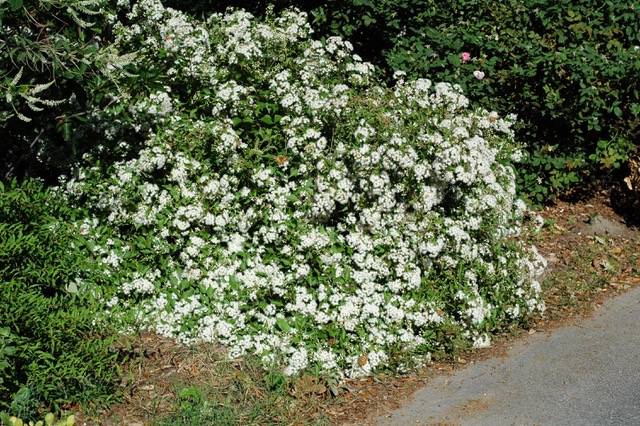
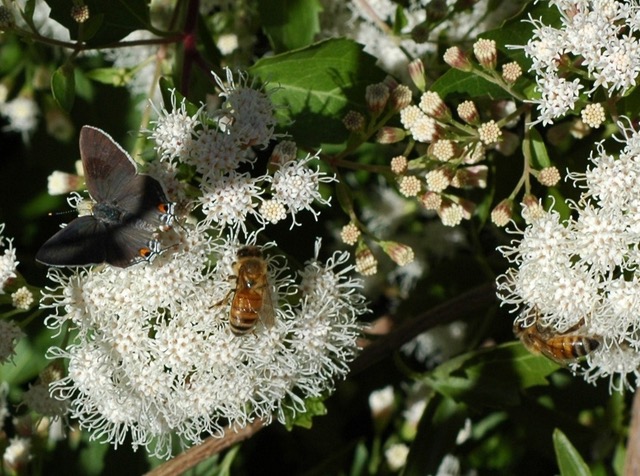
White mistflower prefers sun but will grow in some shade.
To make complicate matters, other common names include Wright’s boneset, Wright Ageratina, Wright Eupatorium, Wright’s snakeroot, shrubby boneset, white shrub mistflower and Havana snakeroot. Mistflower being a good description of the delicate prolific lacy flowers, a native blue relative is the native Gregg’s Blue Mistflower, with the scientific names of both Eupatorium or Conoclinium greggii.
White mistflower is a lacy, woody perennial with delicate white flowers open as early as July lasting until hard frost. It does well in sun or light shade and grows to 2 – 6 ft. tall, with leafy branches and clusters of fragrant white or pinkish white ageratum-like flowers that attract butterflies and hummingbirds. Fruits are 1/5 inch long, with a crown of bristles on one end.
This native adapts to most well-drained soils and really likes the natural-organic program. Heavy shearing in the winter will promote a denser shape and more flowers the following year. Best if pruned to 3′ after first hard frost. It is drought tolerant and can be transplanted year-round if cut back by one third.
The second must-have plant is an introduced ornamental, almond verbena (Aloysia virgata). The only other common name is sweet almond verbena and everyone seems to agree with the one botanical name. It is the most insect-attracting plant I have ever grown, the fragrance is out of this world and it blooms from early spring to the first hard freeze.
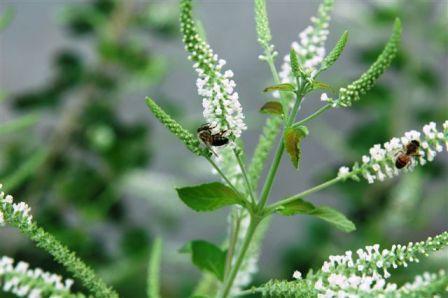

Almond verbena usually dies back each winter, returning from the roots
Almond verbena grows to a height of 10’ – 15′ with a spread of 8’ – 10′ – so it gets big and needs some space. It thrives in full sun but can adapt to partial shade. Native of Argentina but it can be grown pretty much anywhere in the country. The flowers strongly resemble buddleia. It’s a deciduous, woody perennial for us here in north Texas but can be evergreen in mild winters. I usually cut mine to the ground every winter.
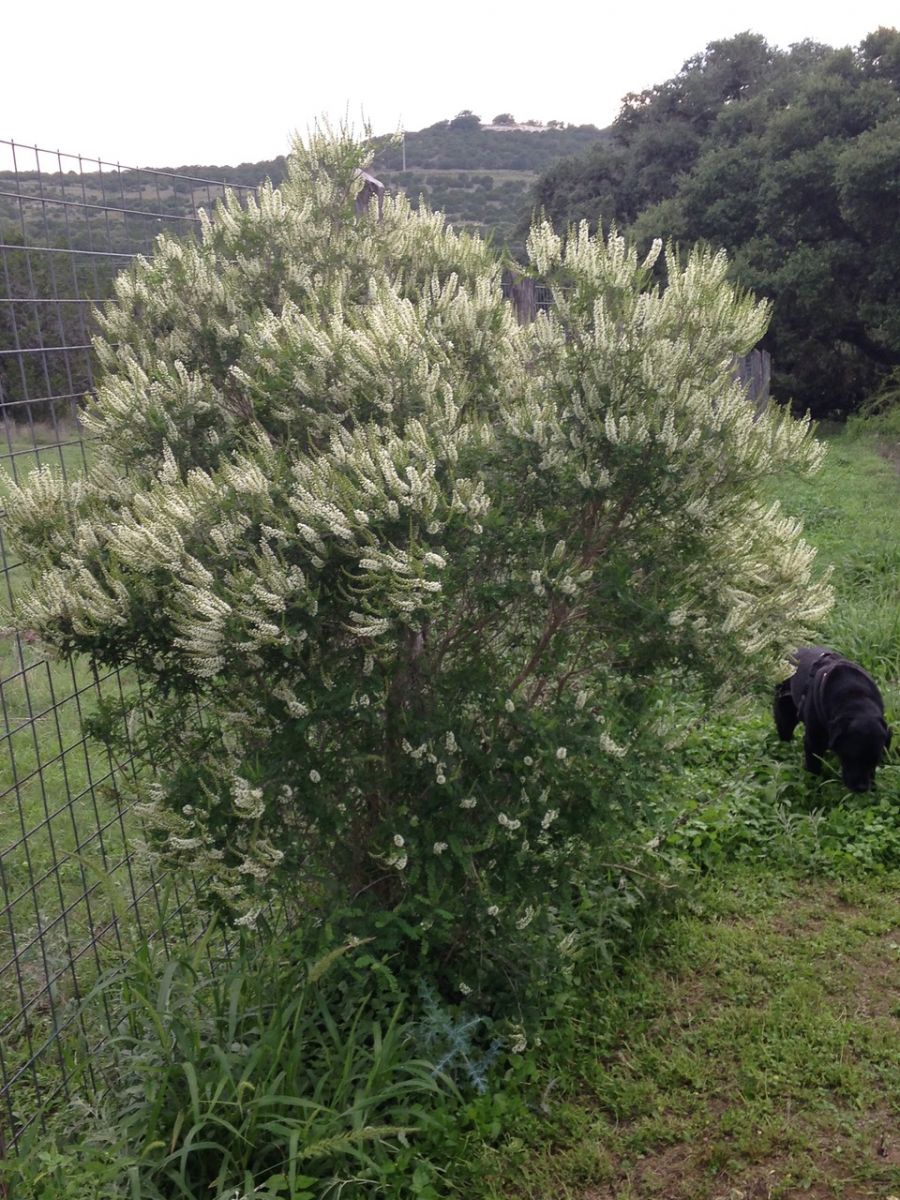
Texas kidneywood is a native
It has few if any disease or insect pest problems and is easy to grow in well-drained beds in most soils. The wonderful flowers are a magnet to butterflies, bees, wasps and other nectar feeding pollinators. You’ll understand why when you get the whiff. If you’re determined to choose native plants then one with a similar look and attractive (but harder to find), search for the native Texas Kidneywood.
