
Vines for Color – Organic Answers Column – June 5, 2024
Want some quick inexpensive color? Plant vines
While trees offer the best value to property over time, sometimes you can’t wait as long long as it takes for trees to mature. Look to vines for the win for color and coverage fairly quickly. Climbing vines are plants that for the least amount of money will give you the most greenery and flowers in the shortest period of time. They are a good investment and should be part of most landscapes.
One of my favorite vines is sweet autumn clematis, which is bare in winter but regrows quickly in the spring to produce lots of small fragrant white flowers in late summer. They can grow a little out of hand but are easy to prune back to control. The botanical name is Clematis terniflora but also sold as C. maximowicziana, C. paniculata and C. dioscoreifolia, although technically C. paniculata is a separate species native to New Zealand. The more colorful clematis varieties are quite pretty but not as easy to grow.
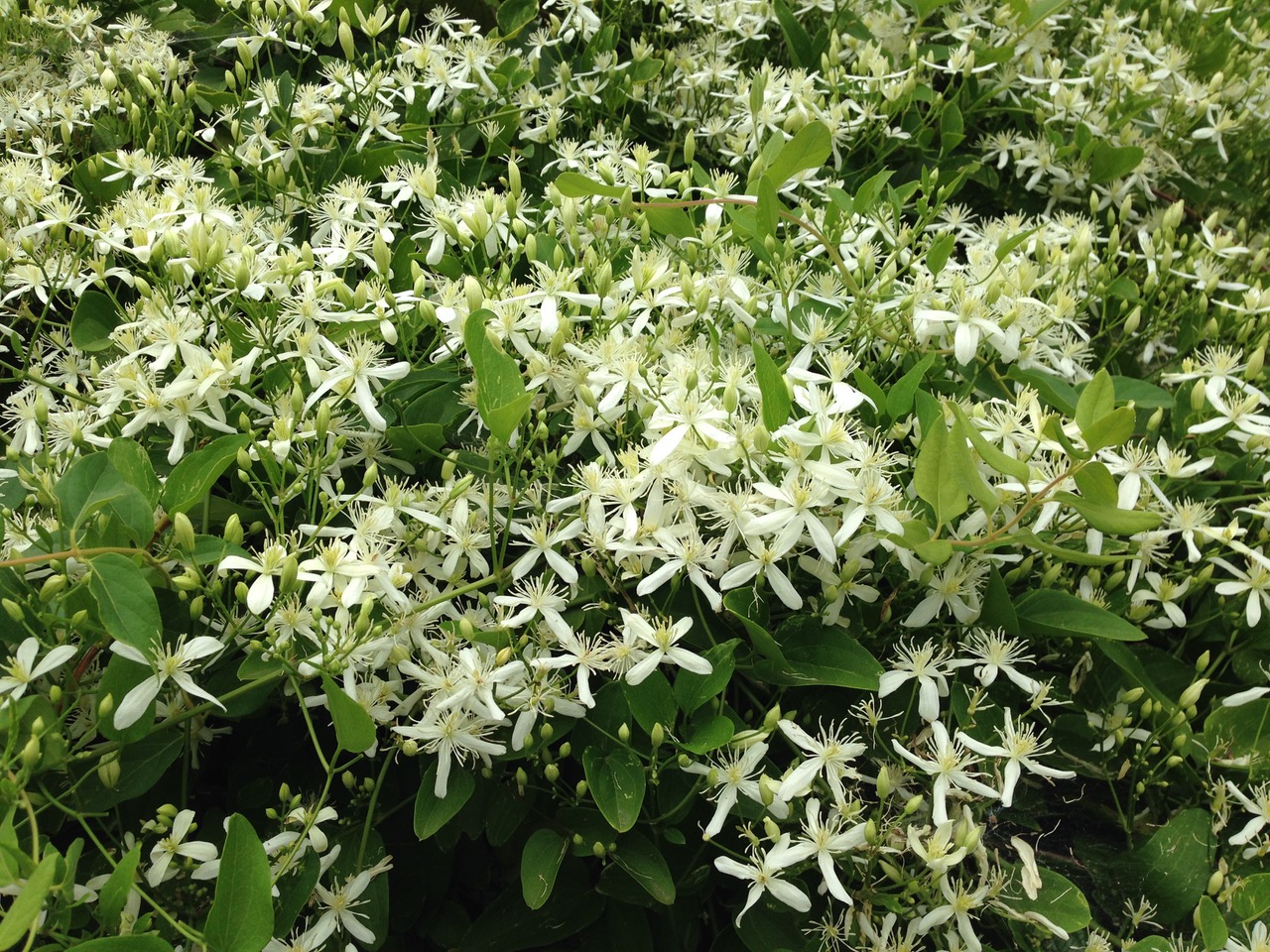
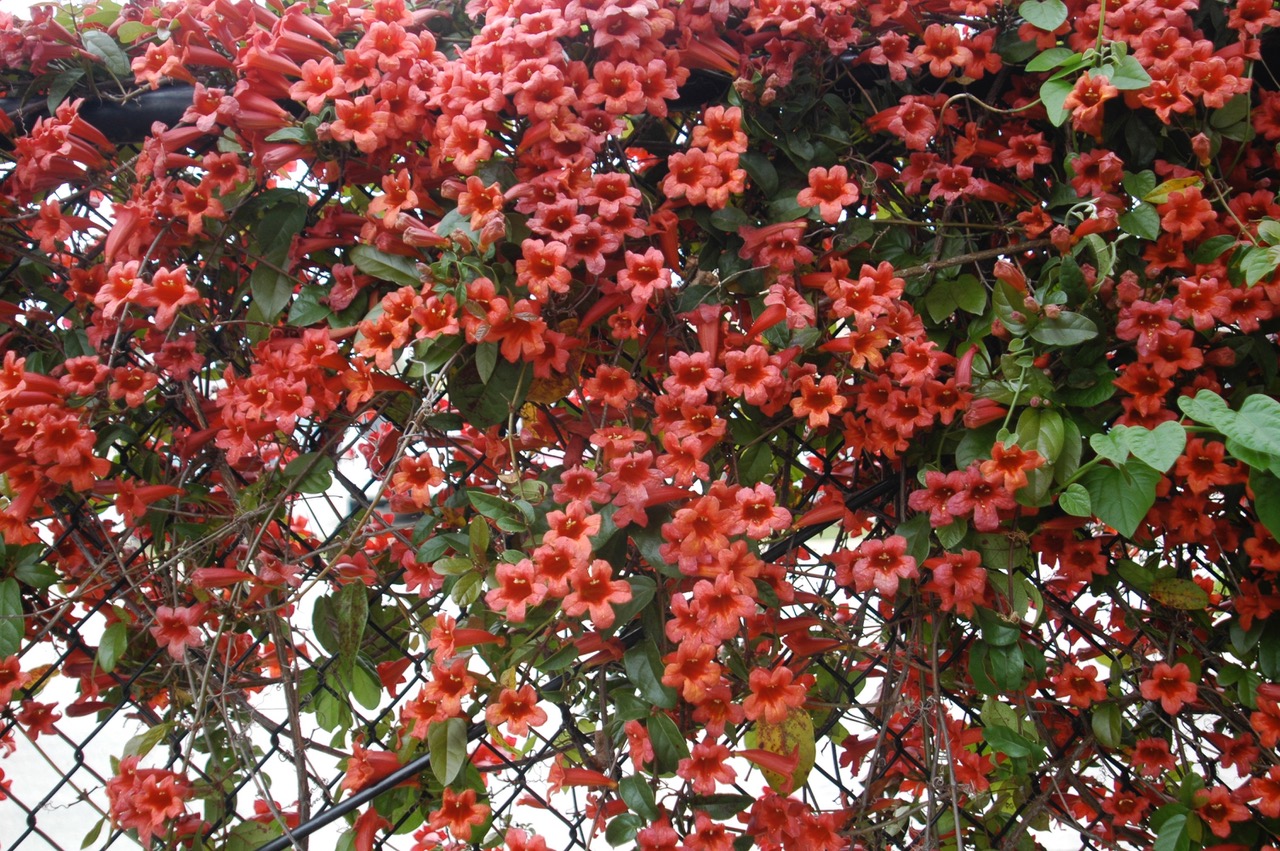
Sweet autumn clematis (left) and iron crossvine
For a native vine, consider Crossvine (Bignonia capreolata), aka iron cross vine, an evergreen with yellow and red trumpet-shaped spring flowers. It is much less aggressive than its look-alike relative Campsis radicans (trumpet creeper) which I wouldn’t recommend ever planting because it is highly invasive and very difficult to get rid of.
Coral honeysuckle (Lonicera sempervirens) is a summer blooming evergreen with red flowers that hummingbirds love. Cypress vine (Ipomoea quamoclit) is another red flowering vine with delicate foliage.
Carolina jessamine (Gelsemium sempervirens) is a pretty evergreen with yellow spring flowers. If eaten this plant is toxic – so don’t do that – and teach the kids about this and other dangerous plants. Passion flower (Passiflora incarnata) is a fast-growing deciduous vine with large spectacular flowers. It has edible fruit, leaves and elaborate flowers can be used in sleepy-time tea.
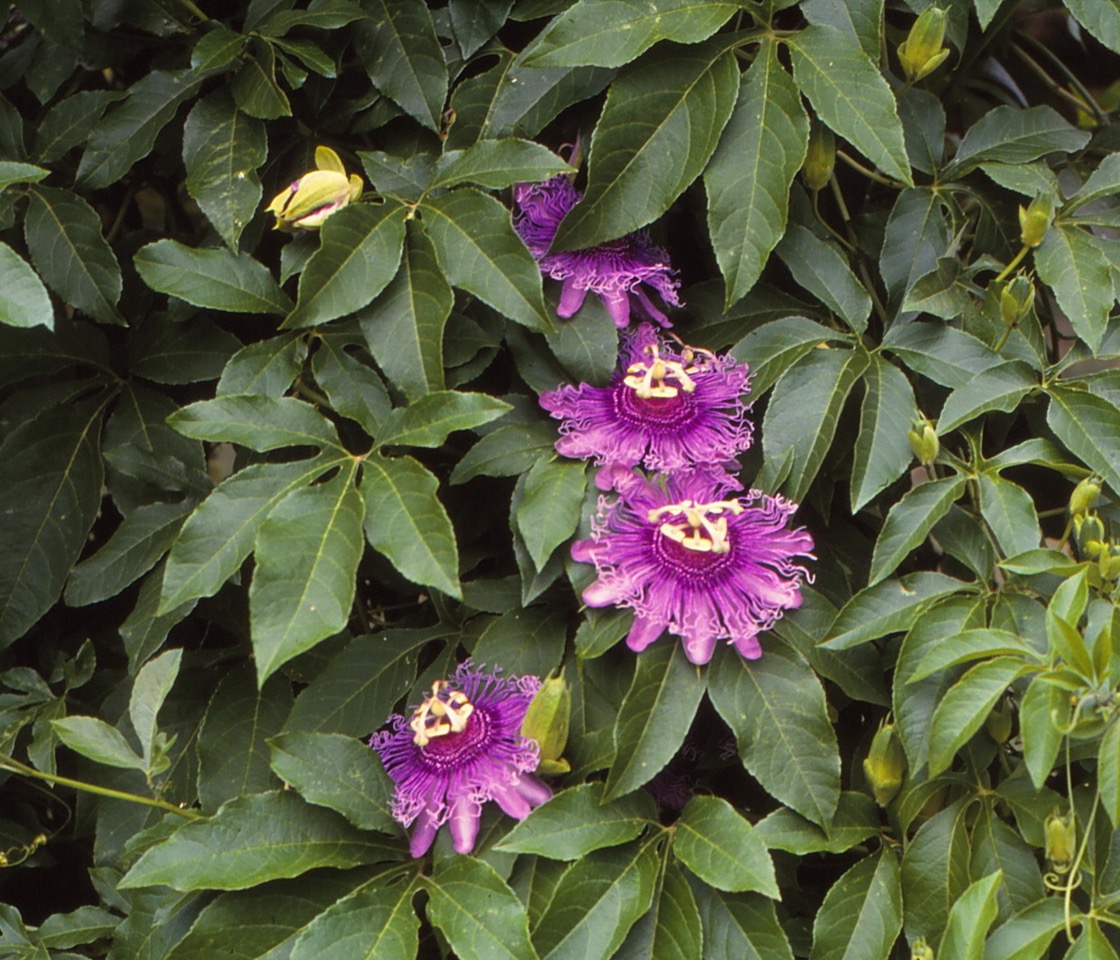
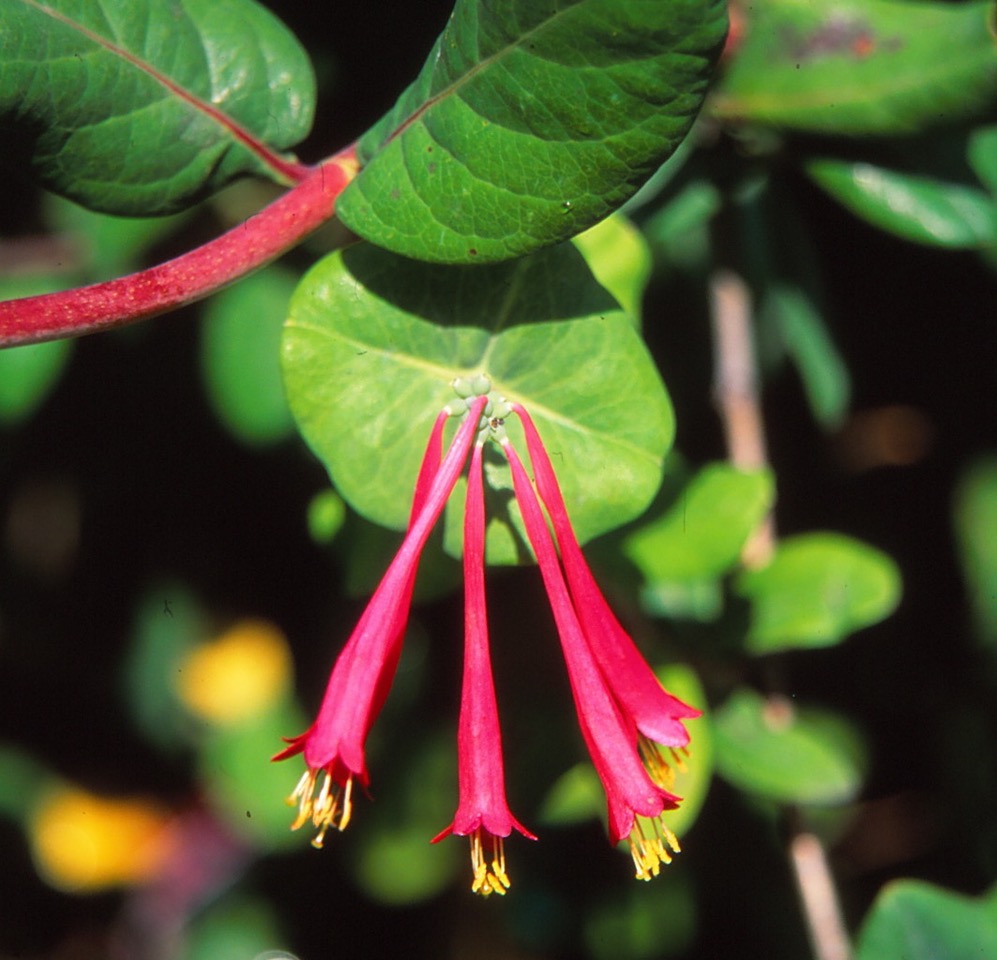
Passion flower (left) and coral honeysuckle
Hyacinth bean (Lablab purpureus) is a colorful annual vine grown from seed. Loofah or luffa (Luffa acutangula) is another annual vine grown from seed and puts quite a show of edible flowers that precede the distinctive gourds that are also edible if harvested while still young.
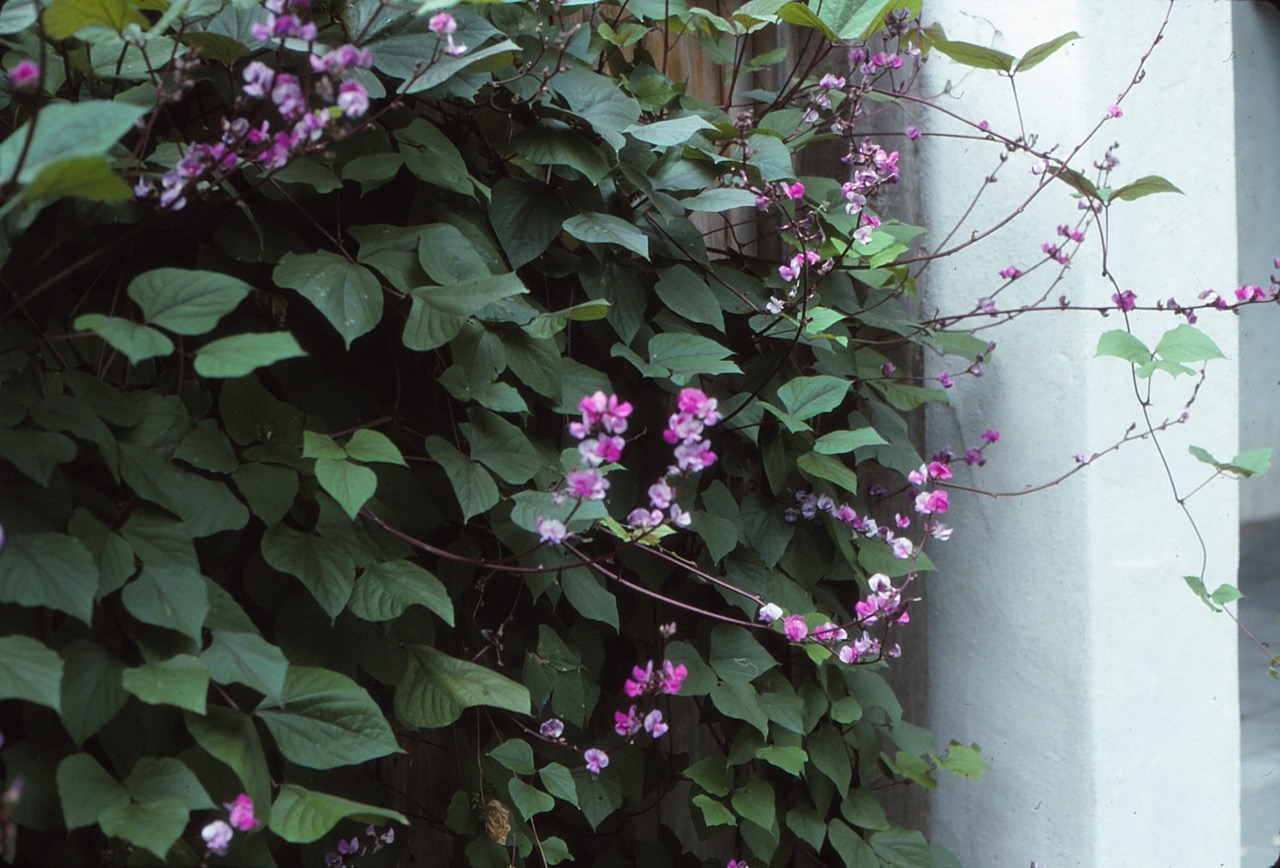
Hycinth bean
Fig ivy (Ficus pumila) is an evergreen clinging vine that will climb on vertical surfaces without supports as most vines need to get started. It can suffer freeze damage in severe winters but usually pops back in the spring. Boston ivy (Parthenocissus tricuspidata) is also a wall-climbing deciduous vine with pretty red fall color. Virginia creeper (Parthenocissus quinquefolia) also called Victoria creeper, five-leaved ivy, or five-finger ivy, is a beautifully vine for the most part but can suffer cosmetic insect damage and become a little too aggressive.
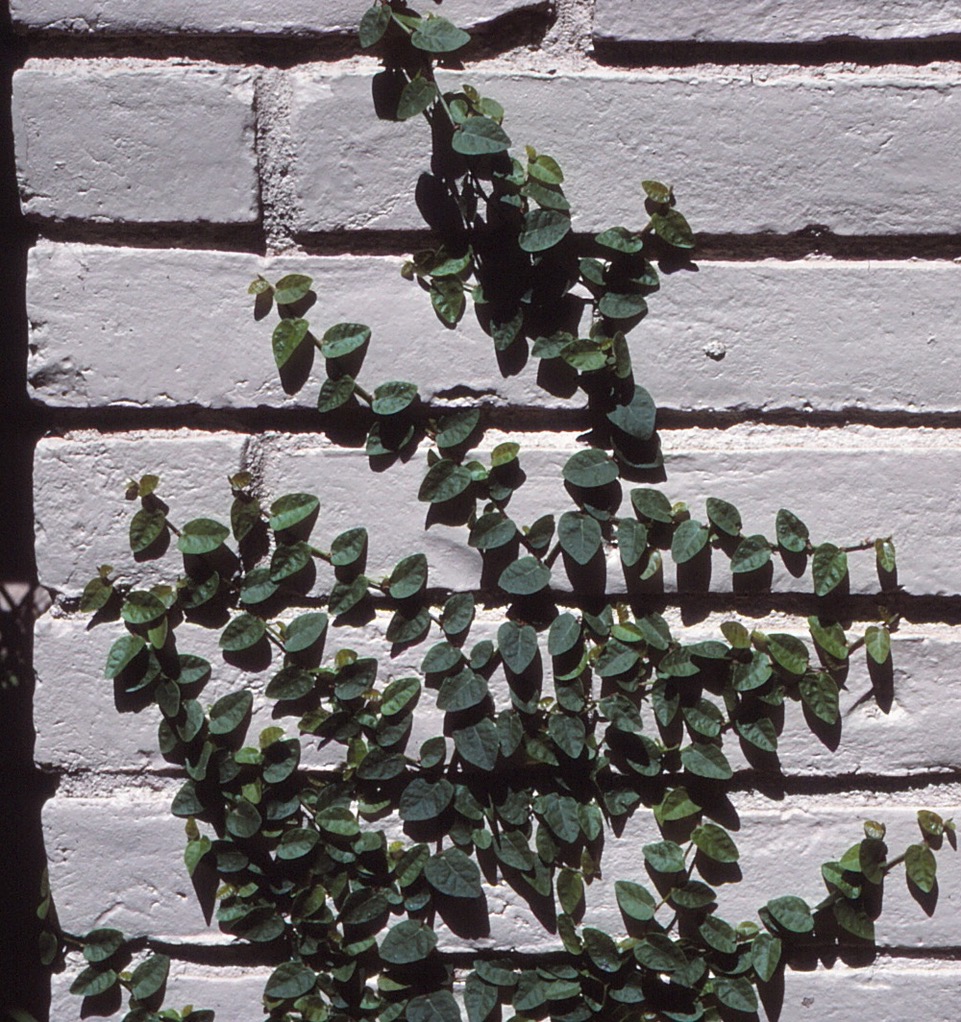
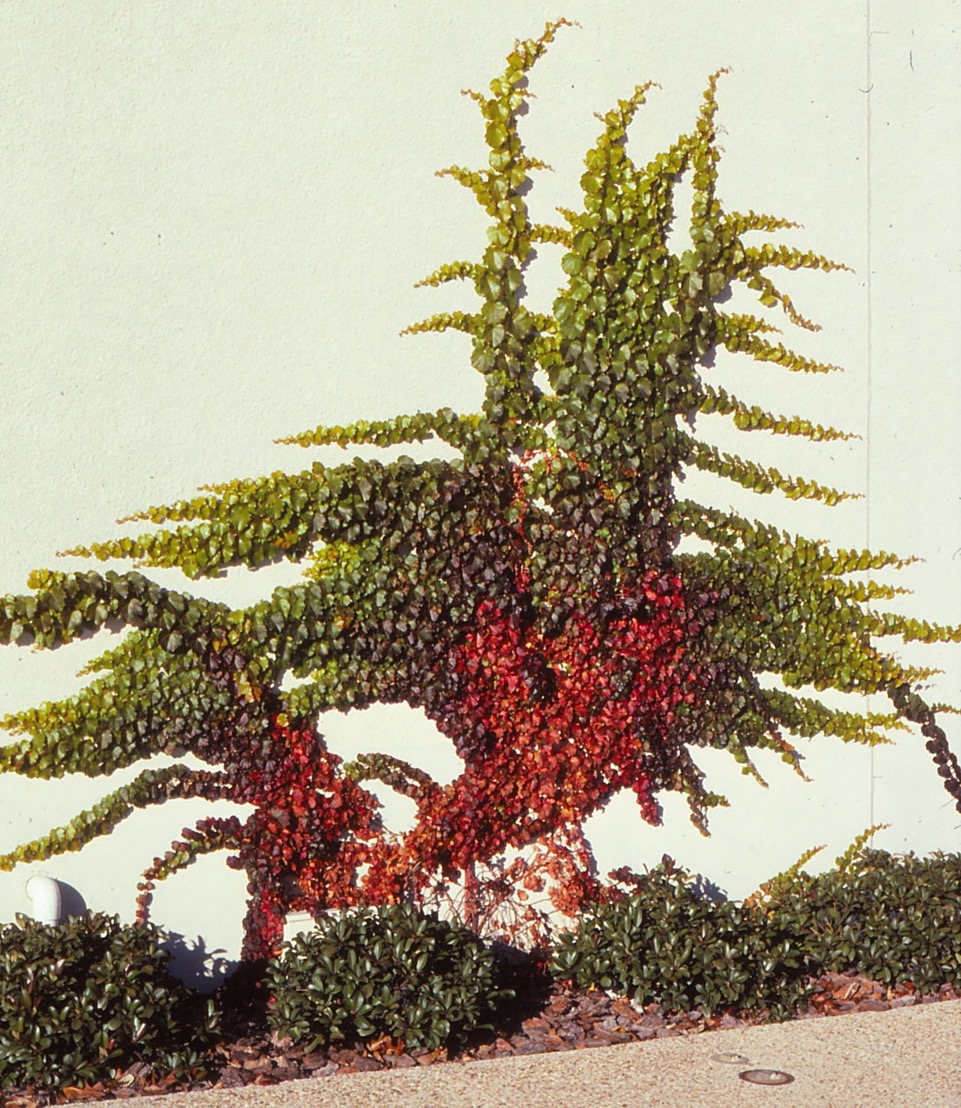
Fig ivy (left) and Boston ivy
Vines can be planted from 1, 3 or 5 gallon containers, grow quickly and look good in a short time. They can provide quick shade, vertical softening and/or colorful flower displays.
Not all vines are delightful plantings in the yard; there are quite a few to be viewed as invasive weeds. That list includes but is not limited to honeysuckle, Carolina snailseed, poison ivy, smilax and bindweed. We’ve also written about Coral Vine becoming a problem. The comprehensive vines list at dirtdoctor.com can be found at this link.
