
TORC – Organic Answers Column December 11, 2024
What is the Texas Organic Research Center all about?
Last week two long-form articles were reprinted in the Dirt Doctor’s Texas Organic Research Center pages. They were significant in that both originating publications allow (and encourage) reprints in order to share (for credit) the information they report on. The newest posts appear on top of the TORC homepage. But whether reprinting or paraphrasing, the work of TORC is to keep a record of problems and research that affects all of us. What follows is some of our recent coverage, and in their own way represent the yin and yang of our database of news – the good and the bad juxtaposed so we learn about what is working and what isn’t.
The New Lede is a publication project from the Environmental Working Group, “a nonprofit, nonpartisan organization devoted to conducting and communicating scientific research that helps inform public policy on human and environmental health issues.” In November, they published Despite critics, organic farming thrives in heart of US corn country, an examination of a successful organic corn farm that started using organics in 1998.
What’s occurred here since 1998, when farmer Barry Fehr experimented with raising chemical-free soybeans on 45 acres, is the development of the most expansive and profitable area of organic grain production in Iowa, and possibly the United States. Most of the land is farmed by multiple generations of the Fehr family. The family also manages about 3,000 organic acres in Colorado. Generating millions of dollars annually in a “sustainable income,” the success of the organic operations here in the heart of corn country defies long-held conventions about a need for chemicals in farming.
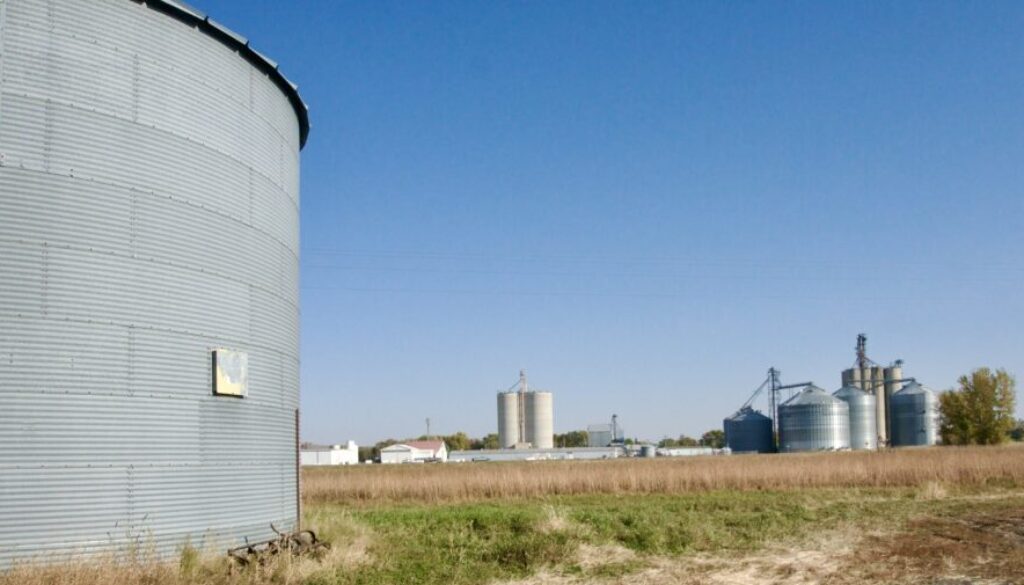 Clear Creek Acres in Iowa is an example of a scaled-up large successful organic farming operation. (Photos credits to The New Lede) |
The yields on this farm are close to the levels of “conventionally grown” crops, coming in about 10% less, but their costs are lower because they aren’t spending on pesticides and expensive GMO seeds. As a result, they get more for their crop because of the demand for organic products.
The amount of land under production with organic methods has grown over the years. Farming without using the expensive GMO seeds and chemical fertilizers, insecticides, and herbicides is less expensive, so a slightly smaller yield is offset by the lower cost overall.
Another part of the production that keeps costs down is that the Fehr family farm is in a community of farms that own and share their equipment. Farm workers hired under a federal special agricultural visa program weed by hand (and earn about $30 an hour). The man-hours are more intense than non-organic farming, but there is still profit.
Working in this organic environment is healthier, but the region as a whole still has some issues because there are both organic and non-organic farms in the area. The environment aspects of these agricultural projects are being studied by the USDA in a multi-year program looking at the water quality in the Emmetsburg, Iowa, area to see which farms are contributing to the phosphorus pollution of waterways in the region.
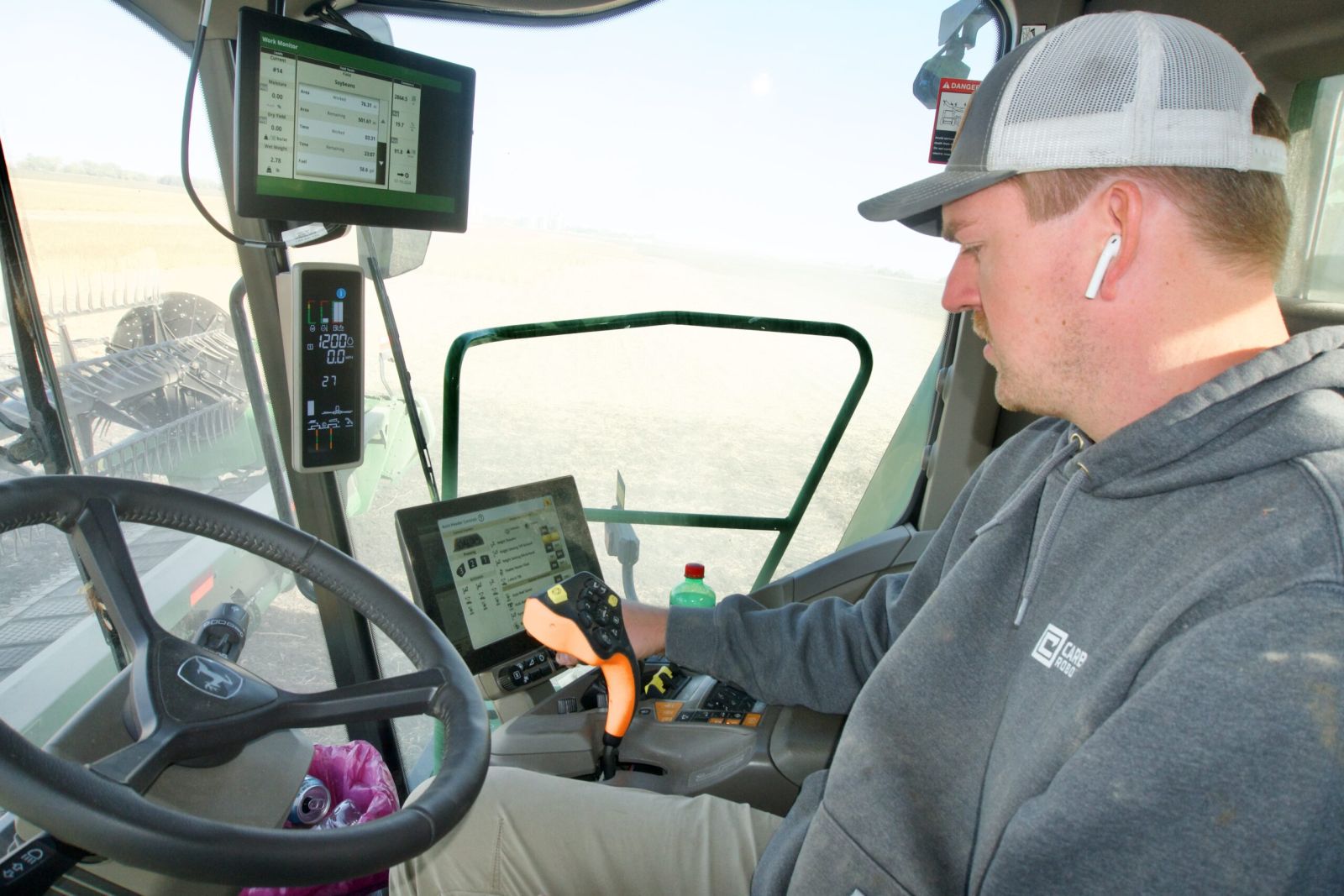
Jack Fehr harvesting organic soybeans on Clear Creek Acres.
Find that TORC article here.
________________________________________________
 The Coleman farm has lost more than 35 animals due to polluted fertilizer. These calves died less than a week after birth. |
The Texas Tribune is a member-supported, digital-first, nonpartisan media organization that informs Texans about public policy, politics, government and statewide issues. In early December the Tribune published an investigative story that details the disastrous results of Biosolid contamination on ranches across the North Texas region. In the piece Texas farmers say sewage-based fertilizer tainted with “forever chemicals” poisoned their land and killed their livestock, farmers and ranchers were interviewed about the reason their animals are dying on their land.
An environmental crime investigator in Johnson County collected samples of the dead animals’ tissue and organs, the water they drank from, the soil and the fertilizer that was applied next door. After the county received test results, the two families finally got their answer: The animals had been killed by something in the fertilizer.
PFAS, or perfluoroalkyl and polyfluoroalkyl substances, are man-made chemicals used since the 1940s that have a singular ability to repel oil and water and resist heat. They are used in products like nonstick cookware, pizza boxes, waterproof mascara, toilet paper, soaps and rain jackets.
We all use these substances, and they end up in our bodies, our sewage, and in our food supply. Consumer products such as grease-resistant food wrappers, our drinking water, and in everything from dental floss to our phones and other electronics, paper products, and it household dust.
PFAS arrived on the property in the form of a contaminant in biosolid fertilizers produced from the solids that are treated and then dried to be sold as fertilizer for agricultural lands. In 2022 the Environmental Working Group estimated that up to 20 million acres of crop fields may have had these solids spread on them.
 The Colemans run a “zombie farm” and will never sell these animals or this hay (Photos from Texas Tribune) |
The EPA has recently set standards for PFAS in public drinking water, but the current stage is monitoring, the regulations won’t go into effect for compliance until 2029. But those rules don’t cover biosolids. The levels of PFOS found in the tissue of one dead calf tested at 320ppt. “Samples of the pond water where the ranching families’ livestock drink from ranged from 84 ppt to 1,333 ppt of PFAS,” according to the article. States are beginning to test and regulate farms that are contaminated, but Texas isn’t one of them.
Johnson County farmers interviewed in the Tribune article have decided not to sell their cattle since their land is contaminated, and now run “zombie farms” – where they pay to feed animals and harvest hay they will never sell.
“These people were led to believe this was safe and a cheap fertilizer,” County Commissioner Larry Woolley said at the meeting. “And this isn’t just isolated to this one incident or multiple counties. This is going on all over. The amount of beef and milk that’s gone into the food chain, who knows what their PFAS levels are? The level of victimization is widespread,” he added.
This article can be found on the TORC site.
What is TORC?
These articles are just two of many that have been reprinted or paraphrased and linked to as part of the work of the Texas Organic Research Center in staying abreast of health and environmental issues. TORC is a 501(c)(3) non-profit organization that was set up by Howard Garrett, the Dirt Doctor, and is dedicated to protecting the soil, developing healthier plants, increasing the nutrition of food, providing education on non-toxic pest and disease controls, improving water conservation, and increasing the health of wildlife, livestock, pets and people. If you’re interested in supporting this work, consider making a year-end donation to TORC.
