
Assassin Bug
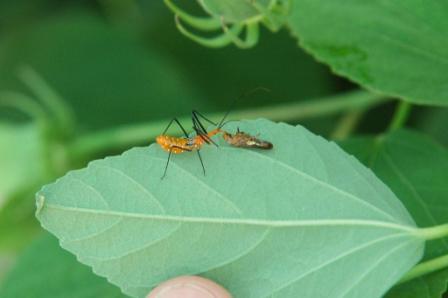
COMMON NAMES: Assassin Bug, Giant Wheel Bug, Wheel Bug
SCIENTIFIC NAME: Order Heteroptera, family Reduviidae, many species
SIZE: Adult—3/8″ to 1 5/8″

IDENTIFICATION: Various colors and sizes, look like skinny stink bugs or leaf-footed bugs. Abdomen often flares out beneath the wings. Head is elongate with a groove between the eyes. Short curved rostrum (swordlike snout) fits in groove under body. Strong front legs to hold prey. Adults can give you a painful bite if handled but rarely do.
This is a form of assassin bug called the giant wheel bug.
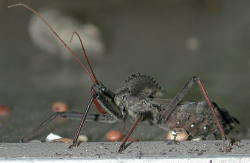
Photo courtesy of Robert Forsbach
BIOLOGY AND LIFE CYCLE: Eggs usually laid singly or in clusters on branches, in crevices, and under stones and the like. Nymphs are often brightly colored. Incomplete life cycle – with normally one generation per season. Will hibernate in all life forms – eggs, nymphs, and adults.
HABITAT: Many ornamental and food crops.
FEEDING HABITS: Eat adults, nymphs, and larvae of many plant-eating insects. Like to eat troublesome insects from mosquitoes to large beetles. Favorite foods include aphids, leafhoppers, beetle larvae, caterpillars, and small flying insects.
ECONOMIC IMPORTANCE: Control many troublesome plant-eating insects.
NATURAL CONTROL: Spiders and themselves. The young feed on each other.
ORGANIC CONTROL: None needed, highly beneficial.
INSIGHT: Assassin bugs in the genus Triatoma, called kissing bugs, bite people at night. They are blood feeders. See Kissing Bug.