

Dallas Morning News – March 1, 2018
BARRIER OR SCREEN PLANTING
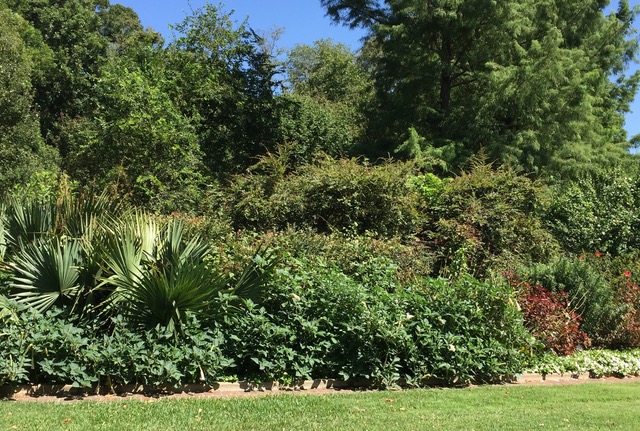
Creating privacy barriers on property lines is an important part of the landscape design. They are important to block views off the property as well as blocking eyes peering in on you. Fences and walls of course are often used and there are many options for fences and wall with a great range of costs. In addition to the expense, these hard construction solutions can only be so high. Making the barrier out of landscape plant is another option that is cost effective and the best choice in many cases.
There are two important keys in this living screen. Whatever you do, use a mix of plant varieties. Using just one variety, especially if planted in a straight line, is a problem if any of the plants die. You’ll have a snaggletooth look after the loss of a plant even if you can find an appropriately large enough one to try to match the other plants. Plus, it’s just a softer, more pleasant effect if there is a mix of textures, colors and heights. Even though I have a forest of bamboo in my backyard, I wouldn’t advise introducing it on site where none exists. Mine has been in place now for over 80 years and isn’t going anywhere. I accept the annual management that works but is a lot of work.
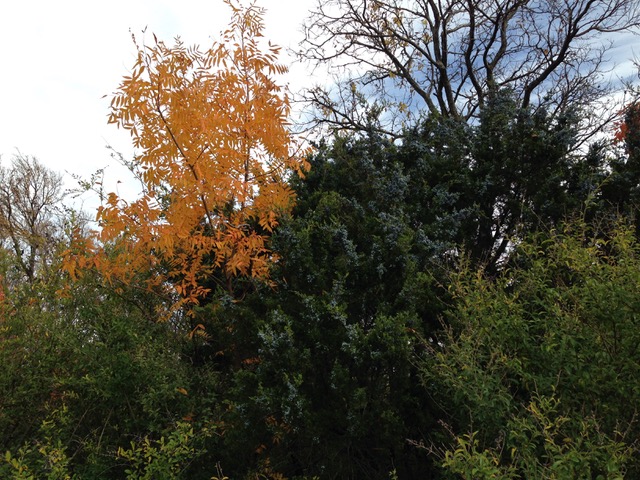
What I strongly recommend other than bamboo or a straight line of one kind of plant is a softly arranged mass of plants with different sizes, colors and textures. Take a look at these plants for consideration – native cedar (females with the blue berries are definitely the best), yaupon holly, Nellie R. Stevens holly, other hollies, viburnums, cherry laurel, Mexican white oak and palms. The hardiest palms such as needle palm, sabal palm, Chinese windmill palm, Mediterranean palm and pindo palm can be used effectively in the mix and they can grow in sun or shade. Needles, Mediterraneans, and pindos provide low foliage while the Fans and sabals have bare trunks and foliage up top. Also trifoliate orange especially if armed plants to prevent intruders is important.
Mixing in some deciduous trees for some spring and fall color can also be effective. Consider redbud, Mexican plum, Mexican buckeye, buckeyes and Persian ironwood.
With an informal arrangement of these evergreen plants, it’s much of a problem if one of the plants dies – no snaggletooth look is left. The deceased plants may not even need to be replaced, but if they are replaced with plants of a different size there is not a visual problem.
Home | Return to Archives