
Dallas Morning News – February 22, 2018
BLACK SOLDIER FLY – ONE OF THE GOOD FLIES
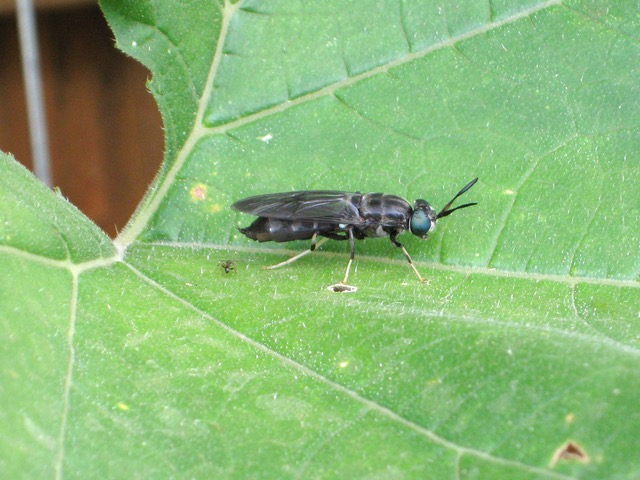
Black soldier fly adult
I have some coffee grounds that were not used and these worms appeared in them. Are they a problem? Should I not use the grounds and should I try to kill the worms. That’s a common question about one of the insects you might run into that should be protected and encouraged.
The black soldier fly is indeed a fly even though it looks like a pretty blue-black wasp. Larvae of this beneficial show up in decaying organic materials, containers with food scraps and compost that is on the wet side. They especially like compost that contains manure and stays consistently moist.

Larvae in coffee grounds
These interesting flies are helpful pollinators for our gardens and the larvae (maggots) are quite efficient at helping break down organic matter and decaying compost. The adults don’t, actually can’t, sting and will be easily encouraged and common in organically maintained gardens.

The adults apparently don’t feed at all but the larvae have large, powerful chewing mouthparts used to shred and devour waste materials. These hungry little creatures are able to digest organic compounds before the compounds have time to decompose, thereby increasing compost efficiency and greatly helping eliminate odors. The black soldier fly larva’s digestive system is so efficient that it leaves behind a fraction of the original weight and volume of waste eaten. Black soldier fly larvae are scavengers and thrive on many kinds of decomposing organic matter, including algae, carrion, compost, manure, pet waste, mold, plant refuse and the waste products of beehives. And, of course coffee grounds.

Also, this beneficial insect makes the breeding places of houseflies and other pest flies less desirable. As large populations of black soldier fly larvae churn manure, they make it more liquid and less suitable for egg-laying by the pest flies. The good maggots also disturb the development of the pest fly’s larvae. Both activities reduce pest fly activity substantially.
I should also mention that the larvae make excellent food for fish, ducks, chicken, guineas and other birds.

Eating food scraps
As a side note, at one time in the southern United States, the black soldier fly was called the “privy fly” because it controlled the common houseflies around the outdoor privies.
As we have discussed before, there are many terrific pollinators that help us with our gardening if we simply stop killing them with toxic chemical pesticides. It’s certainly best to leave these tough little flies alone and allow them soldier on with their jobs in waste management, being a feed supplement, pollinating plants and protecting us against pest flies.