
Dallas Morning News – July 27, 2017
CHLOROSIS IN TREES – THE REST OF THE STORY
Sometimes fall comes early. Chlorosis is an abiotic (not related to insects or diseases) condition in plants where leaves lose color and turn yellow often with green veins left. It happens primarily on the newest growth first. This discoloration is often diagnosed as “iron deficiency” followed by the recommended application of iron and sulfur products.
Like most purely chemical recommendations, this is not very good advice. Iron may not be the only deficiency. Chlorosis is often a deficiency of many elements – iron, magnesium, manganese, zinc, molybdenum and other trace minerals. One of the most common causes of chlorosis is the heavy use of high-nitrogen, synthetic, salt fertilizers. The key to solving this problem is to stimulate the biological activity of the soil so that the “tied-up” minerals in the soil are “released” and made available to plants. The overall solution to the problem is to apply the entire Sick Tree Treatment and go organic using natural fertilizers, rock minerals and sugars.
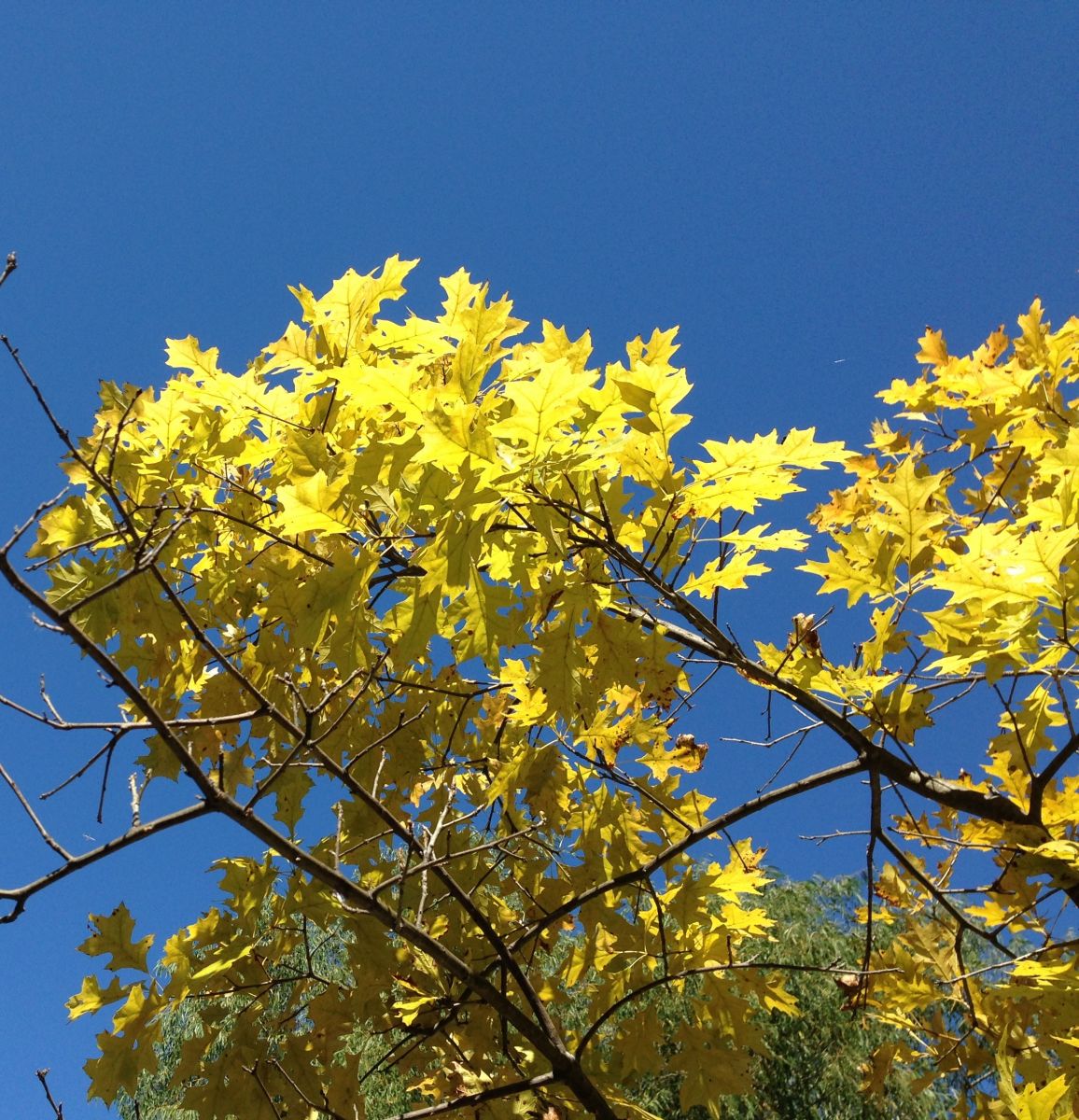
There is another possible reason for the yellow chlorotic leaves. Many red oaks planted here are not adapted to the soil. Pin oaks and mix-breed red oaks are great trees – but must have acid soil. They do best in sandy acid soils like those in east Texas, Oklahoma and much of the eastern US. They will not grow well or even survive long term in alkaline soils like the black and white soils of Texas. Rare sandy spots that are primarily old waterways are the exceptions. Even if you change the soil pH with vinegar, which can be done, you’ll still have to deal with the alkaline conditions of the irrigation water.
Pin oaks are sometimes hard to identify but here’s some guidelines. They have a stiff overall appearance usually with a strong straight central trunk. They are generally upright, to pyramidal shape, especially when young and usually have a weeping nature, especially on the lower limbs. Texas red oaks have more of an upright candelabra effect. The most important characteristic of pin oaks and mix breed problem trees is the presence of small pin-like twigs.
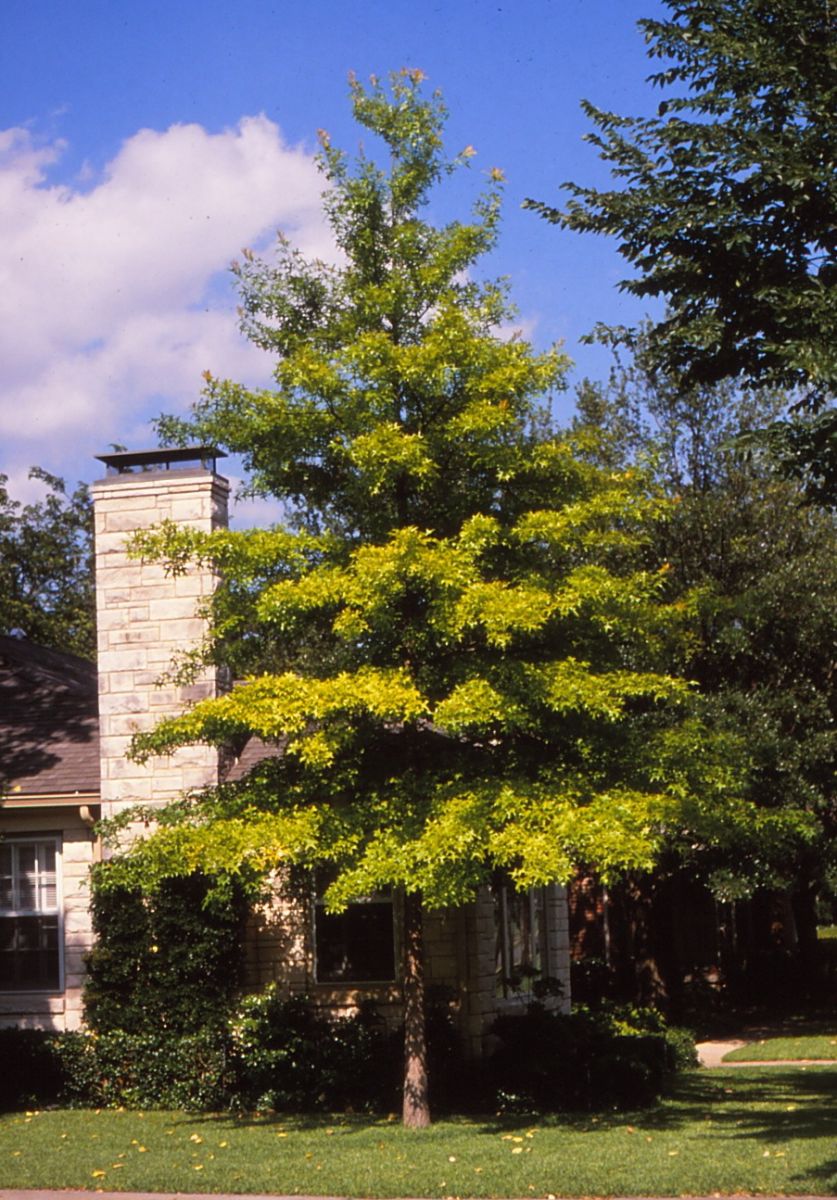
All red oaks naturally cross breed like crazy and when the resulting trees are heavily crossed with the “blood” or genetics of pin oak, northern red oak, southern red oak, and other trees suited to acid soils, they will never be healthy in alkaline (high pH) soils.
Solution? Take the ill-adapted trees out and plant natives and well-behaved introductions that like the alkaline soils. Texas red oaks are great trees unless they are crossbred with the acid loving trees.