

Dallas Morning News – December 10, 2018
Cleanest of the Oaks – Lacey Oak and Fertilizing When Wet
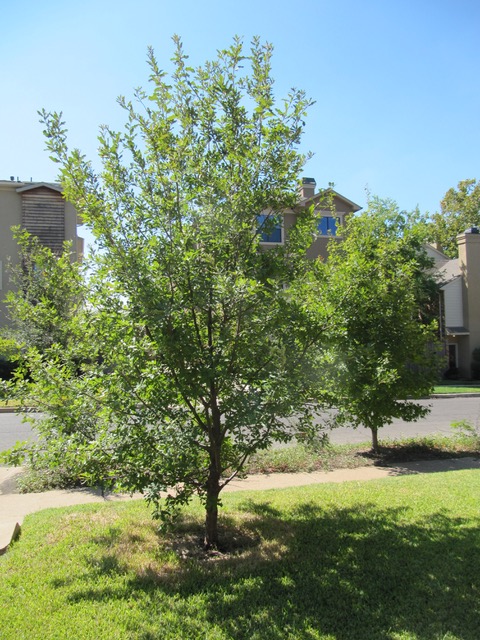
Lacey oak
Two things. My last column was about clean vs. dirty trees and there’s one oak I should highlight in the clean and recommended category. Lacey oak is not only a relatively clean tree, although it still drops leaves, flowers and acorns, it is also a terrific tree choice for residential property. It grows fairly quickly but doesn’t get enormous like red oaks, live oaks and bur oaks. Its fall color is not dramatic but quite pleasant and the new growth in spring is also colorful. So – if you need a new tree, go purchase a Lacey oak and plant away – it’s time. Get to work!
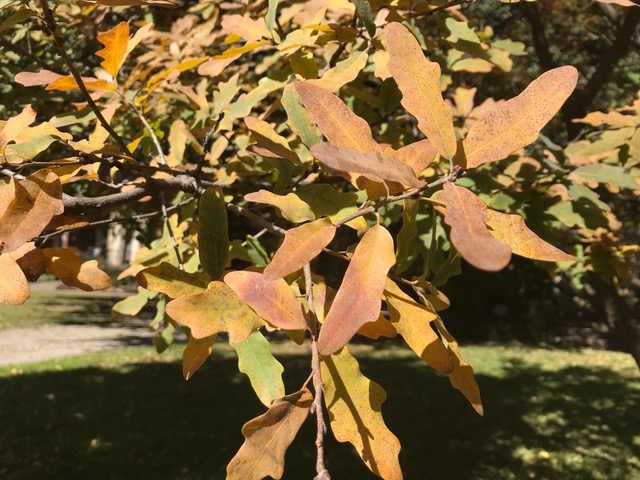
Lacey oak fall color
Other thing is this question about applying gardening products when it’s wet. A recent question about waiting for the rain to be gone before putting out corn gluten meal reminded me to discuss this issue. One of the many advantages of the natural-organic program is the fact that unlike the synthetic high-nitrogen fertilizers, organic fertilizers can be applied while the ground is wet. Not only does that not hurt anything, wet ground and moist, humid, misty weather is excellent timing to do dry organic fertilizer applications and foliar feeding with liquid organic products. The stomata on the leaves are wide open and foliage in general is more receptive. Moisture makes foliage more accepting of the major and minor nutrients and other good things in the organic products. Plus, there is no worry of burn.
.jpeg)
Lacey oak fall color
None of this should be done with the synthetic products. The salt base of the chemical fertilizers (liquid and dry) can burn wet foliage as it adheres to leaves and rain will wash and leach the materials away making it a waste of money and a contamination of the soil and the water stream.
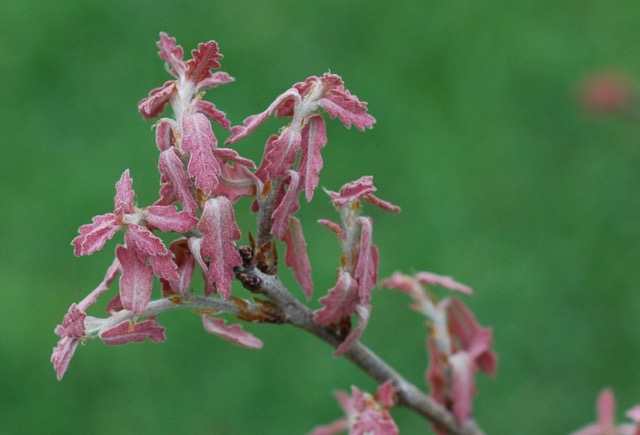
Lacey oak spring growth
My favorite times to fertilize are during a light mist or just before or just after a nice rain. That goes for the use of most of the organic fertilizers. The organic fertilizers don’t leach or wash away and they stay in place to release with a natural slowness that the synthetic boys try to build into their naturally fast-release and harsh products. Dry molasses is an exception. In won’t burn when used when it’s wet, but will gum up on the spreader and be messy.
Once again, this is just another example how organic techniques and products are superior in every way. If you haven’t already, make the transition over and mark your calendar to make the first organic fertilizer application early in the year rather than waiting till April like is advised when using the high nitrogen stuff.
Home | Return to Archives