
Dallas Morning News – January 19, 2017
Q: I’ve have a bay laurel in a large pot that is about 8 feet tall that I’ve had for ~ 20 yrs. I’m in west Plano and the low here was around 15F. It had put on some new growth in late summer/early fall and had not had enough time to harden off and this growth is definitely damaged. I am curious as whether yours has fared better, worse, or same? Any other damage is not apparent at this time. — R.G. Plano
A:. My huge bay has some foliage burn but it looks most cosmetic. I’ll wait a while and cut the dead foliage off all at once. You should plan the same. I think both plants will be fine. Our organic programs have provided impressive protection.
Q: Is there a cultivar of ginkgo that has a horizontal branch pattern rather than upright branches? — J. H. McKinney, TX
A: Not that I know of but some trees do have more horizontal branching than others. If you pick a young tree with strongly horizontal branching, it will probably continue. A little selective pruning will help as well. My tree has a mix of horizontal and upright growth.
.jpeg)
Q: This morning there were clear-to-amber-colored, jelly-like substances on our peach tree, in the various cracks on the trunk. One gob was about the size of a golf ball, but the rest (several dozen) were far smaller. Since we’ve had plum curculio-type infestations of the fruit (with similar but smaller “oozings”), is it the same thing, or is this from the tree and it’s using this to cover the cracks in the growing/splitting tree bark? I know that the problems of the plum curculios are almost definitely from being planted too deep in the ground (ahem – by me…) years ago. I’ve got to get a little more of the root flare exposed, but is there anything else I should do (tree trunk goop)? — V. P. Dallas, TX
A: Gummosis is the oozing of sap from wounds or cankers on fruit trees. It can result from environmental stress, mechanical injury or disease and insect infestation. Cytospora canker or Valsa canker, the fungal cause of gummosis, affects stone fruit trees like apricot, cherry, peach, and plum. Cytospora infection is distinguishable from insect damage and mechanical injuries because sawdust or pieces of bark are not mixed in the sap, as it would be with insect or mechanical damage. Cytospora canker is also known as perennial canker. The oozing sap from fungus, bacteria, physical damage (lawn mowers, weed eaters, hail, etc.) or environmental stress will be amber and opaque. Gummosis caused by peach tree borers will be mixed with frass created by the insects. The solution for any of these situations and resulting gummosis is to get the tree back into a healthy condition. The entire Sick Tree Treatment needs to be applied with the root flare being the most important step. Tree trunk Goop should be applied to any wounds or cankers.
Q: When is it safe to transplant peonies? I have some old and some new plants that are now in shade because a tree has grown tall since I planted the peonies. I think it should have been done in the fall and I have a landscaper who wants to do it now but I am afraid of a freeze in Dallas. S. P. Dallas, TX
A: There would be no problem transplanting the peonies now. Although the fall would have been the ideal time, anytime during the dormant season would be fine. Sooner, the better. Prepare the beds first with plenty of compost, lava sand, green sand, cornmeal and dry molasses. Then just get back to the regular management program you have been using.

Q: My 4 yr old red oak has a problem. The bark split somewhat after the rains and I doctored it with tree trunk goop for several months because I had heard Howard say it needed to be shielded from the sun. This part of the trunk faces west. Last year it seemed to be all right. This also happened to my Chinese pistache in the back yard that spring, but it also faces west so I doctored it with goop also. Do I just continue with the tree trunk goop as needed (it faces directly into the west) or is there something else I can do. Otherwise, this tree was very healthy and beautiful. Will this cause the tree to die? The mulch is only close to the base because it’s winter. I always keep mulch about six inches away from the base throughout the growing season. — R. L. Dallas, TX
A: Continuing to apply the Tree Trunk Goop would be the best thing to do. I would also expose the flare more dramatically and leave it exposed year round. Mulching the base in the winter is not necessary and could cause problems.
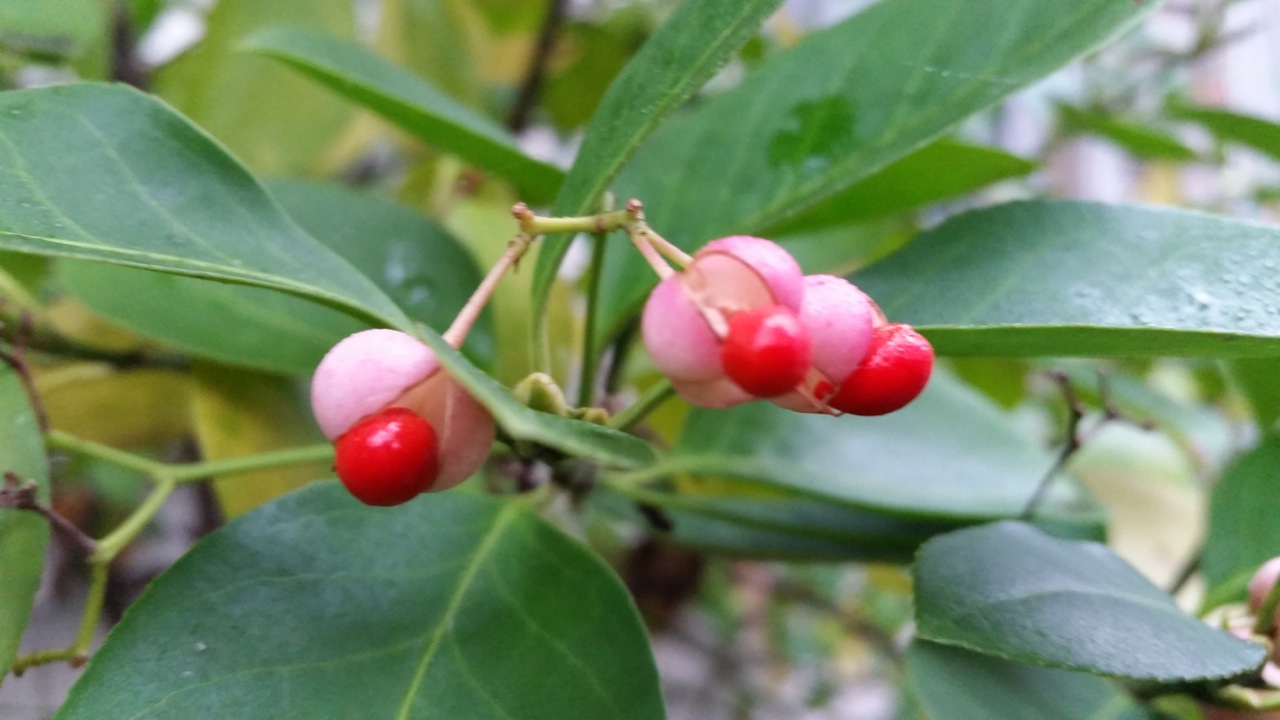
Q: I enjoy your articles. I have a volunteer bush on the west side of my house in Corsicana. I recently noticed some interesting looking seeds on it. I am attaching the photos hoping you may be able to identify the plant. — J. L. Dallas, TX
A: Your plant is a Euonymus called spindletree. Here’s some information about the plant that should be helpful – SPINDLETREE