
Dallas Morning News – January 5, 2017
Q. I’ve seen some articles recently indicating that the crazy ants are coming to this part of the state. Will they be a big problem to control and what do you recommend? T.W. Dallas, TX
A. First of all, there’s nothing new about the crazy raspberry ants. They’ve been around for some number of years in some of the southern parts of the state. The new alarm from the extension service is curious at best. If you do run into an infestation of these fast moving ants, they are easy to control. Just dust them with natural diatomaceous earth. It kills them effectively. They can also be killed with the Mound Drench formula. The easiest way to make it is to add 2 oz. of orange oil to the Garrett Juice mixture.
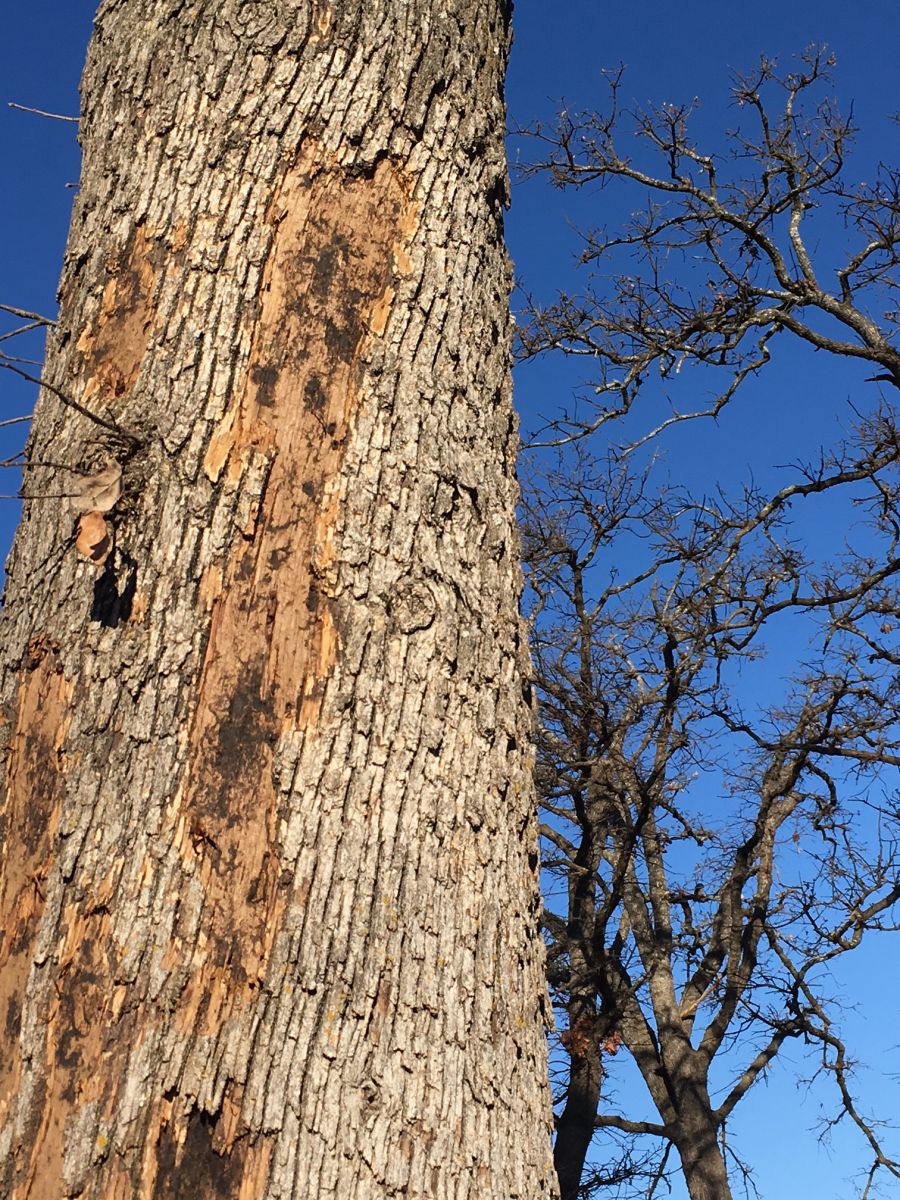
Q. There is some sort of “bark blight” infecting our tall native oak trees. The bark flakes off in small sections – we are told by the local tree servicer that there is no cure for this disease – and that it is quite contagious. So far we have removed several trees near our lake home that were decades old that had this problem to hopefully keep the remaining trees from being infected. Unfortunately our next-door neighbor has two trees that have this “blight” going on. They have had an order to remove these trees almost two months ago, but the tree service hasn’t yet placed their property on his schedule. The Lake Kiowa community has lost a couple of hundred trees to this blight – and this local company seems to be the only business in the area. We’ve tried to locate more information on this blight problem without success – can you recommend any solutions? B.H. Lake Kiowa, TX
A
. Sounds like a fairy tale to me. There is no such thing as bark blight. Actually there is no disease at all that attacks bark. Bark is dead tissue. Stress from past droughts has led to the loss of many native trees such as post oaks and blackjack oaks. There are fungal diseases, such as oak wilt, that attack the vascular systems of red oaks and live oaks but that wouldn’t be the case here on your post oaks. Hypoxylon canker is a disease that kills the wood just under the bark causing the bark to slough off, exposing the spore mats. Keeping trees stress-free prevents infection from this fungus. It is not infectious to other trees. To keep native trees out of stress, avoid all herbicides and apply the Sick Tree Treatment to symptomatic trees. And of course – expose the flares.
Q. Thank you so much for all of your work in the area of organics over the past 25+ years. It has been such a blessing. I am striving for a better effort in 2017 of taking care of my yard and especially my live oak trees. Simple question – what sprayer do you recommend to use with the Garrett Juice to spray the trees. I have tried a few, and they seem to get gummed up fairly easily and do not spray very far/high to reach up into the trees. Any specific brand or type? L. K. Heath, TX
A. The key when spraying organic mixtures is to avoid the hose-end type sprayers. They are inconsistent in mixing and they tend to break. Sprayers that should be used are those that spray the mixture you have created. Pump-up sprayers work for small jobs, backpack sprayers are excellent for larger project, as are the trombone sprayers but they are harder to find unfortunately. And of course the best sprayers for large jobs are the power sprayer tools used by those in the business.
Q. Can you tell me what type of mushroom this is and why it must might be growing on our oak tree? S. G.
A. That ‘s the fruiting body of the fungus that is active inside your tree. In other words there is rot present. Even though there is some flare showing at the base of your tree, I recommend exposing it more dramatically and then applying the rest of the Sick Tree Treatment. Here it is. https://www.dirtdoctor.com/garden/Tree-Sick-Tree-Treatment_vq3707.htm

Q. There’s some kind of yucca plant (white blooms) growing in my garden area. I didn’t want to use chemicals to kill them since it’s in my garden area. I’ve tried digging them out. The roots go down extremely deep. I tried drip irrigation (haha). That didn’t phase them. Any advice would be greatly appreciated. D. P. Andrews, TX
A. I’m afraid physical removal is the only effective method. Requires some work but the problem will be solved.
Q. Will 00 sandblasting sand (also sold as 16 grit sand) stop ants? I have some blocks filled with native soil from the yard. This wall goes around my vegetable garden. I see ant activity in the blocks with soil. The others have gravel – no ant activity. I’m asking about this because it’s cheaper. A. S. Dallas, TX
A. Yes. The large sand just sets up a barrier for the ants but it is mainly used under slabs and around piers and beams. It is actually more expensive than nematodes, dry molasses, spinosad and all the other organic techniques, but if you want to try it, dig a 6X6” trench along the base of the wall and fill completely with the 00 sandblasting sand. It has to be very thoroughly applied.
