

Dye eggs with natural colors
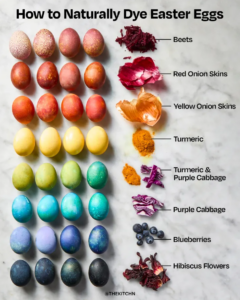
“The Kitchn” recipe illustration for a few of the colors obtained when using food and flower sources. Click on image to enlarge.
Rounding up Easter eggs dye ingredients from the grocery store or the garden is simple for most of these recipes. Easily processed foods to use when coloring your eggs are things like red cabbage, turmeric, onions, beets, spinach, carrots, various berries (blue, rasp, and black), coffee, and more. From the garden try marigolds, cornflowers, red or pink rose petals. Most of the dye sources are easy to prepare, but some take a lot more of one part of the plant, like onion skin. That recipe requires about four cups of brown skins, so plan to save your onion skins in the freezer (four cups comes from about a dozen onions).
The source of this information is from several web sites, including Martha Stewart Living, The Kitchen, and Fine Gardening, but resourceful gardeners may have their own plant choices for dying eggs. From Martha Stewart Living:
There are two main ways to dye Easter eggs naturally. Both approaches work well, though the cold-dipping method may be a better option if kids are helping.
Boiling Method: Our method involves boiling the eggs with natural easter egg dyes. With this method, heat allows the dye to saturate the shells, resulting in intense, more uniform color.
Cold-Dipping: An alternative, called the cold-dipping method, involves boiling the eggs and the ingredients for the dye separately. This produces subtle, translucent shades—but can result in uneven coloring unless the eggs are rotated vigilantly while in the dye. It is, however, a great (and safe) option for kids—and also allows you to create long-lasting keepsakes. For hollow eggs that will last indefinitely, cold-dip raw eggs, then blow them out after they are dyed.
How to Make Natural Dyes for Easter Eggs
How to Naturally Dye Easter Eggs (Using Ingredients You Already Have at Home!)
Dye Easter Eggs in Nature’s Hues
More about natural dyes in general from Wikipedia: Natural Dye.