
Dallas Morning News – November 11, 2021
Fruit and Pecan Tree Program
Fruit trees, pecan trees and other nut plants can be grown with great success and relatively few problems. However, common questions that come to me are about how to control pecan scab, peach leaf curl, borers and poor production.
The curative answer is to apply the Sick Tree Treatment – expose the root flare and apply all the recommended organic amendments.
The preventative answer is to plant the trees and vines correctly in the first place. Even more important than with ornamental trees, fruit and nut trees should be planted high. Even bare-rooted trees should be set so that the flare is above the ground. Fruit trees are notorious for being planted too deeply and the cause of stress that relates directly to insect pests and diseases problems. The swelling or “dogleg” at the bases of fruit trees is the graft union, normally 8-10″ above the start of the roots where the flare is located.
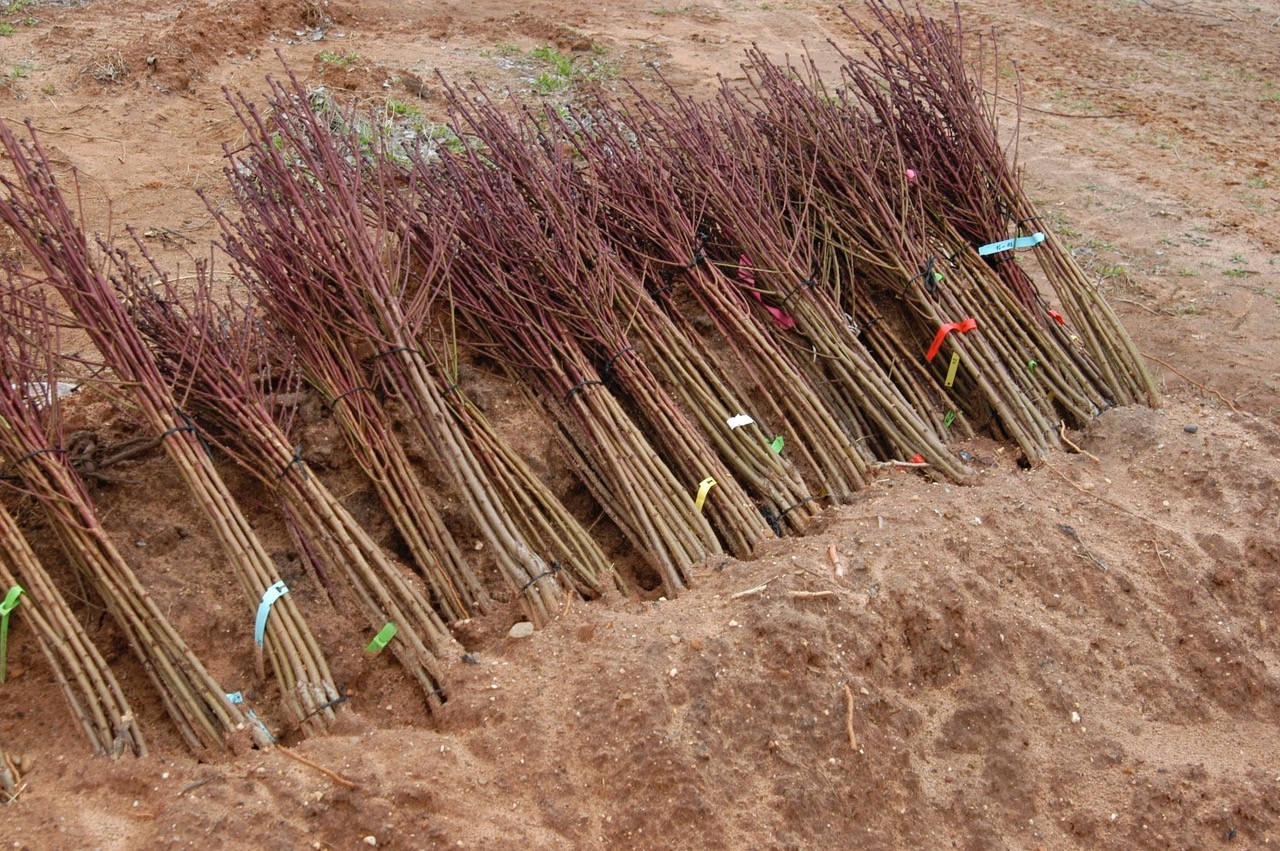 Even barefooted fruit trees need to be planted high avoiding burying the root flare (here are the grafted trees heeled in awaiting planting) |
Before starting to dig the hole, the actual height of the root ball needs to be established. Most trees, in containers and balled and burlapped, have excess soil on the top of the true root ball. Burlap and this excess soil needs to be removed.
Now measure the width and the height of the actual root ball. Dig a wide, rough-sided hole, 2 to 3 times wider than the tree ball, especially at the soil surface. Square-shaped holes also work. The point is to have rough, well-aerated soil around the new root ball to prevent the roots from circling in the hole.
Digging a small, smooth-sided hole is a serious mistake. Width of the bottom of the hole isn’t as important as the top of the hole. The depth of the hole should be slightly less than the height of the ball. Measure, don’t guess.
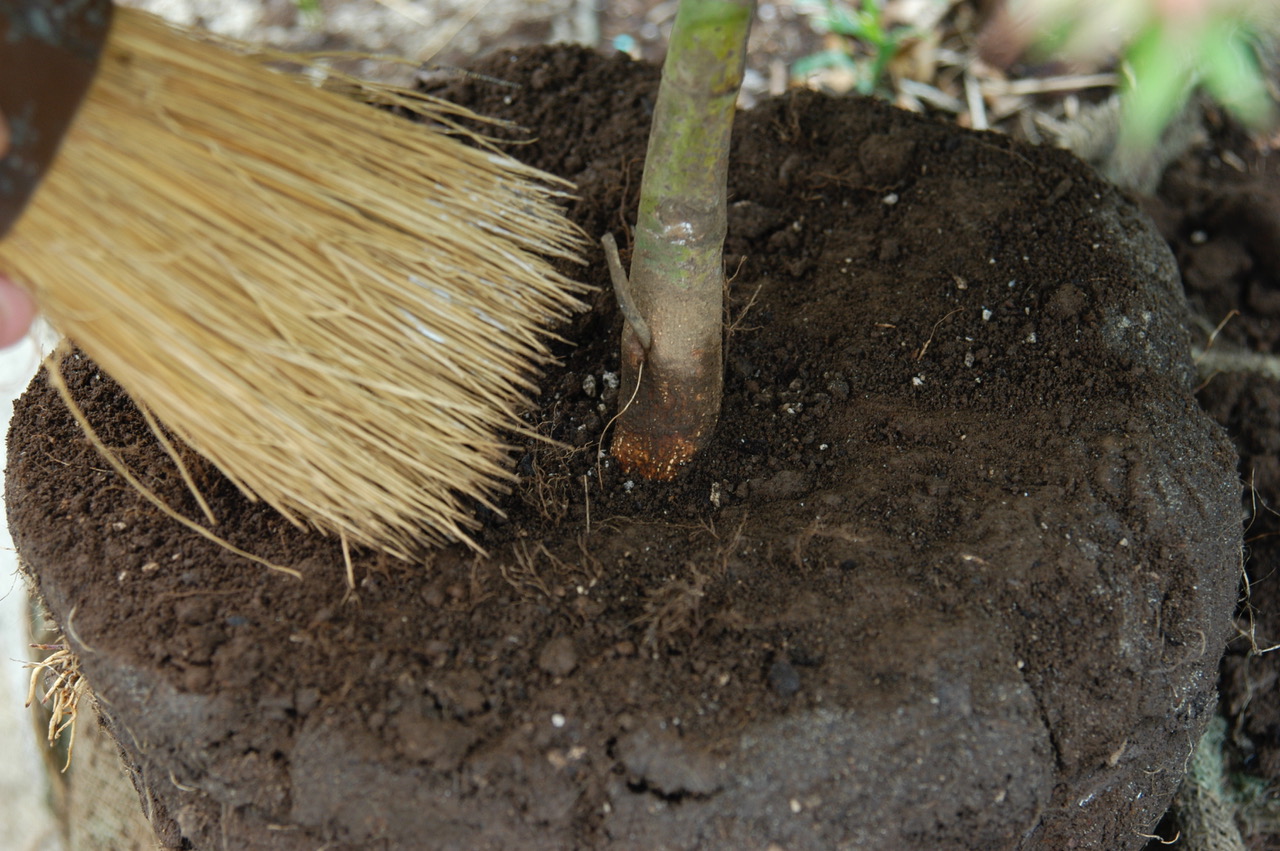 Burlap and excess soil and mulch should be removed from the top of the tree before measuring the height for planting |
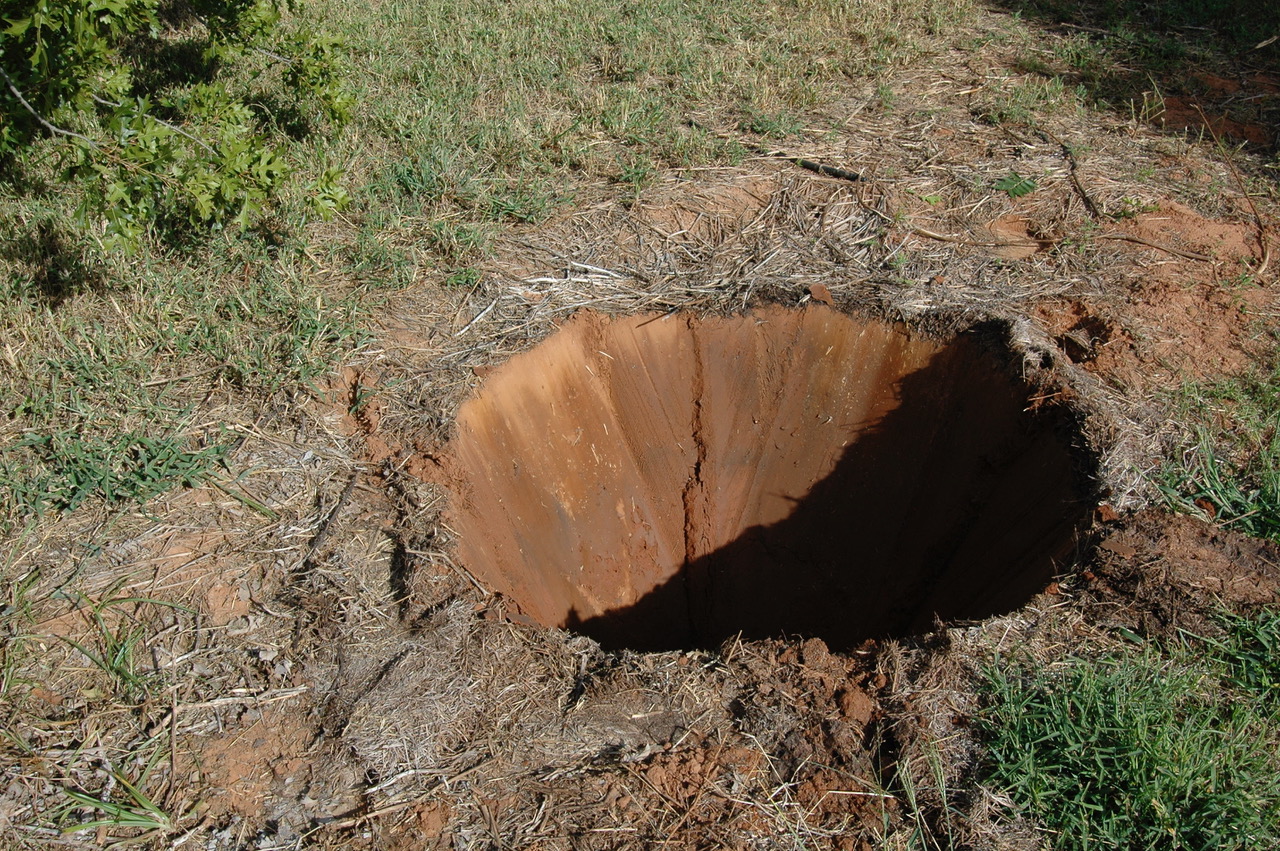 Planting holes should never be small and smooth sided |
Top of the root ball should be about 2″ higher than ground grade after planting. Bottom of the root ball should be sitting on firm undisturbed soil. When you over-dig and have to put backfill under the ball, the tree can settle, a common cause of root flares being too deep in the ground. If fill under the ball is unavoidable, tamp the soil to compact it before planting. Don’t thin the tree, don’t wrap the trunk and don’t stake the tree.
Next step after planting properly is to feed regularly with organic products.
- February: Aerate the root zone or spray hydrogen peroxide at 50/50 mix with water at 1 gallon per 1000 sq. ft. Apply organic fertilizer, dry molasses and whole ground cornmeal @ 20 lbs. per 1,000 sq. ft. Apply lava sand, Azomite and greensand at 80 lbs. per 1,000 sq. ft.
- June: Organic fertilizer @ 10 lbs. per 1,000 sq. ft., lava sand @ 40 lbs. per 1,000 sq. ft.
- September: Organic fertilizer @ 10 lbs. per 1,000 sq. ft.
Spray Garrett Juice at least monthly and use other amendments such as sul-po-mag (organic fertilizer) as indicated by soil tests. Next week we’ll discuss the non toxic spray program that really works.