
Dallas Morning News – September 24, 2020
Installation of Plants in New Garden
If last week’s column was followed reasonably well, the new garden and landscape beds have been prepared well and it’s time to plant. As a quick review, new beds should be a loose mixture of your site’s native soil, compost (not peat moss), organic fertilizer, rock minerals, especially lava sand and Azomite, and microbe stimulators especially dry molasses and whole cornmeal.
Certain plants like azaleas, camellias and gardenias need even better bed prep. Several mixture formulas are discussed on dirtdoctor.com but basically the key is to use more of the same amendments, especially compost. Those same amendments are also used to make potting soil for containers.
The key to proper planting is to install loose, sopping wet roots of the plants into soft, moist beds.
 Severely bound roots need to be cut and physically loosened |
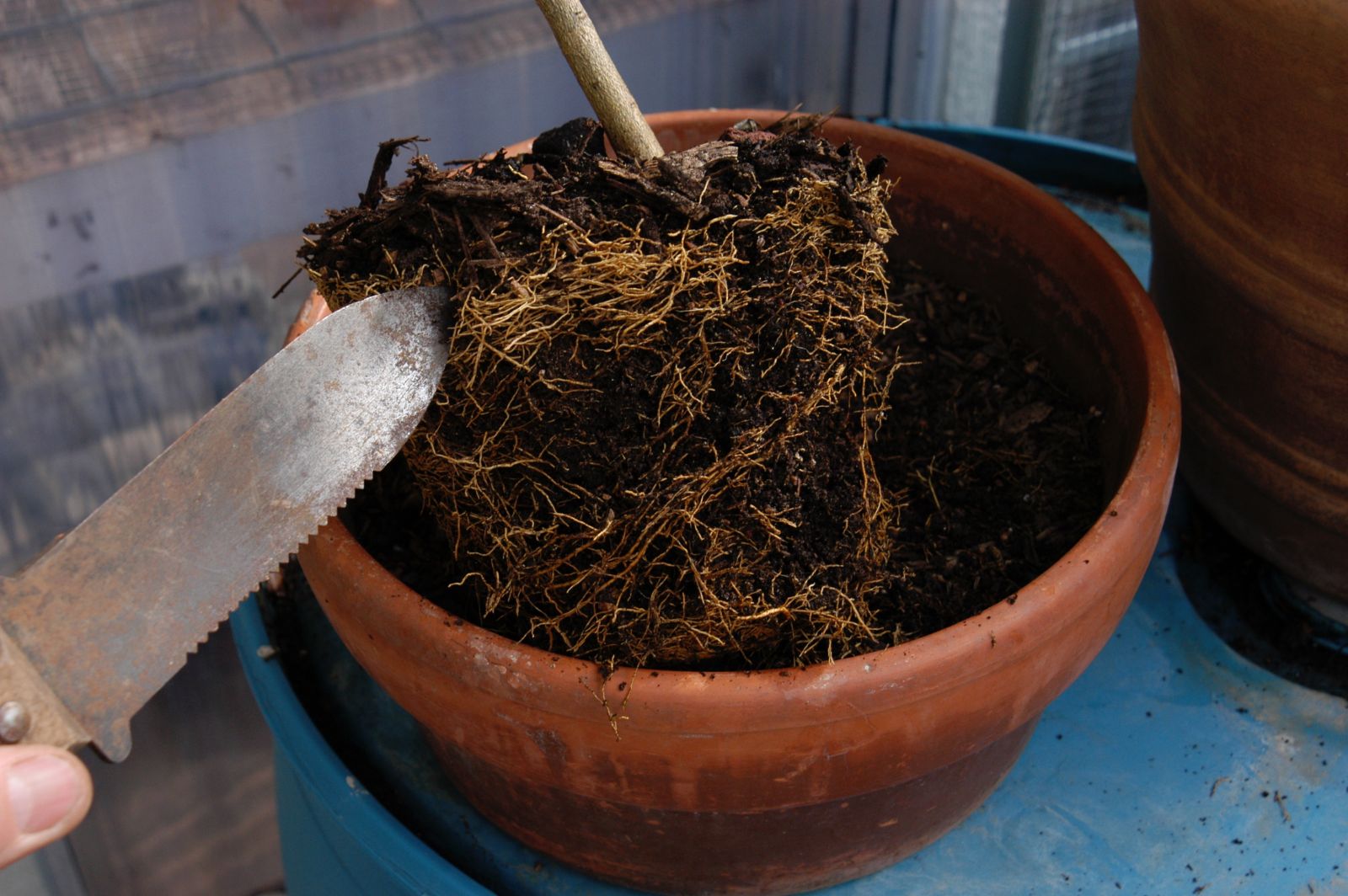 Bound roots after loosening with the hori-hori knife |
Container plants will often be root-bound and need to be loosened or they can resist water permanently and restrict healthy root development, top growth and fruit production. Soak root balls in water until they are thoroughly saturated. Remove excess soil from tops of root balls and any synthetic fertilizer pellets. Spread roots of bare-rooted plants out radiating and then cover them with prepared bed soil. Container plant roots can be spread out after soaking or cut with a knife of other tool if too fused together to be loosened by hand. I use the hori-hori knife.
Plant woody plants high. Make sure the trunk flares are not buried in the soil. Set the plants with the top of the rootballs at or slightly higher than the surrounding soil with the trunk flare visible. This is especially critical on woody plants. Setting the plant too low can cause poor growth, pests and drowning. Tomatoes and other more succulent plants can tolerate deeper planting. Seeds are planted on or just under the soil surface according to the directions on the seed packets. Water transplants or seeds thoroughly soon after planting and add Garrett Juice or compost tea to the watering for best results.
 Before planting, soak rootballs and remove excess soil and girdling roots |
 Root-bound plants should be soaked and the roots loosened by hand |
After planting, mulch bare soil around plants with 2 – 3″ of organic mulch. Do not use ground up rubber, dyed wood, pine bark or cypress. Use shredded native tree trimmings for trees, shrubs, ground covers, and large transplants. Use a thinner layer of the same material or compost for smaller transplants of annuals and perennials. Never pile mulch onto the stems of plants. Don’t mulch seeded beds until the seedlings are large enough to not be smothered by the mulch.
Water beds of new plantings gently but often at first, but cut back frequency as the plants begin to grow. You will be surprised how well your cool season vegetables as well as the herbs and landscape plants grow right into cold weather. With the occasional use of floating row cover on the coldest nights, most of the new crops will produce all winter.