

Lavender
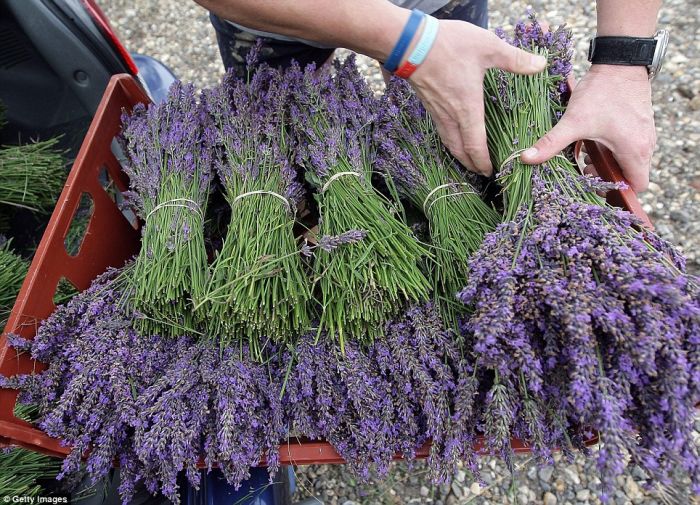
Lavandula spp.
(lav-VAN-dew-la)
COMMON NAMES: LAVENDER
FAMILY: Labiatae
TYPE: Evergreen perennial
LOCATION: Full sun to partial shade
PLANTING: Transplants can be set out year round. Seed can be grown by putting on top of the ground when it’s hot. Not easy to germinate and grow.
HEIGHT: 24 to 36 inches
SPREAD: 36 to 48 inches
FINAL SPACING: 18 to 24 inches
BLOOM/FRUIT: Spikes of fragrant lavender-blue flowers in summer.
GROWTH HABITS/CULTURE: Grey-green narrow foliage, aromatic lavender-blue flower on narrow stalks in spring and intermittently throughout the summer. Shrubby overall growth. English lavender is the easiest to grow. Excellent drainage is a must.
PROBLEMS: Overwatering, damp weather causes lots of trouble for lavender.
HARVEST/STORAGE: Harvest leaves anytime. Harvest flowers early as they first come into bloom for the best quality. Dry and store in glass if needed.
CULINARY USES: Use anyway rosemary is used in cooking. Teas should be made from the flowers and leaves. Flowers are used in spice mixes.
MEDICINAL USES: Lavender is antiseptic, sedative, and antispasmatic. Use from capsules or tea for the above and for headaches.
LANDSCAPE USES: Perennial garden, border plants, specimen plants.
OTHER USES: Fragrance plant – used to scent linens. Beautiful perennial for landscape. Perfume and moth preventive.
INSIGHT: Lavender angustifolia is English lavender and has smooth edged leaves. French lavender, Lavender dentata, has a serrated leaf. Spanish lavender – Lavender stoechas, is gray-leaved and flat purple blooms with broad, flat-topped clusters of flowers instead of a spike. The pink and white flowering varieties are not recommended.
Slide show of a lavender farm from TPSL