| Material |
Cost per Foot |
Pros |
Cons |
| Hand Built Raised Beds (beveled edges) |
0 |
No cost, no installation required |
Must be rebuilt each year, no containment |
| Untreated Pine |
$1.10 /
2″x8″x16′ |
Inexpensive, boards are 2″ thick |
Requires some carpentry skills, wood rot and insect attack. Last 3-4 years. |
| Hardie backer cementatious board panel |
$0.79 /
3/8″x3’x5′ |
Inexpensive, will not rot, no insect damage, lasts for years. Boards are 3/8″ thick. |
Requires some carpentry skills, material is brittle, needs to be cut into narrower lengths from larger panel, needs extra support. |
| Pressure treated lumber |
$1.25 /
2″x8″x12′ |
Inexpensive, resists rot and insects for years. Boards are 2″ thick. |
Requires some carpentry skills, classified as a group 1 human carcinogen. |
| Concrete blocks |
$1.20 /
8″x 8″x16″ |
Cost is reasonable, will never rot or decay, easy installation by anyone |
Blocks get very hot in summer sun, transmitting heat to plants and humans alike, additional cost to fill cores with soil. Blocks are 8″ wide. |
| Natural cedar |
$2.84 /
2″x 8″x16″ |
Rot and insect resistant, boards are 2″ wide |
Expensive and requires some carpentry skills. |
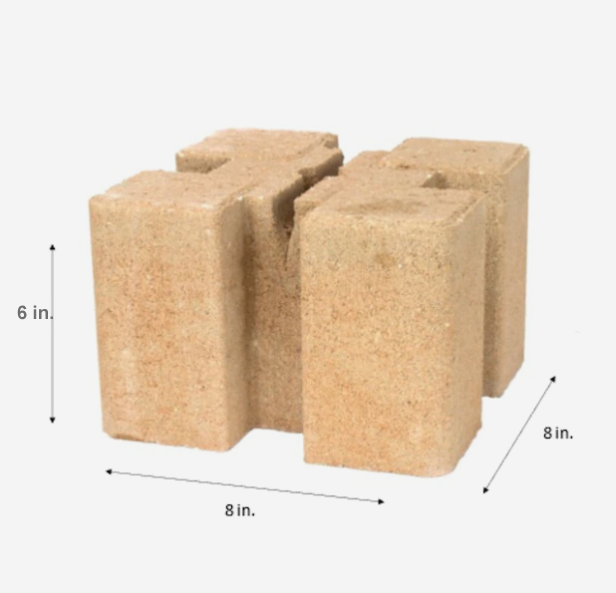
| Oldcastle Planter wall blocks (Lowes)
|
$3.38ea. /
8″x 6″x8″
|
Blocks to fit each corner with planks any length up to 2″ thick for raised beds, 4 per bed to start, stackable, last forever
|
None, really. They can be used with any kind of inexpensive lumber (long deck planks, for example) and reconfigured every year.
|